Muslim faithful begin their annual pilgrimage to Mecca in the scorching heat
Saudi Arabia has deployed a strong device to avoid a repeat of last year's drama, when more than 1,300 pilgrims died from the extreme heat.
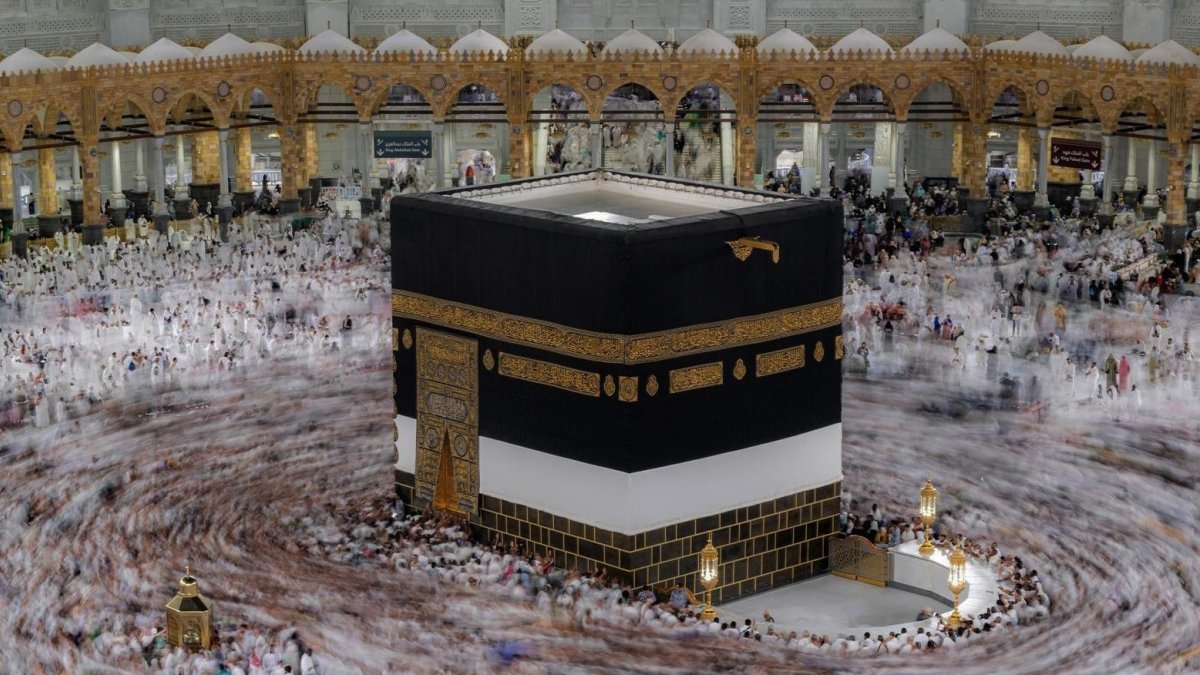
Morning prayers at the Grand Mosque in Mecca.

More than one million Muslim faithful began the rites of the annual pilgrimage to Mecca this Wednesday, with authorities mobilized to prevent a repeat of last year’s tragedy, when more than 1,300 pilgrims died due to extreme heat.
Gathered in the first holy city of Islam with temperatures close to 40 ºC, the pilgrims began with the rite of 'Tawaf,' which consists of circling around the Kaaba, the black cubic structure where Muslims from all over the world converge to pray, in the heart of the Meccan Grand Mosque.
Others arrived in Mina, a valley a few kilometers from Mecca, according to the official Saudi Press Agency (SPA).
There they will spend the night in air-conditioned tents, before climbing on Thursday to Mount Arafat, a hill about 20 km from Mecca, where the Prophet Muhammad is believed to have delivered his last sermon.
About 1.4 million worshippers are in Saudi Arabia for the hajj, consisting of a series of rites planned over several days in and around the heart of Mecca.
The pilgrimage, one of the largest religious gatherings in the world, is one of the five pillars of Islam. Every Muslim who has the means to do so must make it at least once in his life.
Authorities have put in place a series of measures to prevent the dire effects of the Saudi heat, and avoid last year's tragedy, when more than 1,300 worshippers died in temperatures that reached 51.8°C.
"An incredible feeling"
Before entering Mecca, pilgrims must attain a state of purity, called in Arabic 'ihram,' which requires proper dress.
Men wear a seamless white garment, which symbolizes unity among believers, beyond their social status and nationality.
Women are required to wear loose, white garments, revealing only their face and hands.
Tuesday afternoon already saw buses dropping off pilgrims in Mina, where deployed staff offered them coffee and dates.
"I'm very happy, it's an incredible feeling," said Rim al Shogri, a 35-year-old Saudi woman performing the hajj for the first time in her life.
This year, the oil-rich monarchy has mobilized more than 40 government agencies and 250,000 officials to try to mitigate risks linked to the high heat.
Shaded areas were expanded by 50,000 square meters, thousands of additional first responders will be mobilized and more than 400 fresh water drinking points will also be set up, the Hajj Ministry told AFP last week.
Hajj 2.0
The Saudi authorities will also use the latest artificial intelligence techniques to process the images provided by a fleet of drones deployed in Mecca. And that is because crowd management is a delicate exercise: in 2015, some 2,300 people died in a stampede.
According to the kingdom’s authorities, 83% of the 1,301 pilgrims who died in 2024 lacked the official permit required to perform the pilgrimage—a permit obtained for a fee and allocated through country-specific quotas.
By lacking such a permit, these unauthorized pilgrims were unable to access the air-conditioned facilities set up to make the week more bearable.
In this edition, the Saudi government deployed an intense communication campaign with billboards and SMS, to remind that whoever performs the pilgrimage without proper authorization is exposed to a fine of 20,000 rials (5,300 dollars), in addition to a ban on visiting the country for ten years.
Saudi Arabia is home to the holy cities of Mecca and Medina, where the Prophet Muhammad preached, and each year it earns billions of dollars thanks to the Hajj and the lesser pilgrimages known as Umrah, which take place at other times of the year.
LATEST