Delcy Rodríguez's record: DEA target, money laundering, ties to 'blood gold' south of the Orinoco, and overseer of Chavismo's feared political police
Added to this record are the international sanctions Rodríguez accumulated before coming to power. Canada sanctioned her in 2017; the United States did so in 2018, describing her as a key figure enabling Maduro to "consolidate his authoritarian regime"; she was also sanctioned by Switzerland and the European Union, while Colombia barred her from entering the country in 2019.
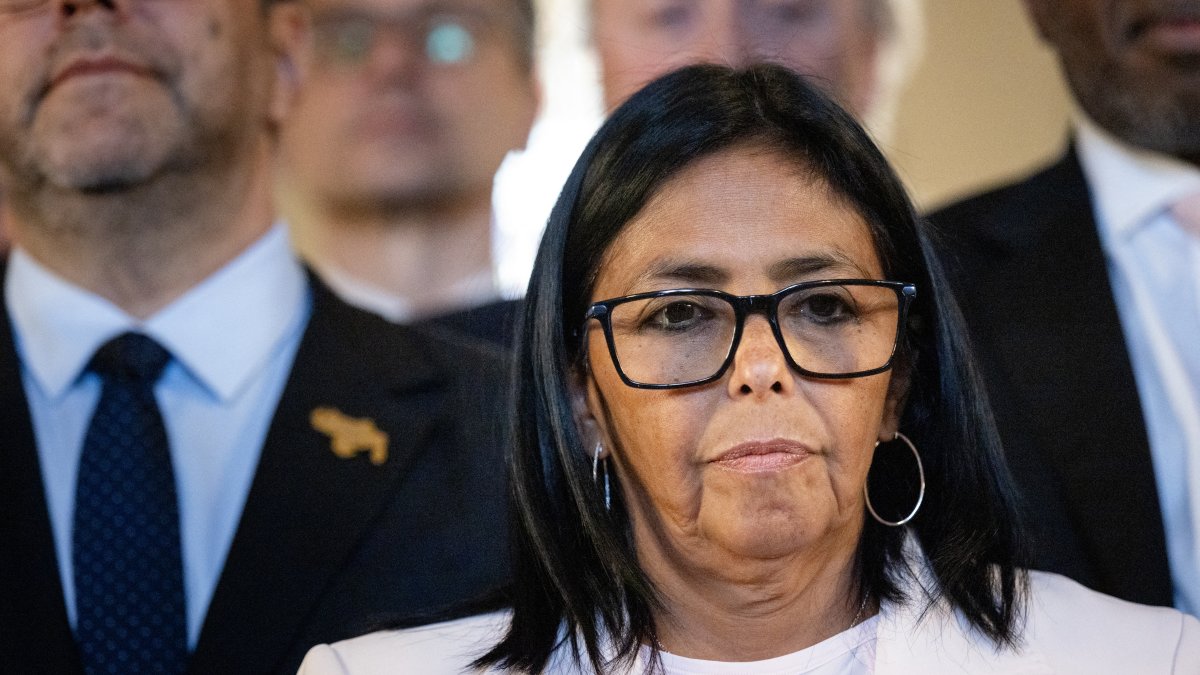
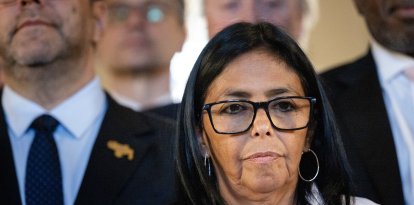
Delcy Rodríguez in a file photo

Three names currently hold power in Venezuela under Washington's tutelage. The man accused of narco-terrorism Diosdado Cabello, one of the leaders of Cartel of the Suns and head of the Chavista repressive apparatus; Jorge Rodríguez, current president of the pro-government National Assembly—whose legitimacy is widely rejected by the international community—and brother of the "strong woman" of, at least, this moment: Delcy Rodríguez, who has the backing of the White House and will meet behind closed doors with President Donald Trump on September 23 at the Lotte Palace Hotel at 7:40 p.m. local time.
Two decades ago, at the height of the already authoritarian and socialist government of the late Hugo Chávez —Maduro's predecessor— the name of Delcy Rodríguez would undoubtedly have been the least connected to the circles of power among these three names. In fact, she would have been the most unlikely candidate to succeed Chávez, since Rodríguez did not get along well with "El Comandante" due to a communication style that was unfriendly, direct, and, according to reports, "rude" toward Chávez himself, who had little tolerance for dissent even among his inner circle of allies. However, with Chávez's death and Maduro's rise to Miraflores, Delcy Rodríguez began to consolidate power like few others. Various reports, independent analyses, and public evidence paint a picture of her taking control of Caracas's foreign relations—forging important strategic alliances in China, the Middle East, Russia, Europe, and the U.S.— rising to the position of Vice President, controlling the illegal mines in the South of the Orinoco in the deforested Venezuelan Amazon, managing money-laundering routes, and also serving as the head of the chain of command for the Chavista repressive apparatus.
This last detail is paradoxical for Rodríguez, as her father, Jorge Antonio Rodríguez—a far-left student activist involved in guerrilla movements—died while in state custody in the 1970s. He was arrested for participating in the infamous kidnapping of American businessman William Niehous, which attracted worldwide coverage at the time. Decades later, his daughter, Delcy, was directly responsible for the chain of command that resulted in hundreds of political and illegal kidnappings, documented cases of torture, and even extrajudicial killings—in short, various widely documented crimes against humanity. The difference is that, in 1970s Venezuela, those responsible for the death of Jorge and Delcy Rodríguez's father were brought to trial. In Chavista Venezuela, justice has yet to be served, and in the case of the current Chavista leader, that may be difficult to see, because Transparencia Venezuela notes that she prepared herself extremely well for post-Maduro Venezuela.
Under DEA scrutiny
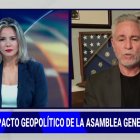
The Drug Enforcement Administration (DEA) has been investigating Rodríguez since at least 2018, according to documents obtained by The Associated Press and confirmed by more than half a dozen current and retired U.S. agents.
The agency even formally designated her as a "priority target" in 2022, a designation reserved for suspects with a "significant impact" on drug trafficking. Her name appears in nearly a dozen open investigations at DEA offices across South America and the United States, from Paraguay and Ecuador to Phoenix and New York, several of which remain active, according to the report.
Despite this case file, Washington never formally charged her, unlike other Chavista figures such as Maduro himself, Diosdado Cabello or former Defense Minister Vladimir Padrino López and more than a dozen senior officials in his inner circle. "She was on the rise, so it's not surprising that she might become a high-priority target with her role," former federal prosecutor Kurt Lunkenheimer explained to the AP, though he noted an important distinction: "The issue is when people talk about you and you become a high-priority target, there's a difference between that and evidence supporting an indictment."
David Smilde, a professor at Tulane University who has been studying Venezuela for three decades, argued that this may be the trump card the White House holds over Rodríguez: "She surely knows this, and it gives the U.S. government leverage over her. She may fear that if she does not do as the Trump administration demands, she could end up with an indictment like Maduro."
That dossier also includes specific allegations of money laundering. A confidential informant told the DEA in 2021 that Rodríguez was using hotels on the idyllic Margarita Island "as a front for money laundering," according to the same documents reviewed by the AP.
Politics
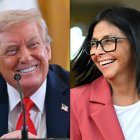
Trump, Delcy Rodríguez to meet in New York amid oil deals, calls for democracy in Venezuela
Andrés Ignacio Henríquez
Blood-stained gold in Bolívar state and corruption in Spain
Despite the money laundering and alleged management of drug trafficking routes, gold is, without a doubt, the most recurring theme in his history. In February 2020, for example, authorities in Aruba seized nearly a metric ton of Venezuelan gold —932 kilograms, valued at $50 million— from an airplane that was forced to make an emergency landing at Queen Beatrix Airport, as Infobae reported at the time. The pilot revealed that the aircraft had taken off from a clandestine airstrip near Ciudad Bolívar, the capital of Bolívar State, in the heart of the gold mining region, with a probable final destination in the United Arab Emirates. Authorities then investigated whether the shipment was linked to Rodríguez and her brother Jorge, who are said to maintain "an operations bunker" in the area, something that is an open secret both in the state capital and in the mining towns themselves, such as El Callao, Los Pijiguaos, and Tumeremo, among others.
That same year, documents from the Central Operational Unit (UCO) of the Spanish Civil Guard, revealed in connection with the so-called "Koldo case"—the biggest corruption scandal of the government of leftist Prime Minister Pedro Sánchez— showed that Rodríguez negotiated directly with broker Víctor de Aldama the sale of 104 bars of Venezuelan gold, valued at $68.5 million, transported from Moscow to Caracas via Zambia and disguised as "medical supplies." The messages exchanged via the Threema app reveal a relationship of extreme trust between the two. "I'm going to have to take the last name Rodríguez too, hahaha," Aldama wrote to her; she replied, according to the report, "Yeees! You're already part of the family." The shipment was coordinated just weeks before Rodríguez landed in Madrid, despite the European Union's entry ban against her.
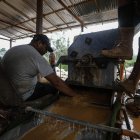
This was reported primarily by major media outlets in Spain —ABC, El Mundo, El País—and in Latin America, in a case that added to the other scandal involving the Chavista leader in Spain, commonly known as "Delcygate."
That episode, which occurred in January 2020, took place when Rodríguez traveled to Madrid with some 40 suitcases—despite being barred from entering the Schengen Area due to European sanctions—and spent hours inside Barajas Airport meeting with then-Minister of Transportation José Luis Ábalos, and his advisor Koldo García—the same man who is now under investigation in the case that would ultimately expose the gold scandal. As it later emerged, it was Ábalos himself who invited her to Spain, and it was President Pedro Sánchez who congratulated him for "avoiding a diplomatic crisis" following the stopover, according to messages that came to light years later. Ábalos, cornered by the leak about the meeting, gave contradictory accounts at the time, claiming at first that Rodríguez "was just passing through," and then that he had actually met with the Venezuelan Minister of Tourism, not with her. The case was closed by the courts months later, but in 2024, the investigation into the Koldo case itself revealed sufficient evidence for the Spanish justice system to consider reopening it.
Politics
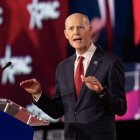
Rick Scott calls Delcy Rodríguez 'the head of drug cartels' and warns that a photo with Trump would be ‘a slap in the face’ for Venezuela
Emmanuel Alejandro Rondón
In fact, his name resurfaced in that same Spanish case file in May of this year, when a court order related to the indictment of the former president José Luis Rodríguez Zapatero identified her under the alias "La Dama." According to reports in Spain, wiretaps included in the case file show members of the network describing her as the key figure in securing the oil deal: "La Dama is the one who handles the direct allocation of the ships." The judge presiding over the case, José Luis Calama, maintains that Zapatero operated as the "decision-making and strategic core" of a scheme involving influence peddling, with Chinese delegations particularly interested in gaining access to Venezuelan crude oil through him.
In any case, Rodríguez's power over the gold in Bolívar State and his shady connections in Spain are well documented. In fact, sources consulted by VOZ in Bolívar State—the epicenter of illegal gold mining in the south of the country—assert that the names of the Rodríguez brothers are frequently mentioned among local residents and miners in the area. This perception aligns with the findings of organizations such as SOS Orinoco, which monitor the so-called Orinoco Mining Arc, a 112,000-square-kilometer strip—the size of Portugal—that Maduro declared a mining zone in 2016. "Delcy Rodríguez has her own mines; it's an open secret," said anthropologist Cristina Burelli, founder of that organization. "She travels frequently to Bolívar State; there are photos of her touring mines. Everyone knows she has mines."
Repression also affects her
This track record coexists with her direct control over the Chavista intelligence and repression apparatus. Since assuming the vice presidency in 2018, and at least through 2021, Rodríguez served as the direct supervisor of the Bolivarian National Intelligence Service (SEBIN), the Venezuelan political police that has for years been singled out by the UN and human rights organizations for being responsible for torture, cruel treatment, and arbitrary detentions of opposition figures. According to a report by Transparencia Venezuela, that position granted her political responsibility and direct hierarchical command over the agency.
Her ties to that repressive apparatus did not diminish after Maduro's fall. In early 2026, now as the U.S.-backed interim leader, Rodríguez appointed Gustavo González López—a former director of SEBIN who had been accused by the UN itself of ordering arbitrary detentions and torture during his tenure—as commander of the Presidential Honor Guard. Months later, in a controversial move aimed at mitigating international criticism, she publicly described the operation of El Helicoide prison—SEBIN's historic headquarters—as "a mistake" and announced its transformation into a community space. Human rights organizations, however, maintain that the agency's pattern of persecution remains active under her leadership.
Added to this record are the international sanctions that Rodríguez accumulated before coming to power. Canada sanctioned her in 2017; the United States did so in 2018, describing her as a key figure in enabling Maduro to "solidify his authoritarian regime"; she was also sanctioned by Switzerland and the European Union, while Colombia barred her from entering the country in 2019. None of these measures, however, amounts to a formal criminal charge, and all preceded the current rapprochement between Rodríguez and the White House, which has cost the Trump administration significant reputational damage among Venezuelan and Cuban communities in South Florida, with the midterms just around the corner.
Mundo
Two opposing visions for the future? Marco Rubio and María Corina Machado call out Delcy Rodríguez's Castroist rhetoric
Andrés Ignacio Henríquez
LATEST