ANALYSIS
GOP’s financial offensive: Republicans hold $221 million advertising advantage over Democrats
The lead is concentrated in super PACs and party committees, which ramped up their advertising spending ahead of the Nov. 3 midterm elections.
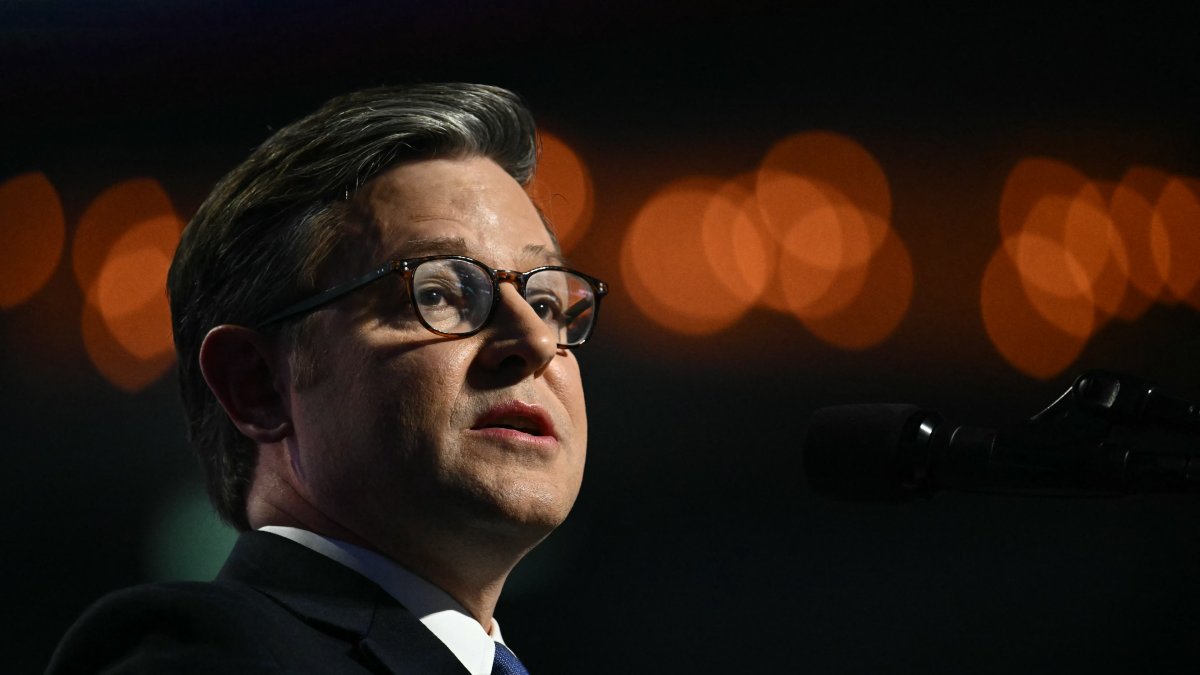
Mike Johnson in Dallas, Texas/ Kent NISHIMURA

Republicans are entering the final stretch of the midterm elections with an advantage over Democrats in one key area: the money available to spend on ads. This financial advantage could be crucial in determining control of Congress in key races for the Senate and the House of Representatives.
According to data from AdImpact cited by The New York Times, Republican groups and their allies plan to spend approximately $888 million on advertising between now and Nov. 3, compared with about $666 million by Democratic groups. The difference amounts to $221 million.
The advantage does not stem primarily from the money raised by the Republican candidates themselves; rather, the difference lies with super PACs, party committees and other external spending groups. For example, President Donald Trump's political machine recently began mobilizing with multimillion-dollar contributions to support Republican candidates in approximately 50 key races for the House of Representatives and the Senate.
Since the beginning of September, MAGA Inc. and other groups linked to the president have booked more than $130 million in advertising to support Republican candidates, according to data from AdImpact reported by The Washington Post.

Politics
Trump’s political machine kicks into gear: $138 million for key races ahead of midterms
Joaquín Núñez

Politics
Inside the GOP's case against Nellie Pou: A progressive Democrat in a Trump-won district
Joaquín Núñez
Among the groups channeling that money are No Going Back PAC and Safety & Affordability PAC, two recently created organizations linked to MAGA Inc. No Going Back has set aside nearly $99 million, while Safety & Affordability PAC has committed about $27 million to ads.
Republican national committees are also entering the final stretch with a financial advantage over their Democratic counterparts. The Republican National Committee (RNC) ended August with $125.6 million in cash on hand, according to records filed with the Federal Election Commission (FEC), while according to the NYT, the Democratic National Committee (DNC) had a debt of around $750,000.
In the House of Representatives, the National Republican Congressional Committee (NRCC) ended August with $89 million in cash, compared to $76 million for the Democratic Congressional Campaign Committee (DCCC). According to Axios, this difference of approximately $13 million represents a record lead for the NRCC at this point in the election cycle
"Republicans own the airwaves, and House Democrats can’t afford to fight back. Democrats’ socialist bailout fund is being drained to explain away their radical records instead of defining their campaigns, and by the time they find the cash, voters will already know exactly who they are," said Mike Marinella, spokesperson for the National Republican Congressional Committee (NRCC).
In the Senate, the National Republican Senatorial Committee (NRSC) is using that advantage to ramp up coordinated spending with candidates in key states. The committee is allocating $46.5 million across eight states through coordinated campaigns with Republican candidates. The change came after the Supreme Court eliminated limits on coordinated spending between national party committees and their candidates, allowing the NRSC to allocate much more money directly to campaigns.
LATEST