Cuba awaits its 'Venezuela Moment': Wealthy Cuban-Americans plan transition in Miami as Iran War holds Trump back
This entire framework was built on an expectation that the White House itself fueled: Since the capture of former dictator Nicolás Maduro in early January, Trump has repeatedly said, both in private and in public, that "Cuba is next," and he even pushed for an oil embargo against the island in addition to publicly proposing a "friendly takeover" of power. Now, however, the regime's downfall depends on other factors.
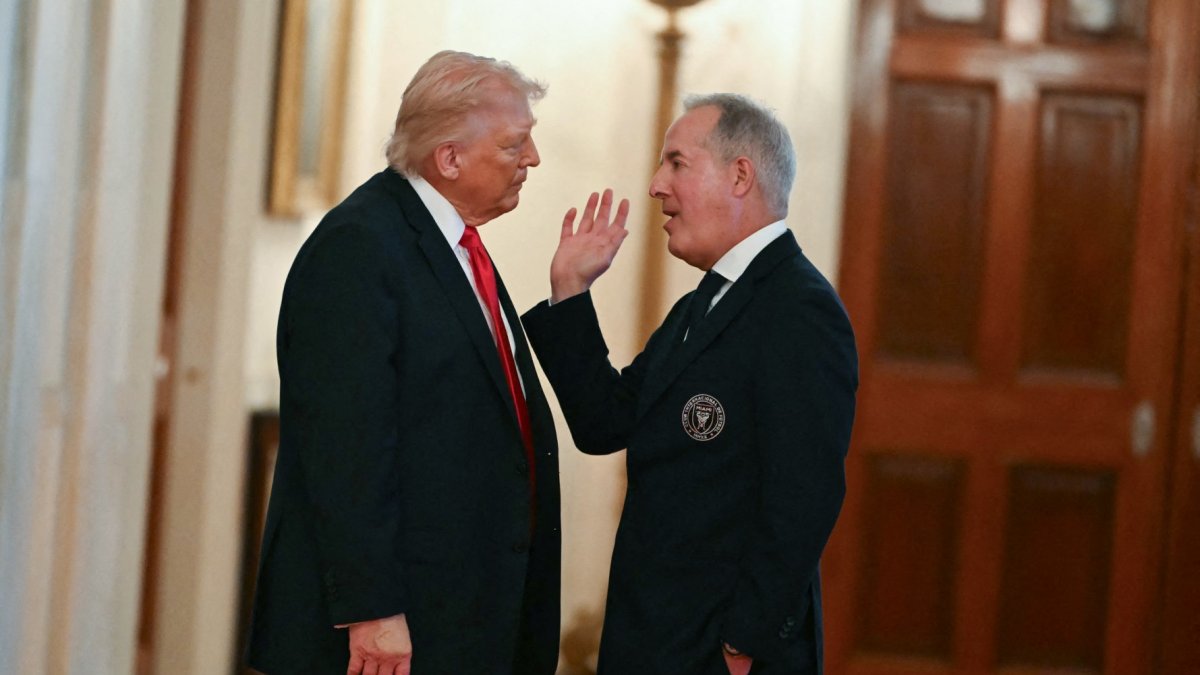
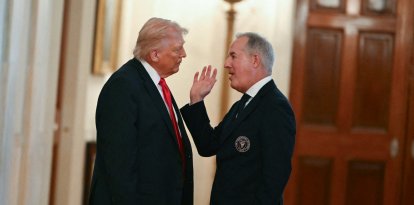
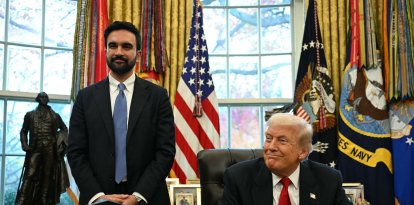
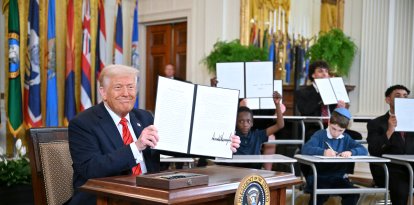
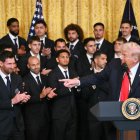
Donald Trump and Inter Miami owner and manager Jorge Mas chat after an event honoring the club

While the war in Iran is hampering the White House both geopolitically and domestically, and Venezuela is beginning to become a complicated issue for the Trump administration, Cuba is an issue that, for now, seems to be at a standstill, but a lot is happening, especially in South Florida. According to a report in The Wall Street Journal, wealthy Cuban-American tycoons in exile are already preparing a massive plan for the island's reconstruction once the Castro regime falls, an expectation based on public statements by President Donald Trump and senior administration officials.
According to the WSJ, Cuban millionaires — who have inherited or amassed their fortunes in recent decades in the hope of one day returning to Cuba — are ready to rescue their homeland economically through key investments in infrastructure, real estate and even a stock exchange. The only problem, for now, is that the regime's collapse, which seemed imminent months ago, is now dragging on as the White House is realigning its foreign policy priorities ahead of the midterms, where Democrats appear to hold an advantage as fuel prices skyrocket around the world.
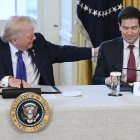
The amount handled by these business leaders was revealed by Jorge Mas, the billionaire co-owner of Inter Miami -- the team Leo Messi plays for -- and a close friend of Secretary of State Marco Rubio, who estimated the cost of rebuilding Cuba during the first three years of a potential transition at $90 billion, a sum that, as he confided to the WSJ, his Cuban-American contacts could raise without much effort.
That financial optimism carries over to the skies, according to architect Willy Bermello, who explained that every two weeks he convenes airline executives and investment fund managers to refine an $8 billion plan that would renovate eight Cuban airports as soon as the Cuban regime falls.
"We have our people on speed dial," he told the WSJ
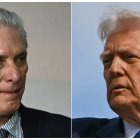
Likewise, 82-year-old tobacco entrepreneur Juan Omar Sixto, who chairs the newly created Cuban-American National Chamber of Commerce, is already designing a stock exchange for a future Cuba and is organizing an investment summit planned for Havana. "We have waited for 67 years. We need to start," Sixto declared at a meeting as reported by the WSJ.
The same enthusiasm is shared by Hialeah Mayor Bryan Calvo, 28, who leads the city with the largest Cuban-American population in the country: "I don't think we've ever been as close. But at the same point, if it doesn't happen now, it's never gonna happen."
Planning is also extending to the legislative arena. Mas also chairs the National Cuban-American Foundation, founded by his father, and is working with the Cuban-American Bar Association of Miami on a draft bill that would establish a provisional government for up to two years before free elections are held. Another ongoing debate is whether that future democratic Cuba should temporarily reinstate its 1940 constitution while a new one is being drafted — an issue that the American Museum of the Cuban Diaspora recently addressed in one of its panel discussions. "This is our Berlin Wall moment," said the institution's president, Marcell Felipe, at the event.
All of this framework was built on an expectation fueled by the White House itself: From the arrest of former dictator Nicolás Maduro in early January, Trump has repeatedly stated, both privately and publicly, that "Cuba is next," and even went so far as to push for an oil embargo against the island, in addition to publicly proposing a "friendly takeover" of power. At the beginning of the year, high-ranking officials assured Florida politicians and Cuban-American business leaders that regime change would come before summer, or at the latest, before the end of the year.
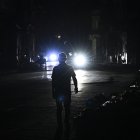
However, that deadline has already passed. The blockade has exacerbated fuel shortages on the island and multiplied power outages, which now last for entire days, but the Castro regime, though battered, continues to resist by resorting to repression and the political attrition of its adversaries. Meanwhile, as reported by the WSJ, the war in Iran ended up absorbing the attention of the White House, as Trump himself repeatedly told his advisors that he needs to resolve that conflict before allocating resources to Cuba or any other foreign policy priority. Some officials are already talking about a campaign in Cuba that could last until the end of his current term.
Rubio himself, when asked about those timelines during a trip to Manila in July, avoided committing to a specific date: "We're not a miniseries, like you get in three episodes and it's over. These are complex things that take time."
Despite that rhetorical shift, Rubio, a Cuban-American, asked his team to maintain a weekly stream of announcements regarding Cuba — sanctions, accusations, reports — a strategy that, according to a State Department official quoted by the newspaper, aims to keep alive the sense that decisive action could come at any moment. That delay did not go unnoticed among the exiles themselves. "They have not changed the goal, but they have moved the goal post," Tony Costa, 86, told the WSJ. Costa retired as one of the world's largest producers of ornamental plants to devote himself entirely to bringing down the Cuban regime.
Hope and concern over the Venezuela situation
Behind much of this business optimism, a serious fear is also growing in South Florida: that Washington will end up applying the same strategy to Cuba that it already used in Venezuela, where it ousted dictator Maduro but left the rest of the Chavista apparatus — now headed by Maduro's former vice president Delcy Rodríguez — in exchange for trade agreements, with no set date yet for a democratic transition, which is a promise of the Trump administration. A Miami Herald survey of 800 Cuban-Americans, published in April and cited by the WSJ, showed that four out of five South Florida residents support direct military intervention on the island, and that the same proportion rejects any negotiations with Havana that do not result in a complete regime change. Something similar is happening among Venezuelans, who overwhelmingly supported U.S. military intervention to oust Maduro, celebrated that capture, expressed their sympathy for Trump and Rubio, and now view with concern Washington's signing of trade agreements with Delcy Rodríguez, who is already in New York for the U.N. General Assembly eight months after Maduro's capture.
In Venezuela, there is also concern that there are more than 300 political prisoners and that repression against dissidents continues, albeit less intensely than during Maduro's worst period. However, many critics and ordinary Venezuelans believe that this decline in political violence is solely due to an explicit request from the White House, and that it would disappear as soon as the Trump administration lets its guard down.
But Cuban-Americans clearly do not share this view. Their concern, in fact, is that the downfall of the Castro regime — which marginalized, repressed and exiled them — is gaining momentum.
Sports
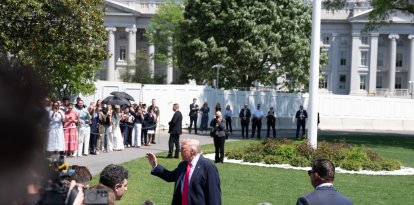
Messi better than Pelé, destruction of the Iranian arsenal and Cuba free: this was Trump's tribute to Inter Miami at the White House
Emmanuel Alejandro Rondón
Even the diplomat who most fueled initial expectations has toned down his rhetoric. Trump's ambassador to Havana, Mike Hammer, had asserted in February — while dancing on stage at a gala for Cuban-American lawyers in Miami, that the communist regime would come to an end that very year. According to sources cited by the WSJ who remain in contact with him, he no longer mentions any specific timeline for 2026 in private.
Inside Cuba, meanwhile, the situation continues to deteriorate with no sign of organized popular rebellion. Havana-based economist Omar Everleny Pérez Villanueva, who is working on plans to restructure the Cuban economy, described the current climate to the WSJ: "The country is totally paralyzed. People walk around like zombies. There's no electricity for days, you don't sleep, food spoils." More than 1 million Cubans, mostly young people, have left the island since 2021, drastically reducing the number of potential protesters and leaving Cuba today poorer, with an aging population, and with the voice of its own people virtually absent.
LATEST