ANALYSIS
Michigan primaries: Stevens vs. El-Sayed, a new showdown pitting moderates against radical leftists within the Democratic Party
Senate Minority Leader Chuck Schumer endorsed Stevens. Bernie Sanders and Alexandria Ocasio-Cortez aligned themselves with El-Sayed. For her part, Rep. Debbie Dingell, who has remained neutral, warned that the "brutality" and "ugliness" of the race could hinder party unity after Tuesday.
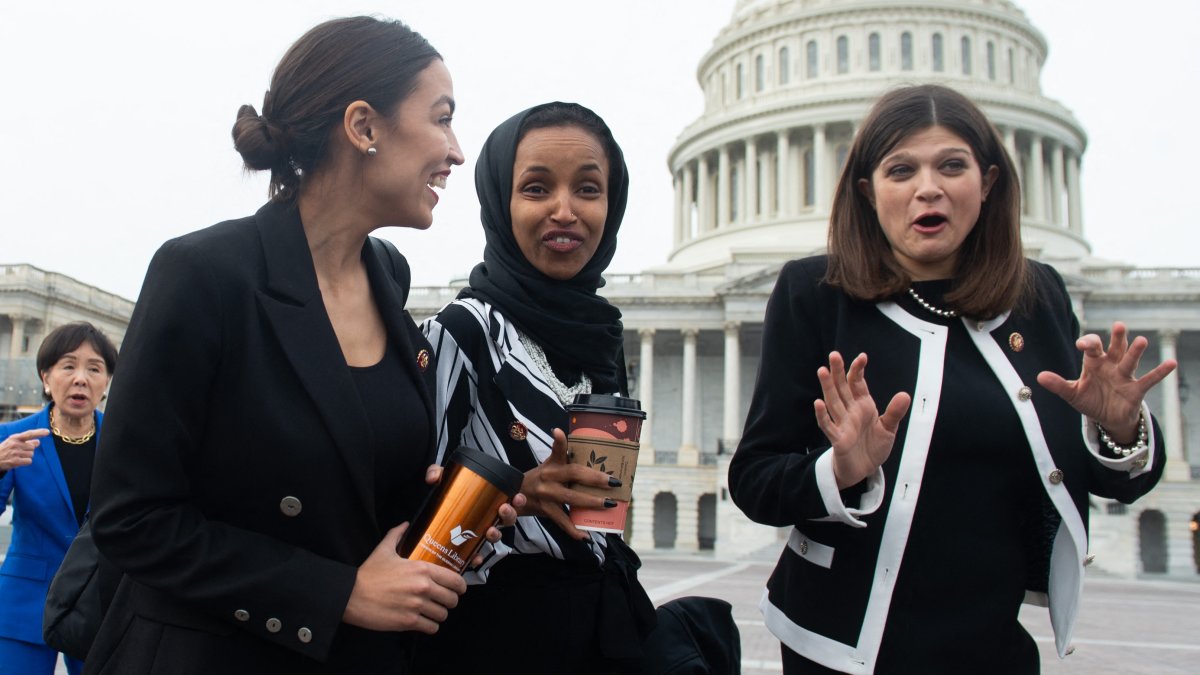
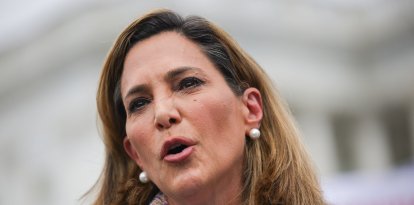
Alexandria Ocasio-Cortez (L), Ilhan Omar (C), and Rep. Haley Stevens

Democrats in Michigan are voting this Tuesday in one of the most closely watched primaries in the country. The race for the Senate nomination pits moderate Congresswoman Haley Stevens against radical leftist Abdul El-Sayed. The winner will face Republican Mike Rogers in November in a race the party considers essential to regaining a majority in the Senate.
The campaign has been long, costly and deeply divisive. It has turned into an open clash between the party's old guard and its more radical wing. Senate Minority Leader Chuck Schumer, endorsed Stevens. Bernie Sanders and Alexandria Ocasio-Cortez sided with El-Sayed. State Sen. Mallory McMorrow, who had also entered the race, suspended her campaign in July and left the contest to the two finalists.
Politics
James Carville vs. Hasan Piker: Why the Democratic old guard is threatening to leave the party
Carlos Dominguez
Two conflicting visions: the economy vs. the far-left agenda
Stevens, who describes her campaign as "a love letter to Michigan," has served four terms as a congressman representing the Detroit metropolitan area and has focused her message on manufacturing and the economy. She has the support of Michigan Gov. Gretchen Whitmer.
El-Sayed, for his part, is attempting a political comeback after losing the 2018 gubernatorial primary to Whitmer. A former Wayne County health director, he has based his platform on Medicare for All, campaign finance reform and ending military aid to Israel.
The campaign has reached such a level of confrontation that El-Sayed went so far as to describe Stevens as "the least capable candidate in America." Congresswoman Debbie Dingell, who has remained neutral, warned that the "brutality" and "ugliness" of the race could hinder party unity after Tuesday.
Millions to stop the far-left attack on Israel
The most bitter division has centered on US support for Israel. Stevens has defended continued military aid and rejected accusations of genocide in Gaza. El-Sayed, by contrast, has called for an end to unconditional aid, has harshly attacked AIPAC’s influence, and has been reluctant to affirm that Israel should exist specifically as a Jewish state.

Politics
James Talarico leads Ken Paxton by three points in Texas Senate race: Poll sounds alarm for Republicans
Emmanuel Alejandro Rondón
External funding has made all the difference. According to AP, groups allied with Stevens have invested more than $50 million, with over $30 million coming from AIPAC and affiliated organizations, the largest investment by that entity in a single election cycle.
While El-Sayed calls for cutting military aid, Stevens maintains strong support for the bilateral relationship and has accused the leftist candidate of blaming American Jews for his problems.
The 2018 video that complicates El-Sayed's case
A 2018 video has resurfaced in recent weeks and is adding tension to El-Sayed's campaign. At the time, while running for governor, he argued that undocumented immigrants should be able to obtain driver's licenses. He contended that denying them licenses was discriminatory: "We’ve got to make sure that in this state we are not discriminating against documentation status. Right now, if you’re undocumented, you don’t get access to a driver’s license. You’re stuck."
Politics
Trump stands his ground against internal opposition and defends Todd Blanche as future attorney general
Carlos Dominguez
Critics believe that such a measure would facilitate access to services and could be interpreted as legitimizing their presence in the country. His campaign team did not immediately respond to inquiries about whether he maintains that position.
Michigan, a barometer for the Democratic future
The ideological battle extends further down the ballot. In Detroit's 13th District, Congressman Shri Thanedar is fighting for his political survival against state Rep. Donavan McKinney, who is backed by Sanders and several members of the Congressional Black Caucus. In a historically Black district, the anti-establishment sentiment also threatens the incumbents.
Michigan has become a barometer of the direction the Democratic Party will take. A victory for Stevens would reinforce the party's commitment to the center and legislative experience. A win for El-Sayed would consolidate the advance of more radical positions in a key state. In any case, Tuesday's result will set the tone for one of the most decisive battles in November.
LATEST