Report reveals that Democratic states with net-zero emissions goals have highest electricity prices
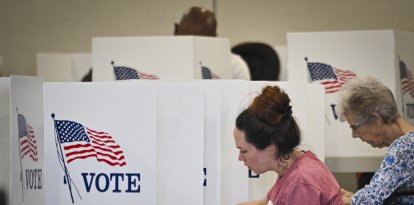
The study, titled "Blue States, High Rates," analyzes data from the U.S. Energy Information Administration (EIA) for January–August 2025 and concludes that 86% of the contiguous states with electricity prices above the national average voted for the Democratic Party in the 2020 and 2024 presidential elections.
Illustrative image of electricity

While millions of Americans face a steady rise in their electricity bills, a new report by Always On Energy Research and the Institute for Energy Research argues that Democratic states that have pushed for carbon-free targets and aggressive energy transition policies have, for the most part, the highest electricity rates in the country.
The study, titled "Blue States, High Rates," analyzes data from the U.S. Energy Information Administration (EIA) for January–August 2025 and concludes that 86% of the contiguous states with electricity rates above the national average voted for the Democratic Party in the 2020 and 2024 presidential elections.
According to the authors, the difference is not solely due to geographic or market factors, but primarily to the energy policies adopted by each state.
Energy policies under scrutiny
The report notes that, under federal law, states have broad authority to define their electricity generation mix, set renewable energy standards and establish clean electricity goals.
This autonomy has allowed numerous states to adopt Renewable Portfolio Standards (RPS) and Clean Energy Standards (CES), which require a gradual increase in the share of renewable energy or carbon-free sources in the electricity supply.
The researchers assert that these policies have directly contributed to rising costs for consumers and businesses.
World
EU pushes the return of nuclear energy with new investments and political backing
Diane Hernández
The most expensive states also lead the way on climate goals
The study highlights that the five states with the highest electricity prices in the country have targets aimed at achieving fully renewable or carbon-free electricity systems.
Drawing on data from the Lawrence Berkeley National Laboratory, the authors note that these states have mandates to achieve a 100% clean electricity supply, in addition to other policies such as net metering programs for residential solar power, which—according to the report—increase the costs of the electricity system.
In contrast, eight of the 10 states with the lowest prices voted for the Republican Party in the last two presidential elections, and seven of them do not have state goals for 100% carbon-free electricity, according to the report.

California and New York: The leading examples
The report devotes specific chapters to California and New York.
In the case of California, it notes that electricity rates are roughly double the national average, a situation it attributes to a combination of mandatory emissions reduction targets, the expansion of renewable energy, subsidies for solar panels, the closure of nuclear power plants and transportation electrification policies.
Regarding New York, the document indicates that electricity costs about 58% more than the national average and links this increase to the implementation of the Climate Leadership and Community Protection Act (CLCPA), which sets goals to generate 70% of electricity from renewable sources by 2030 and achieve a completely carbon-free system by 2040.
The report also cites the closure of the Indian Point nuclear plant, restrictions on natural gas infrastructure, and new investments in the power grid as additional factors that, according to its authors, have driven up costs.
Contrast with Florida and Louisiana
Florida maintains prices slightly below the national average despite having one of the highest electricity demands in the country due to the widespread use of air conditioning. According to the report, approximately 75% of its electricity generation comes from natural gas, and the state has not adopted the same climate goals as other states with higher rates.
Louisiana, for its part, ranks among the states with the cheapest electricity thanks to an energy mix based primarily on natural gas and the absence of state mandates for emissions reductions or mandatory renewable generation.
LATEST