Second Amendment victory: SCOTUS overturns Hawaii’s 'Vampire Rule' restricting the concealed carry of firearms on private property open to the public
The majority rejected Hawaii’s argument that its culture justified stricter regulations. “The Second Amendment cannot give way to 'the spirit of Aloha' in Hawaii any more than it can yield to the spirit of the Big Apple or the Windy City,” Alito noted.
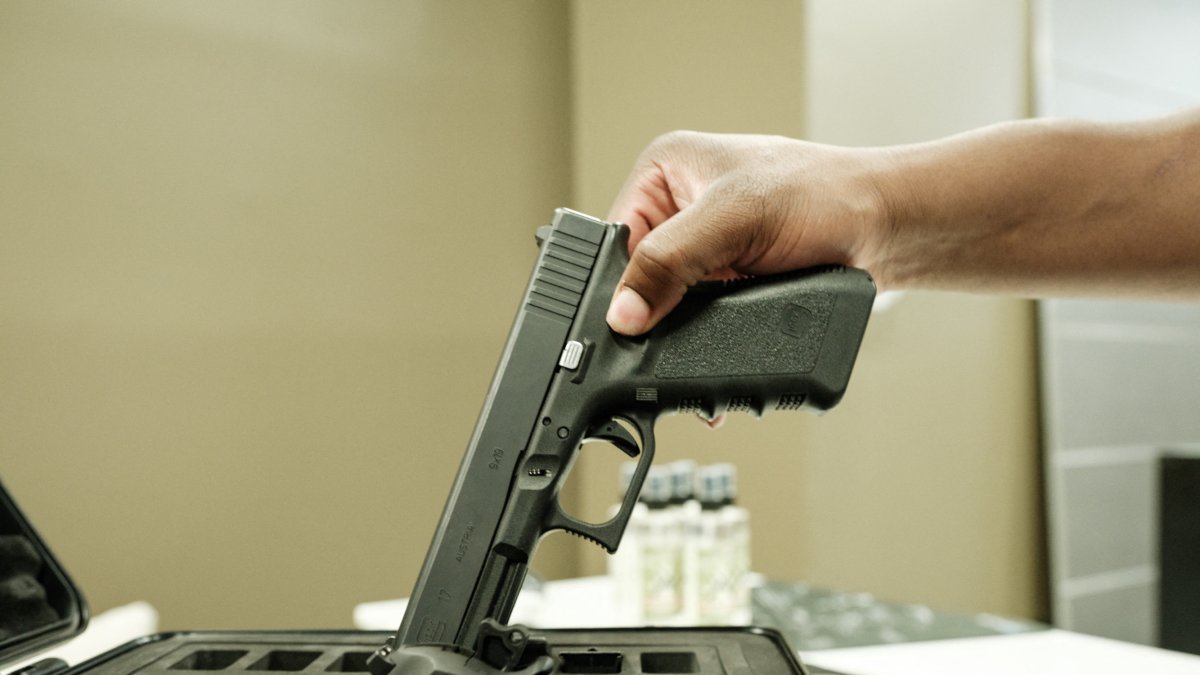
A gun being holstered—File photo

In a 6-3 decision, the Supreme Court (SCOTUS) ruled in favor of gun rights advocates, declaring unconstitutional a Hawaii law that required explicit permission from property owners to carry concealed firearms in businesses and other private spaces open to the public.
The ruling, issued this Thursday, overturns a state regulation informally known in pro-gun rights circles as the "vampire rule," which made it a crime for a concealed carry permit holder to enter private property—such as gas stations, supermarkets, or pharmacies—with a firearm, without the owner’s express authorization via signs, verbal consent, or written permission.

Politics
SCOTUS rules that the right to asylum applies only within US territory, not at the border
Carlos Dominguez
Self-defense vs. property rights
According to a report by Fox News, conservative Justice Samuel Alito, author of the majority opinion, wrote that Hawaii’s law “violates the constitutional right to keep and bear arms” and that it “hobbles what the Second Amendment protects: the right of Americans to carry arms for self-defense as they go about their daily lives.”
In the dissenting opinion, progressive Justice Ketanji Brown Jackson argued that the case was not really about the Second Amendment, but rather about the rights of private property owners: "There is no constitutional right to enter private property without the owner’s permission, let alone with a firearm." In her view, the Second Amendment does not regulate how property owners must communicate their decision to allow or deny entry.

Politics
Road to Majority 2026: Conservative activists gather in Washington for the nation's largest event on faith, freedom and family
Andrés Ignacio Henríquez
The Second Amendment is non-negotiable
The challenged law was enacted by Hawaii following the landmark 2022 decision New York State Rifle & Pistol Association v. Bruen in 2022, in which the Supreme Court held that Americans have the right to carry handguns outside the home for self-defense, without having to demonstrate a “just cause.” Hawaii and other states responded by tightening regulations, including this default restriction on private properties open to the public.
The majority rejected Hawaii’s argument that its culture and “spirit of Aloha” justified stricter regulations. “The Second Amendment cannot give way to 'the spirit of Aloha' in Hawaii any more than it can yield to the spirit of the Big Apple or the Windy City,” Alito noted.

The NRA and pro-gun groups celebrate the ruling
Gun rights organizations celebrated the ruling. The National Rifle Association (NRA) called it “a major victory for the Second Amendment,” noting that legal gun owners will no longer have to “beg for special permission” to exercise their right in public places.
Adam Kraut, executive director of the Second Amendment Foundation, emphasized that “if a business does not want you to carry a firearm on the premises, the burden should be on the proprietor, not the private citizen.”
LATEST