ANALYSIS
SCOTUS rules that the right to asylum applies only within US territory, not at the border
In a 6-3 split decision, the Supreme Court’s conservative majority upheld the interpretation that a migrant on the Mexican side of the border has not yet “arrived” in the United States, meaning authorities may deny their asylum request if they deem it appropriate.

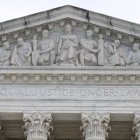
U.S. Supreme Court Building—File Photo

The Supreme Court (SCOTUS) ruled Thursday in favor of the Trump Administration by allowing the federal government to reject asylum applications at the border itself, on the grounds that this right is only triggered once the person has physically entered U.S. territory.
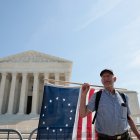
In a split decision of 6 votes to 3, the high court’s conservative majority upheld the interpretation that a migrant on the Mexican side of the border has not yet “arrived” to the United States, and therefore authorities may deny their asylum application if they deem it appropriate.
“An alien standing in Mexico does not ‘arrive in the United States’ simply by attempting, without success, to set foot in this country,” the ruling stated. "A foreign national ‘arrives in the United States’ only when they cross the border."
The left’s immigration argument falls flat
Migrant advocacy organizations, including Al Otro Lado, argued that the right to asylum is triggered upon reaching the border. However, the Supreme Court rejected that interpretation.
In its reasoning, the court used several examples to clarify the meaning of the English expression "to arrive in the United States." "A guest does not arrive at a house when he knocks on the front door. An army does not arrive in a city when it camps outside its walls,” the court wrote.
SCOTUS clears the way for the deportation of Haitians and Syrians
The Supreme Court also gave the green light to a Trump administration measure that removes protections against deportation for approximately 350,000 Haitians and 6,000 Syrians residing in the country.
In a 6-3 decision, the high court ruled that the Department of Homeland Security’s (DHS) decision to end Temporary Protected Status (TPS) for these immigrants cannot be reviewed by the courts.
Politics
Supreme Court limits federal government's ability to confiscate weapons from drug users
Williams Perdomo
Alito dismisses racism allegations against Trump
Judge Samuel Alito, who wrote the majority opinion joined by the other five conservative judges, rejected claims that race was a “motivating factor” in President Trump’s decision to revoke TPS for Haitians.
“None of the cited statements by either the President or the (Homeland Security) Secretary was overtly racial, and in substance all expressed policy views that could rest on race-neutral justifications,” Alito wrote.
Haitians were granted TPS under the Obama administration following the devastating 2010 earthquake. However, Haiti remains mired in deep poverty, violence unleashed by heavily armed criminal gangs, and chronic political instability.
LATEST