Supreme Court sides with Trump administration and gives green light to increased surveillance of green card holders
The nation’s highest court ruled that immigration authorities may take action against permanent residents accused of certain crimes, a decision that could broaden the scope of future deportation proceedings.
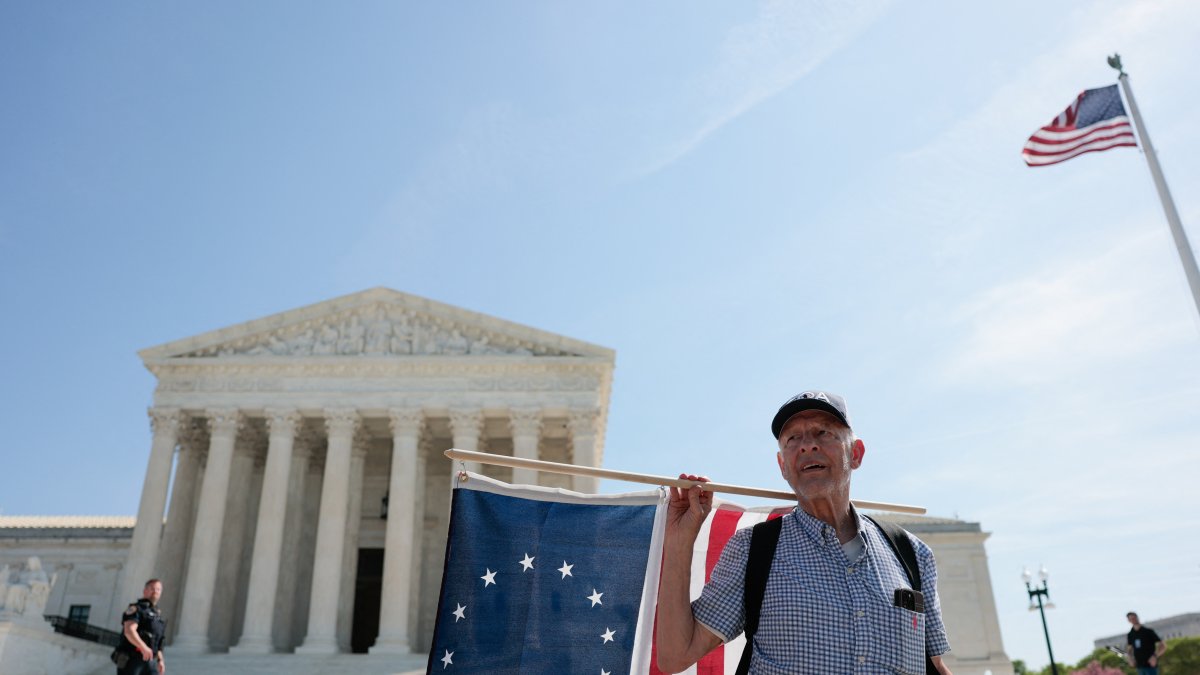
A man during a protest outside the Supreme Court over immigration issues (File photo)

The Supreme Court issued a ruling on Tuesday that could set a precedent for millions of legal permanent residents in the country.
In a 6-3 vote, the justices upheld the actions of immigration authorities in a case examining how far the federal government can go when a green card holder faces criminal charges.
The ruling, cited by the AP, centers on Muk Choi Lau, a lawful permanent resident who returned to the United States in 2012 after a brief trip to China. Upon his arrival, he was placed under an immigration mechanism known as “parole” due to allegations related to the sale of counterfeit goods.
Lau later pleaded guilty to selling counterfeit clothing in New Jersey, but argued that immigration authorities had exceeded their authority by taking action before a formal conviction had been handed down against him.
The court’s conservative majority rejected that argument.
In the court’s opinion, written by Justice Clarence Thomas, border agents were not required to present conclusive evidence that Lau had committed a crime before making decisions regarding his admission into the country and his immigration status.

Politics
Congress approves a historic $70 billion package and secures funding for Donald Trump's border funding
Andrés Ignacio Henríquez
A ruling that could influence future immigration cases
Beyond this individual case, experts believe the decision could have significant consequences for other legal permanent residents facing criminal investigations or charges.
During the litigation, the Trump administration defended a broad interpretation of the government’s powers in immigration matters, arguing that reasonable suspicion of certain crimes can justify administrative actions before a final conviction is handed down.
For groups that support stricter immigration policies, the decision strengthens the authorities’ ability to take action against individuals who, they argue, have violated the conditions associated with permanent residency.
However, civil rights organizations expressed concern about the scope of the ruling and warned that it could open the door to more aggressive measures against immigrants who have not yet been convicted of a crime.
The decision comes amid other immigration battles
The ruling comes as the Supreme Court considers several of the most significant immigration cases in recent years.
These include disputes related to birthright citizenship, restrictions on asylum, and temporary protection programs for immigrants from countries affected by armed conflicts or natural disasters.

Just The News
Federal appeals court hands Trump big win, ends protections for migrants from three nations
Misty Severi
Although the litigation began years before Donald Trump returned to the White House, the decision adds to a series of rulings that could redefine the scope of the federal government’s authority on immigration matters.
For millions of green card holders, the message is clear: the Supreme Court has just expanded the scope of action available to immigration authorities in situations involving criminal charges, even when a final conviction has not yet been handed down.
LATEST