Supreme Court clears immediate implementation of Louisiana electoral map ruling
Thus, the highest court in the land authorized Pelican State lawmakers to redraw its electoral map before the midterm elections.
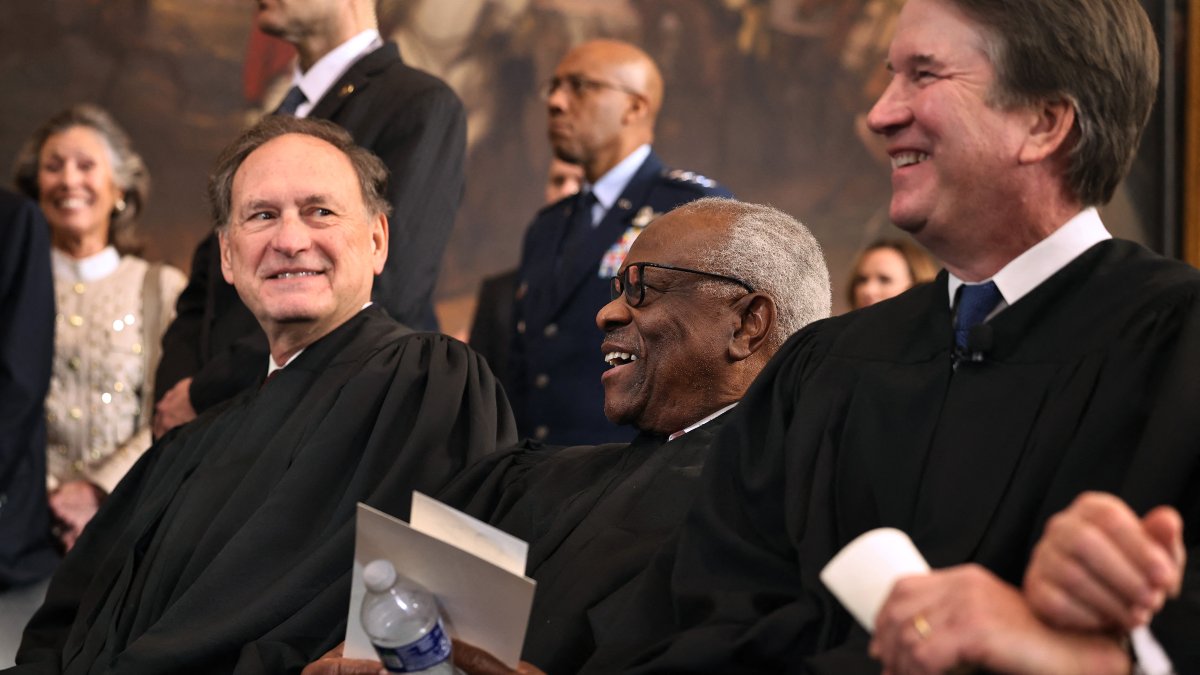
Samuel Alito, Clarence Thomas and Brett Kavanaugh/ Chip Somodevilla.

The Supreme Court issued a procedural order allowing the ruling declaring Louisiana's congressional map unconstitutional to take effect immediately. In this way, the country's highest court authorized Pelican State lawmakers to redraw its electoral map before the midterm elections.
In late April, the Supreme Court issued Louisiana v. Callais, in which it ruled that Louisiana's second congressional district in the House of Representatives violated the Equal Protection Clause of the Fourteenth Amendment, on the understanding that it had been racially drawn. The ruling opened the door for state lawmakers to change the electoral design, potentially favoring Republicans with the new design.
In most cases, when the Supreme Court issues a ruling, there is a time period known as a stay. With this decision, the court allowed the ruling to take immediate effect, nullifying that waiting period.

Due to the deadlines in filing nominations and conducting the primary, without the court's procedural order, it was highly likely that Louisiana would be forced to hold the November election under the current map, including the district challenged by the court.
Louisiana currently holds six seats in the House of Representatives, four Republican and two Democratic. With the ruling eliminating race-based districts, Republicans in the state could redraw the map to make the majority 5-1 or 6-0.
The ruling brought a crossover between Justices Alito and Jackson
In this case, Ketanji Brown Jackson, nominated by Joe Biden in 2022, put her dissent on the record. The judge argued that the order was "tantamount to an approval of Louisiana's rush to pause the ongoing election in order to pass a new map."
The judge Samuel Alito, a member of the conservative wing of the Court, wrote a harsh response that was joined by Neil Gorsuch and Clarence Thomas: "The dissent in this suit levels charges that cannot go unanswered. The dissent would require that the 2026 congressional elections in Louisiana be held under a map that has been held to be unconstitutional. They further added that they found Jackson's dissent to be "baseless and insulting."
The Court's two other progressive justices, Sonia Sotomayor and Elena Kagan, did not join Jackson's opinion.
LATEST