Blind spot: Media amplified white supremacy narrative as SPLC funded Charlottesville organizer
Federal prosecutors say the Southern Poverty Law Center directed a source to promote the Charlottesville “Unite the Right” rally and coordinate transportation for attendees. Afterwards, the media cited one senior executive as an authoritative source on white supremacy.

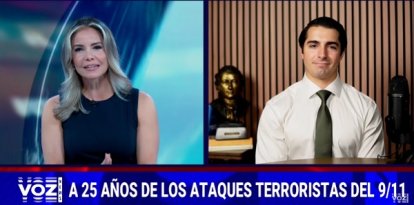
(Voz / Christian Camacho)

In the wake of the Charlottesville rally in August 2017, the media relied on Southern Poverty Law Center experts to explain an apparent rise in white supremacy in America after Donald Trump’s election.
But, while SPLC’s experts helped the media understand America’s racism problem after the rally, it was allegedly funding an organizer of the event, a member of a racist group prone to extremism. At the same time it was double-dipping, the Charlottesville rally launched SPLC’s credibility to new heights and boosted its fundraising hauls.
Throughout the last decade, SPLC also covertly funded members of racist groups prone to extremism, including the Aryan Nations, the Ku Klux Klan and the National Socialist Party of America, federal prosecutors alleged in a recent indictment, which charged the organization with 11 counts of wire and bank fraud and conspiracy to commit money laundering. In total, they allege SPLC funneled more than $3 million from 2014 to 2023 to individuals associated with these and other similar groups.
The “Unite the Right” rally in Charlottesville, Virginia, was a major cultural touchstone in the first Trump administration that launched a resurgence in concern, especially in the media, over right-wing extremism and racist groups.
The rally, which occurred amid the controversy over the removal of Confederate monuments by local governments, took place on Aug. 11-12, 2017, just months into Donald Trump’s first term. At least 30 people were injured when protesters clashed with counter-protesters and one person was killed by a motorist about a half-mile from the protests.
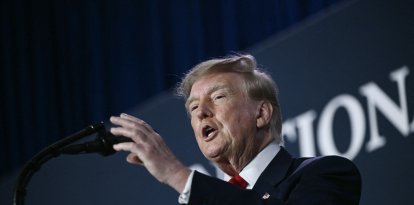
The president faced withering criticism from the left for not responding immediately to the incident and later for saying there were “very fine people, on both sides,” though he made clear he was referring to those on both sides of the debate about the removal of historical statues.
"You’re changing history. You’re changing culture," said Trump. "And you had people – and I’m not talking about the neo-Nazis and the white nationalists – because they should be condemned totally. But you had many people in that group other than neo-Nazis and white nationalists. Okay? And the press has treated them absolutely unfairly."
The rally even became one of the central justifications for Joe Biden’s 2020 presidential campaign.
"In that moment, I knew the threat to this nation was unlike any I had ever seen in my lifetime," Biden said in his 2019 video announcing his run for president. He spent the campaign frequently saying that “democracy is at stake" and warning that then-President Trump wanted to end it.
In the indictment last week, prosecutors allege SPLC allegedly directed a source to promote the Charlottesville “Unite the Right” rally and coordinate transportation for attendees – only to later use that same event as a fundraising hook to warn donors about the growing threat of extremism.
The source, identified as “F-37” in the indictment, was part of the “online leadership chat group that planned” the August 2017 event.
"[F-37] attended the event at the direction of the SPLC. F-37 made racist postings under the supervision of the SPLC and helped coordinate transportation to the event for several attendees. Between 2015 and 2023, the SPLC secretly paid F-37 more than $270,000.00,” the indictment reads.
Yet, despite directly funding one of the organizers of the incident, SPLC deployed its then-director of intelligence Heidi Beirich to comment on the alleged rise of white supremacy in the United States.
“Since the era of formal white supremacy – right before the Civil Rights Act when we ended [legal] segregation – since that time, this is the most enlivened that we've seen the white supremacist movement,” Beirich told ABC News just days after the rally.
Separately, she told CBS News that "In all of our years of tracking, we've never seen this many [hate] groups … "We've never seen their ideas penetrating the mainstream the way they are. I would say most Americans don't realize how much of this there is."
Media outlets would continue to rely on SPLC’s Beirich for years. In subsequent interviews the following year, she blamed President Trump directly for the alleged rise in white supremacy and claimed his comments after the rally and his policies emboldened extremists.
“This has been a year that has seen increasing divisiveness and bigotry, particularly in the mainstream of American life,” Beirich told reporters in February 2018. “There has been a substantial emboldenment of the radical right and that is largely due to the actions of President Trump, who has tweeted out hate materials and made light of the threat to our society posed by hate groups.”
In an interview with NPR later that year, nearing the anniversary of Charlottesville, Beirich said the president’s “anti-immigrant policies” like the “Muslim ban” have contributed to the flourishing of white supremacy.
Beirich did not respond to a request for comment from Just the News sent to her new organization, the Global Project Against Hate and Extremism.
CBS News, The Washington Post and NPR did not respond to requests for comment about their articles citing Beirich.
For decades, the SPLC has positioned itself as the nation’s preeminent watchdog, which maintains a controversial "Hate Map" that has increasingly labeled benign conservative organizations and religious groups as hate groups.
The DOJ alleges the SPLC utilized a network of shell companies – with names like "Center Investigative Agency" and "Fox Photography" – to disguise payments to individuals associated with those groups.
While the SPLC claims these were legitimate payments for undercover informants to monitor threats, the FBI and DOJ allege the funds were used to ensure that "hate" remained visible enough to justify the SPLC’s mission and purpose.
The group's recent financial success can likely be attributed to the claims of escalating white supremacy it had proffered. SPLC’s donations surged in the wake of the Charlottesville rally and its most recent financial filings show that the group is flush with cash, boasting nearly $790 million in net assets.
The organization reported a large surge in revenue following the Charlottesville rally in particular. In 2016, a year prior, SPLC reported net assets and public donations at $51 million. The following year, by October 2017, SPLC reported $133 million. This rapid change was driven in part by contributions from public figures like George Clooney and Apple CEO Tim Cook, Fox News Digital reported.
LATEST