Minnesota debate: Undocumented driver's license law raises questions about the election process
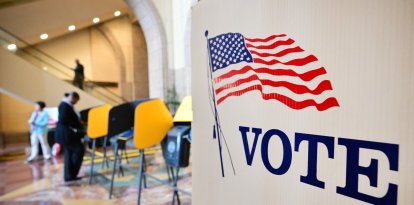
Currently, Minnesota does not require proof of citizenship to register to vote. Registration can be done with a photo ID - such as a driver's license - and a social security number, although the latter is not always required.

Image by Tim Walz (File)

A law signed in 2023 by the Democratic governor Tim Walz has returned to the center of political debate in Minnesota, after an exchange in the state House of Representatives raised questions about its potential impact on elections.
The regulation, known as Driver's License for All, allows people without legal immigration status to obtain a driver's license from the state. According to estimates by PolitiFact, about 81,000 undocumented immigrants currently reside in Minnesota.
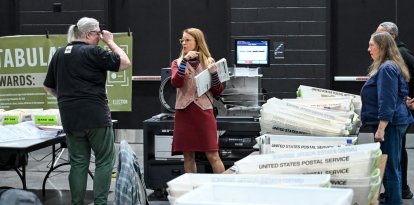
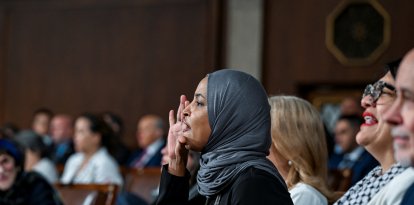
During a recent House session, a lawmaker asked an election official whether a noncitizen holding a driver's license could get to vote.
The official responded that, if the document presented met the identification requirements accepted at polling places, that person could cast a vote, which generated concern among some representatives about possible flaws in the electoral system's controls.
">THEN: Tim Walz signs “Driver’s Licenses for All” law, which allowed illegals to obtain government-issued photo IDs…for free.
— Derrick Evans (@DerrickEvans4WV) October 15, 2025
NOW: Minnesota election officials CONFIRM that illegals can vote in state elections using those driver’s licenses.
pic.twitter.com/L7tfz6PZVc
Currently, Minnesota does not require proof of citizenship to register as a voter. Registration can be done with a photo ID - such as a driving license - and a Social Security number, although the latter is not always required.
Critics of the measure argue that the lack of citizenship verification could open the door to irregularities, while supporters of the program claim that drivers licenses do not grant voting rights and that authorities have mechanisms in place to ensure that only U.S. citizens participate in elections.


The debate reflects a broader tension in the country over how to balance election security with access to identification documents for those living and working in the U.S. without legal immigration status.
How does the Driver's License for All work?
Its main objective is to ensure that all people living in Minnesota - regardless of their immigration status - can drive legally, access auto insurance and pass required tests.
Signed by Democratic Governor Tim Walz, in a public ceremony surrounded by community leaders and immigration advocates, the legislation argues that "this improves road safety, because more drivers would be registered, tested and insured, and it also facilitates the mobility of migrant workers and families."
Key aspects of the bill:
- Eliminates the requirement for citizenship or legal residency.
- Allows use of alternative documents.
- The license has the same format as that of legal residents.
- It does not grant voting rights or immigration status.
The Driver's License for All went into effect in October 2023. Minnesota thus became one of more than 15 U.S. states (along with California, Illinois, New York, among others) that allow driver's licenses for undocumented persons.
LATEST