After Senate review, Trump's big law will include state ban on regulating AI
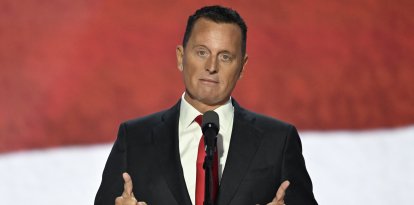
In his role as chairman of the upper chamber's Commerce, Science, and Transportation Committee, Ted Cruz (R-TX) made some key changes to the wording of Section 0012 of the House version.

Ted Cruz at an event in Nevada/ Wade Vandervort.

The state ban on regulating artificial intelligence (AI) may follow in the "One Big, Beautiful Bill." After weeks of uncertainty, the Senate confirmed that this provision included in Donald Trump's big bill meets the requirements of the Byrd Rule, a filter used to ensure that members of Congress do not over-include things in the budget reconciliation.
The confirmation came from Elizabeth MacDonough, a current Senate parliamentarian. This is a nonpartisan official who serves as the Senate's top parliamentary rules expert, advising the leaders of the day on procedural matters.
The debate was over Section 0012 of the House version, which sought to prohibit states from regulating artificial intelligence for the next ten years.

Politics
Democrats join Republicans in knocking down impeachment attempt on Trump over Iran strikes
Joaquín Núñez
After some wording changes pushed by Senator Ted Cruz (R-TX), chairman of the Senate Commerce, Science, and Transportation Committee, MacDonough determined that this provision complies with the Byrd Rule and will therefore remain in the text of the bill.
With these changes, states would be prohibited from regulating AI if they want to access federal funding from the Broadband Equity, Access, and Deployment (BEAD) program. In other words, it implements a conditional approach in which federal funds are contingent on states refraining from imposing the aforementioned regulations.
BEAD funds were approved in the Infrastructure Investment and Jobs Act (IIJA) of 2021 and seek to bring high-speed internet to rural or disconnected areas. To access the funds, each state draws up a plan with priority areas and sends it to the National Telecommunications and Information Administration (NTIA), which must approve the requested funds.
Therefore, according to the new Senate version, states must avoid regulating AI for ten years to receive these funds.
This provision is being resisted by some Senate Republicans, including Marsha Blackburn (R-TN) and Ron Johnson (R-WI).
Congresswoman Marjorie Taylor Greene (R-GA) has already advanced that she will vote against the bill if it returns to the House with such a provision included.
What is the Byrd Rule?
In other words, it is the filter used to ensure that only appropriate provisions are part of this process.
According to the Byrd Rule, a provision is designated as "extraneous" if it meets any of the following conditions:
- It does not change federal revenues or expenditures.
- The fiscal effect is merely incidental to other purposes of the provision.
- It is outside the jurisdiction of the committee that submitted it.
- Increases the deficit beyond the budget period (usually 10 years).
- Modifies the Social Security (OASDI) program.
- Does not respect budget reconciliation instructions.
LATEST