9/11: The longest day
There are probably only two people in the entire world willing to fight and capable of defending us: Donald Trump and Benjamin Netanyahu. And that is why they are always in the crosshairs of the West's enemies.
Published
Nearly 3,000 empty chairs, carefully lined up in New York's Bryant Park, serve as a silent tribute to the victims of 9/11 on its 25th anniversary. I vividly remember what I was doing on that fateful day during that darkest hour of recent history. And like me, so do many people. But for nearly 40% of the American population, bin Laden's audacious act is something they did not experience firsthand, but rather an event they have learned about through friends, social media, the press or museums.
That's why we shouldn't be surprised that even today, the question asked by a significant portion of the population is a very simple one: How could something like this happen? Or, to put it the same way but more rationally: Why did Al Qaeda, Islamic terrorism, attack America? And yet, 25 years after that day, the question we should be asking is not why, but whether it could happen again. If Islamic terrorists were able to, would they attack the United States again?
I'm afraid there's no easy answer.
According to the latest U.S. national security strategy, from December 2025, and the most recent Counterterrorism Strategy, from May, the threat of Islamic terrorism has taken a back seat, overshadowed by the rivalry between major powers and international criminal organizations. The success of the war on terror, the efforts of intelligence agencies and international cooperation have not only decimated the leadership and capabilities of groups like Al Qaeda and eradicated the caliphate imposed in Syria and Iraq by the Islamic State (ISIS), but have also limited the geographic scope of terrorist activity to parts of sub-Saharan Africa. The numerous isolated attacks, with stabbings or vehicle rammings as the primary modus operandi, do not pose a threat severe enough to put an entire nation in jeopardy.
And it's true. There have been many successes in the fight against Islamic terrorism on the operational front (despite the major strategic errors, particularly the inglorious withdrawal from Afghanistan, which returned power to the Taliban just as the 20th anniversary of 9/11 was being marked): Osama, eliminated; Al Zawahiri, eliminated; Al Zarqawi, eliminated; Al Baghdadi, eliminated; Al Quarashi, Abu Hasan and Abu Hafs, eliminated.
However, it is worth refreshing our memory: the official commission that investigated 9/11 attributed the operational failure to prevent those attacks to a "failure of imagination" that prevented officials from seeing and understanding what was being plotted. That's regarding how it could have happened. As for why, it's worth remembering that Islamic terrorists did not attack America because of its actions around the world, but because of what it was and what it represented: an infidel, decadent and decaying society, allied with the corrupt Gulf monarchies, which also had to be eliminated. Al Qaeda wanted to wage holy war, jihad against the West, striking its greatest enemy where it hurt the most: on its own soil, targeting the symbols of its economic and military power; and, had the passengers on United Airlines Flight 93 not prevented it, also against the institutions of its political power: the White House or the Capitol.
The destructive power of terrorism depends on two factors: its capacity to act and its willingness to do so. It would be a betrayal of 9/11 and a new failure of our imagination to think that, just because terrorist capabilities have been significantly diminished, the terrorists' will and desire for victory have been broken. Perhaps the best proof that Islamists never gives up on achieving their goals is the attack that Hamas launched against Israel on Oct. 7, 2023, and its determination to remain in power in Gaza even if that meant increasing the suffering of its own population—whom it considered expendable if it believed doing so would put Israel on the ropes of the global stage.
<cite class="c-detail__cite__title">Islamism has found in anti-capitalist forces a symbiotic ally with which to fight to impose its medieval worldview.</cite>
On the other hand, the European experience does not allow for much optimism. True, the days of major attacks—such as the March 11, 2004, attacks in Madrid; the Beslan school siege in Russia in 2004; the July 7, 2005, attacks in London; the Bataclan in Paris in 2015; or the Brussels airport attack in 2016, seem to have been overcome thanks to more intensive police and intelligence work, but attacks involving knives or vehicle ramming have continued to occur throughout Europe. However, that is not the worst of it. The worst part is the veil of silence that political authorities and the press have imposed to avoid any reference to the Islamic component, accepting as fact that these types of attacks stem from the psychological profiles of the mentally ill and disturbed. Why Islam would foster such profiles is something no one seems interested in addressing.
European leaders, far from seeking to prepare their populations for the persistent threat of Islamic terrorism, have chosen the path of collective complacency. And when the enemy is not named, it is impossible to defeat.
There are several reasons for this cowardly and suicidal attitude, but no one can ignore that the constant increase in the population from Muslim countries and the total inability to integrate them into Western society and values lead to the radicalization of the most frustrated—usually the youth. If this pattern is not identified by name, is impossible to stop. In that sense, the work of law enforcement is a never-ending task, like that of Sisyphus, doomed to failure for a mathematical reason: it is easier and cheaper to radicalize a young Muslim than to train a police officer.
It is very clear that the future is no longer what it used to be—or what we expected: a Muslim and communist mayor will be leading the celebrations marking the 25th anniversary of the Al Qaeda attacks on New York. And the pen with which he signed the municipal resolution authorizing those celebrations was a gift to his chief legal counsel, Ramzi Kassem, the defense attorney for Ahmed al Darbi, an Al Qaeda terrorist linked to 9/11—a move that has outraged the victims' families, among others.
Islamic terrorist groups may be weaker today than they were a few years ago. But their cause against the West is clearly not. Moreover, Islamists have found in anti-capitalist forces a symbiotic ally with whom to fight to impose their medieval worldview. But this, too, is nothing new: Khomeini used the Iranian communists to overthrow the Shah; he then massacred them and imposed his fundamentalist Islamic republic.
All it takes is a little reflection to see things clearly. That is why the global left is at war with history, seeking to impose its version of events. If they win, we will be doomed to repeat our mistakes, and sooner or later, another 9/11 will take us by surprise.
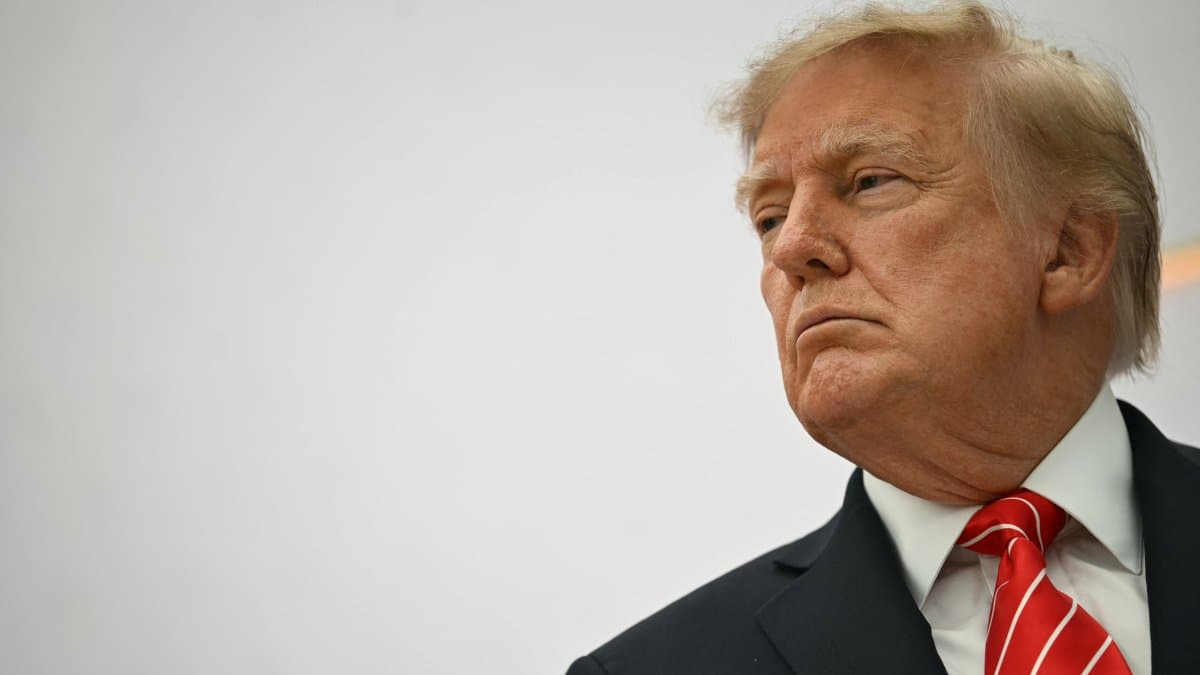
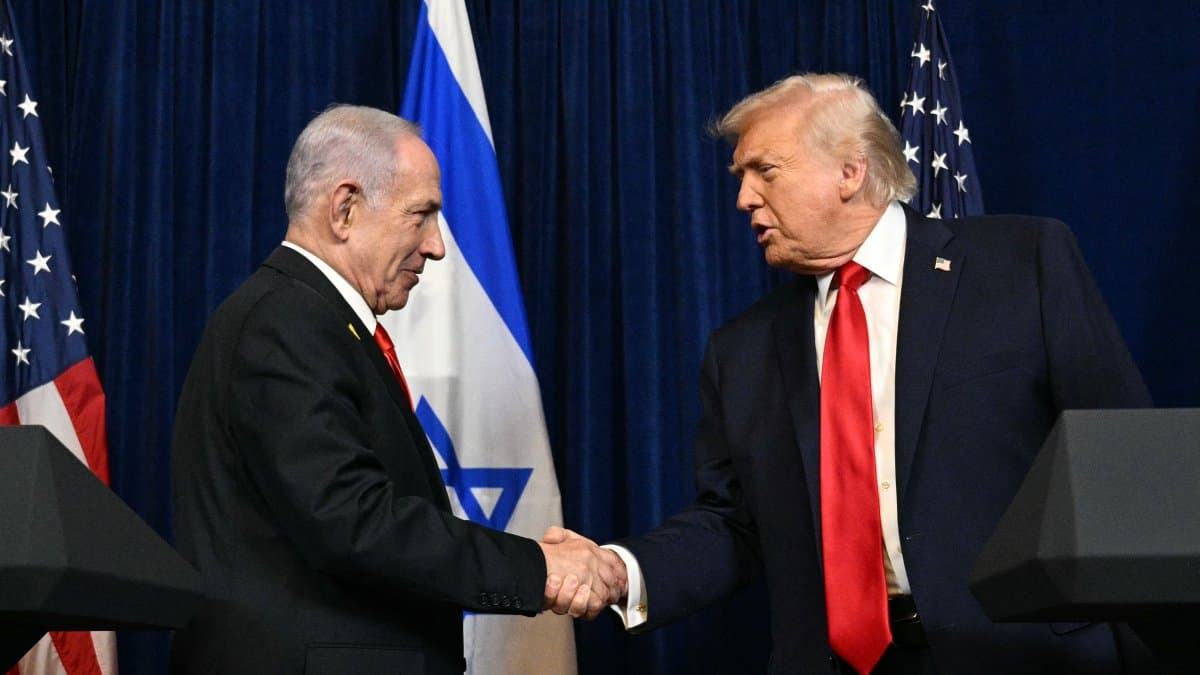
There are probably only two people in the entire world willing to fight and capable of defending us: Donald Trump and Benjamin Netanyahu. And that is why they are always in the crosshairs of the West's enemies, both from outside and within our societies. That is also why they are so hated—today, and 25 years from now.
🛠 Do you think there is an error in this article?
Recommendations

LATEST