One Year Into Operation Southern Spear: The Numbers Prove Its Success
A U.S. official told Voz Media that illicit maritime activity has declined by 65% in the Western Caribbean, 60% in the Eastern Caribbean, and nearly 50% in key areas of the Eastern Pacific, delivering striking results in the fight against cartel networks.
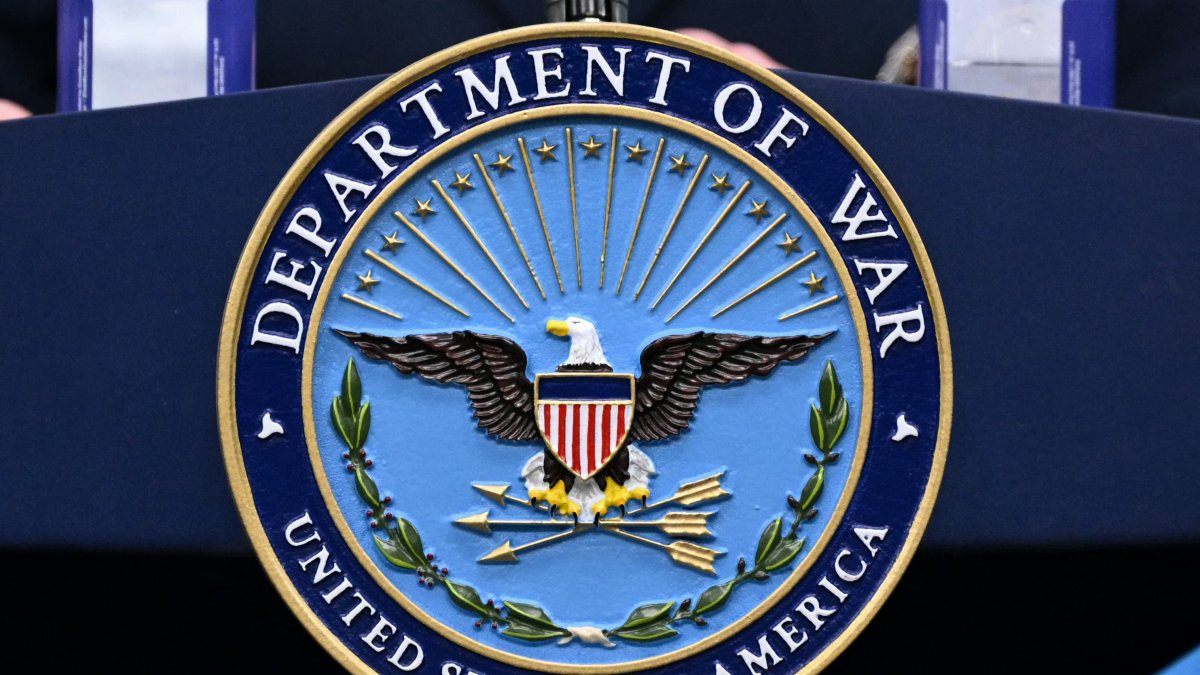
Logo del Departamento de Guerra/ Mandel Ngan
One year after the launch of Operation Southern Spear, the numbers are clear: the dramatic decline in illicit maritime activity is proof of the success of this administration’s more aggressive military approach to the cartel threat. A U.S. official told Voz Media that illicit maritime activity has declined by 65% in the Western Caribbean, 60% in the Eastern Caribbean, and nearly 50% in key areas of the Eastern Pacific, delivering striking results in the fight against cartel networks.
President Donald Trump directed the development of a strategy to defend the American homeland against the cartel threat using direct military force. The Department of War executed the first-ever plan of its kind. The results have been remarkable, including the largest and steepest reduction in U.S. casualties inflicted by cartels in American history.
Launched in September 2025, Southern Spear is a large-scale U.S. military and counter-narco-terrorism campaign aimed at disrupting cartel networks and protecting the American homeland. The effort has also helped lay the groundwork for a broader hemispheric coalition against the cartels: the Americas Counter Cartel Coalition, or ACCC, a military partnership of nations committed to confronting the threat with hard power.
But the significance of those reductions extends beyond the numbers themselves. “Those numbers matter because every disputed route, every denied corridor, and every degraded network makes it harder, makes it more expensive, and more dangerous for narco-terrorists to move their poison towards the United States of America,” a U.S. official said. He added that the results demonstrate what can happen “when American military power is applied with purpose and in line with President Trump’s vision.”
That approach reflects a broader shift in how the Trump administration has defined the cartel threat. The administration has made clear that it is not simply a drug problem—it is a national security and terrorism crisis that has already cost more American lives than any other adversary in recent years. The damage extends far beyond the deadly spread of fentanyl, which has been classified as a weapon of mass destruction, to the violence these organizations export into American communities. Gang killings, targeted assassinations, bloodshed, extortion and armed robberies are all part of the same transnational criminal infrastructure operating across the Western Hemisphere. That reality has driven the administration to move beyond the traditional war on drugs and confront the cartels as the sophisticated terrorist organizations they have become.
For the first time, the Trump administration is treating these organizations and their upstream and downstream allies as part of a broader continuum of terrorist activity for which kinetic force may be necessary, the official said. Traditional law enforcement, he argued, is insufficient against groups that control physical territory, influence judicial and political outcomes, operate outside the legal system and maintain armed forces across Mexico, Central America and South America. When their interests are threatened, these organizations resort to lethal violence without hesitation, making them fundamentally different from criminal groups that can be addressed through conventional law enforcement.
The ACCC is a key part of that broader strategy. The official emphasized its military function, describing it as “the military arm of the Shield of Americas” and explaining that “the A Triple-C is the formal military coalition of states who have pledged to use hard power, military power, to fight this enemy of civilization.”
Beyond the immediate fight against cartel networks, the administration’s strategy is intended to send a clear message: the United States is willing to use lethal force when necessary to protect its core interests.
The official said the actions taken under President Trump have had “a huge deterrent impact,” demonstrating that Washington is no longer allowing foreign bureaucrats to determine when and how America can defend itself. Instead, the administration is making decisions based on what the official described as “our own self-interest” and direct assessments of the nation’s security needs. The message is straightforward: America is prepared to use its military power decisively, and its adversaries understand that the threat of lethal force is no longer merely theoretical.
But what, ultimately, would victory look like? The official said the administration’s objective goes far beyond disrupting individual drug shipments. He defined victory as the moment when “all of the territory in our partner nations is under the control of partner governments,” rather than criminal organizations. That means Colombia controlling Colombia’s territory, Ecuador controlling Ecuador’s territory and Venezuela controlling Venezuela’s territory, with the same goal extending to every country in the Western Hemisphere. The official stressed that the broader purpose is to protect the United States, adding that President Trump “made clear we can and will strike wherever we need to.”
That objective requires stripping cartel organizations of the territory and military capabilities that allow them to operate as armed forces and project power across borders. Citing a central lesson from the war on terror, the official said, “you have to deprive the adversary of territory.” Success, therefore, means these organizations can no longer raise armies, control territory, dominate commerce, export violence into American communities or kill Americans by trafficking drugs into the country. “There’s always going to be crime,” he said, but the administration is targeting something far more powerful: organizations capable of exercising territorial and political control and projecting that power into the United States.
After one year, Operation Southern Spear represents a decisive shift in how the United States confronts the cartel threat: not as a conventional drug problem, but as a national security threat requiring military power, the disruption of terrorist networks and the elimination of their ability to control territory and project violence. The Trump administration has made clear that it is willing to use lethal force to defend American interests and has challenged governments across the hemisphere to do the same. Under this administration, the Western Hemisphere is no longer a safe haven for drug cartels.
And the results are difficult to dismiss: a 60% reduction in illicit maritime activity in just one year is a remarkably clear measure of the operation’s success and of what can happen when the United States chooses to confront the cartel threat with sustained military force rather than treating it as a conventional law-enforcement problem.
LATEST