The alarming anti-Americanism of the Democratic Party
To understand what's wrong with the Democratic Party, it's worth starting with the most uncomfortable character these days: Hasan Piker, a thirty-something, New Jersey-born, Istanbul-raised streamer with millions of Twitch followers and an uncanny ability to say outrageous things and monetize them.
Published
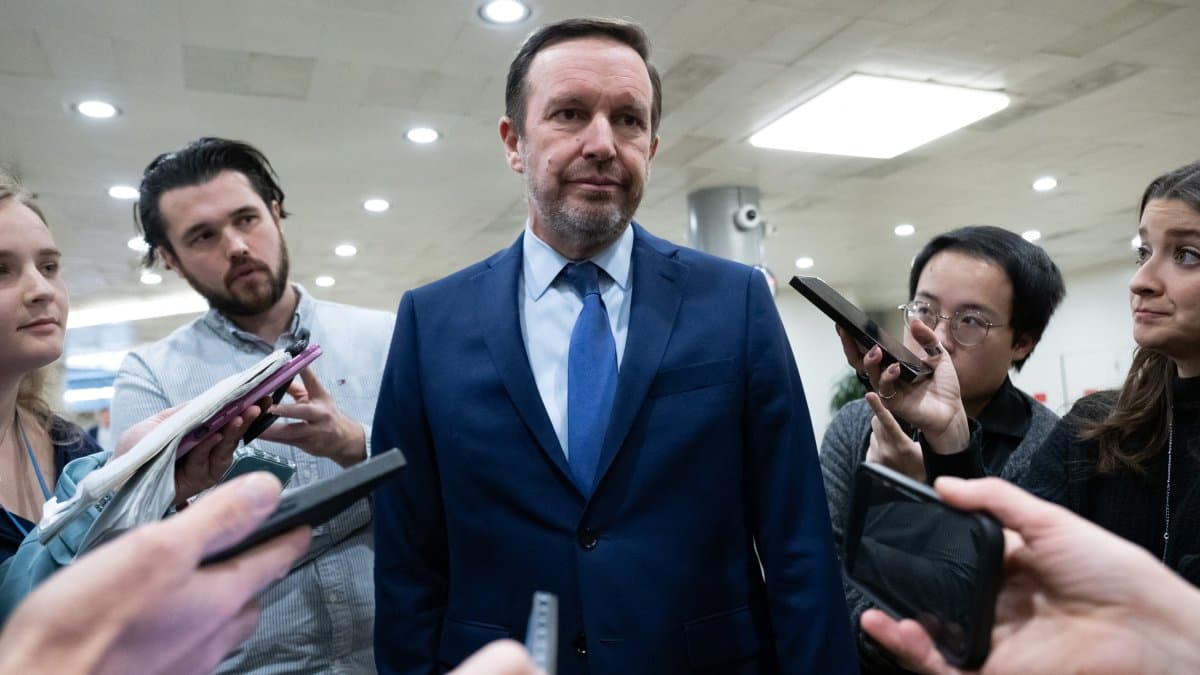
There are weeks when the symptoms of a disease become so obvious that it is no longer possible to look away. Chris Murphy, a Democratic senator from Connecticut, wrote an excited and cheerful "awesome" on X in response to a post reporting that 26 ships in the Iran had managed to circumvent the U.S. blockade in the Gulf of Oman, openly wishing a military defeat on the country he claims to serve. This would only be a scandal if it were an isolated event. But it is not.
In the span of seven days, three other facts illuminated the state of one of the two major parties that have governed the most powerful republic in the world. All these facts form a diagnosis.
I. Hasan Piker and the mirror problem
To understand what is happening to the Democratic Party, it is worth starting with the most uncomfortable character these days: Hasan Piker, a thirty-something streamer, born in New Jersey and raised in Istanbul, with millions of followers on Twitch and an uncanny ability to say outrageous things and manage to monetize them.
On Sunday, April 13, Piker appeared on "Pod Save America," the podcast founded by Jon Favreau, a former Barack Obama speechwriter. The logic of the encounter turned nasty from the start: Favreau tried, with remarkable patience, to give Piker a chance to qualify his more extreme statements. He asked him, juggling to disguise the undisguisable, whether when he said that Hamas is "a thousand times better" than Israel meant it or was it just rhetoric, a sign of solidarity. Piker's response was direct: "I'm a lesser-evil voter, and therefore I would vote for Hamas over Israel every time."
This is not the first time Piker has said things of this caliber. He has a history of statements that any serious political party should consider incompatible with its platform: he said that United States deserved 9/11, asserted that it doesn't matter if there were rapes on Oct. 7, called Zionism an exterminationist supremacist ideology, praised Mao Zedong as one of the great leaders of the world, and when asked which country had implemented socialism in a way he liked, his answer was China.
None of this, however, has stopped "establishment" Democratic figures from legitimizing him as a political voice. Bernie Sanders has appeared on his platform. Rep. Ro Khanna, Chicago Mayor Brandon Johnson and former Obama advisor Ben Rhodes are regular guests on his show. And in Michigan, Democratic Senate candidate Abdul El-Sayed campaigned alongside Piker in April 2026.
But what makes the interview on "Pod Save America" so revealing is not what Piker said, but the situation in which he placed Favreau, who laid a thousand bridges for Piker to moderate his vitriol, and the streamer rebuffed them all. The episode functioned as a mirror of the party's central dilemma: how to relate to influencers who have reached positions that a decade ago would have been condemnable and today are common currency.
Hasan Piker represents the triumph of a worldview cultivated for decades in universities and amplified by social media, which turned "solidarity with the oppressed" into anti-Americanism and terrorist apologism. But the Democratic Party is responsible for allowing this radical colonization.
II. Michigan and the logic of the purge
On Sunday, April 20, the Michigan Democratic Party held its delegate convention to elect its candidates to the University of Michigan Board of Regents. Dearborn attorney Amir Makled defeated incumbent regent Jordan Acker to become one of two Democratic candidates for the body that governs one of the nation's most prestigious universities.
Makled's victory was not a surprise to those who follow Michigan university politics, but it does represent a threshold that the party has deliberately crossed. Makled is an attorney who represented those criminally charged with participating in the illegal anti-Israel encampment on the Ann Arbor campus in 2024. And he is the one who reposted on X messages calling Hezbollah leader Hassan Nasrallah a "martyr"; that honored Hezbollah's security chief, Abu Ali Khalil; and that shared antisemitic posts, including content from Candace Owens where she called Israelis "demons." The campaign against Jordan Acker singled him out for being Jewish, knowing that his home had previously been vandalized by anti-Israeli activists.
Makled's coincidence with Piker's political ecosystem is not accidental. Makled appeared at the same rally where El-Sayed campaigned alongside the streamer. The node connecting these three names (Piker, El-Sayed and Makled) is the tactical alliance between radical pro-Palestinian activism, anti-Israeli rhetoric, and the Democratic Party's grassroots structures in Michigan, a state that will play a decisive role in the upcoming election. The signal is not reassuring.
III. Fetterman: The last man standing?
In this context, one figure sticks out for his willigness to stand alone: Senator John Fetterman, a Democrat from Pennsylvania. On Saturday, April 18, Fetterman appeared on "The Arena," a CNN program hosted by Kasie Hunt, and said what most of his colleagues dare not say. Asked by Hunt if the Democratic Party has a problem with antisemitism, Fetterman said, "Yes, definitely." And he listed cases such as that of the Democratic Senate candidate for Maine, Graham Platner, who is leading in the primary despite having a tattoo of the Nazi Totenkopf symbol on his chest.
A high percentage of Democrats hold a negative view of Israel. In addition, the overwhelming majority of Senate Democrats voted to block an arms sale to Israel that same week. "We have a serious problem in my party," Fetterman said. "As Democrats continue to abandon Israel, I'll be the last man standing if that's what's necessary." Fetterman has taken to the rooftop of his office waving the Israeli flag and has repeatedly voted in favor of military support for Israel against the tide of his bloc.
But if Fetterman is an anomaly today, it is not because he has run away from his party's values, but because his party seems to have gone mad. Fetterman has a progressive record on domestic policy, on labor rights and on health care. What makes him politically unusual is that he refuses to subordinate his moral compass to the demands of a base that has radicalized its positions at a speed few anticipated.
The problem with the Democratic Party is that Fetterman is the exception and not the rule. A party that can comfortably accommodate a candidate with a Nazi tattoo and reject Fetterman as a maverick has its priorities backwards.
IV. The state party at risk
The Democratic Party is, along with the Republican Party, one of the two pillars on which rests the two-party system that has structured American democracy since the mid-19th century. In that sense, the two major parties function as state parties and are a constitutive part of the institutional architecture of the country, the means through which the two halves of the country channel their political participation. The fact that one of them is experiencing such a profound identity crisis is not a matter that affects only its militants; it affects the system as a whole.
For decades, the Democratic Party represented a heterogeneous coalition that included the labor movement, minorities, middle-class liberals and internationalists who believed in democratic alliances and the postwar global order. It was a party with its internal contradictions, but anchored in the republican tradition and the American national project.
What this week's episodes reveal is a process of transformation that has accelerated and threatens to dissolve those anchors. It is not just that the party has pivoted toward positions more critical of Israel. A part of its militant base and its emerging figures have adopted an interpretive framework in which the distinction between criticizing a government's policies and celebrating the terrorist organizations that attack it has become blurred or outright irrelevant.
Something is failing in the filtering mechanisms that should operate so that the party can function within the framework of a liberal democracy. There is a fundamental difference between a progressivism that criticizes power from support for the democratic project and one that has come to see that project as the real enemy. Anti-Americanism is taking hold of the Democratic Party, disconnecting its goals and values from those of the nation it purports to represent. And that not only destroys it internally, it also harms the nation. A party that can no longer distinguish between criticizing its country and wishing it to lose a war has ceased to be opposition and become something else.
🛠 Do you think there is an error in this article?
Recommendations


LATEST