'I can't breathe': The Henry Nowak case and the deadly price of DEI indoctrination in institutions
Judge William Mousley, in handing down a sentence of life imprisonment with a minimum of 21 years, was categorical: Henry Nowak said nothing racist. The charge was, in the words of the prosecution, "an evil lie." None of that mattered at the moment when it mattered most.
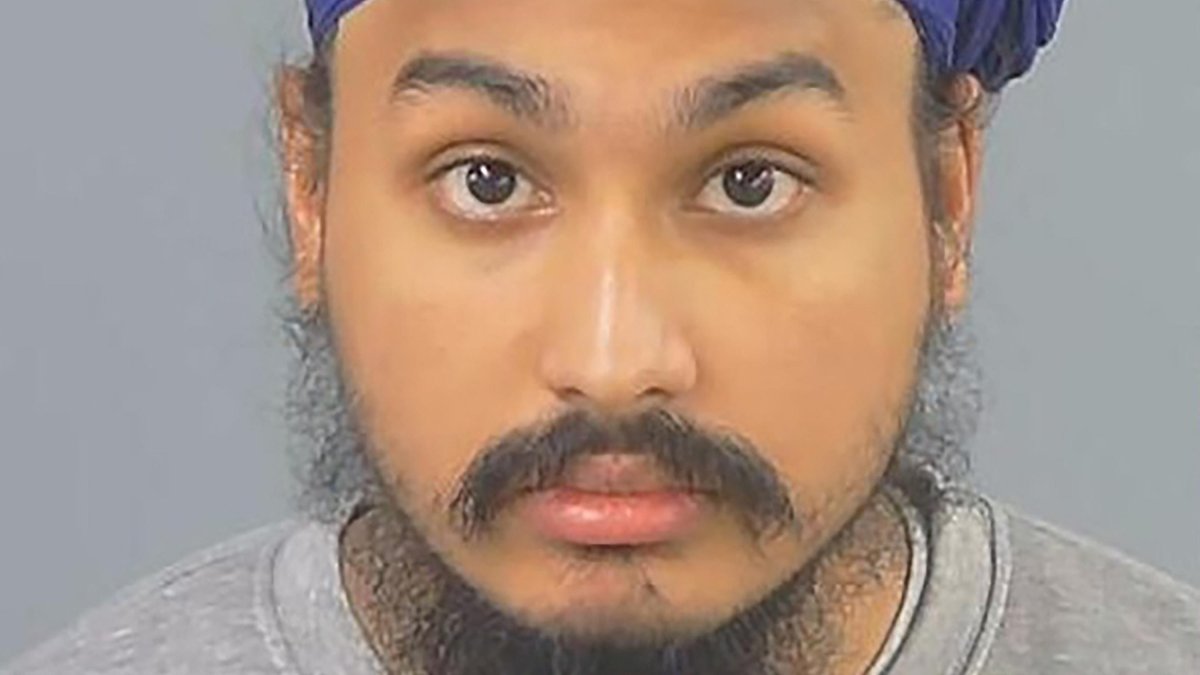
Image of Vickrum Digwa
What Henry Nowak suffered in the last moments of his life was revealed, finally, by police body camera footage. His horrific murder takes on a dark dimension with this footage, the result of a system that has been deliberately reconfigured to respond to ideological cues rather than evidence and common sense.
Vickrum Digwa, 23, stabbed him five times with a 21-centimeter dagger (two wounds to the legs, one to the face, a fatal one to the chest) and then, with a perversity described at trial as "obsession with guns," filmed his victim bleeding to death on the floor. When the police arrived, Digwa accused the dying man of insulting him with racist remarks and ripping off his turban.
And the police believed him. The man on his feet. The speaker. What did Digwa know, instinctively, haughtily, superbly, vilely about the spirit of the society in which he lives, that made him certain that such a hoax would work?
He knew that the white teenager lying on the ground with his chest pierced, repeating "I've been stabbed, I can't breathe," would be handcuffed. He must have enjoyed watching the young boy being read his rights as he bled and begged. Digwa must have rejoiced that the police arrested his victim for assault and only when he lost consciousness did they call an ambulance. When it was too late.
Judge William Mousley, in handing down a sentence of life imprisonment with a minimum of 21 years, was categorical: Henry Nowak said nothing racist. The charge was, in the words of the prosecution, "a wicked lie." None of that mattered at the moment when it mattered most.
To understand the tragedy of the Henry Nowak case it is necessary to read the Hampshire Constabulary's Action Plan Against Racism. In 2020, Hampshire invested millions in mandatory training on "organizational culture, prejudice, microaggressions, privilege and the importance of being an ally." Compliance with these principles was tied to pay progression and performance appraisals. Anyone who did not demonstrate sufficient commitment to the new anti-racist paradigm had their promotion compromised. The College of Policing reinforced the framework with an instruction that is revealing in retrospect: officers "should not challenge the initial perception" when someone reports racism. The Independent Office of Police Conduct (IOPC), meanwhile, warned that demanding "tangible" or "conclusive" evidence of racism makes complainants feel their experiences are neither real nor valid.

Translated: if someone says they were discriminated against, believing it is mandatory. The presumption of innocence became a crime. What if it turns out that the whistleblower is lying... the system has no protocol for that, assuming that such a scenario is impossible. The result of years of this indoctrination was a police with ideologically hijacked judgment, unable to read reality before their eyes because reality contradicted the learned script: a minority man cannot be the aggressor. A white student cannot be the victim. Any evidence that points in that direction must be challenged, not the accusation.
There is a temptation to think that the problem is soluble with a change in policy. That if the DEI rules are repealed, fairness and reasonable suspicion will be restored and institutions will once again function properly. But this belief is dangerous because it is naive. People trained for years in certain frameworks of interpretation, with careers built on demonstrating adherence to those frameworks, with internal cultures that reward certain behaviors and penalize others cannot change overnight. It takes decades for a culture to transform, and then only if there is a deliberate and sustained will to do so.
The officers who handcuffed Henry Nowak did not act contrary to their training. They acted exactly according to it. They were not rogue cops; they had internalized, by dint of repetition and professional incentives, that the charge of racism was the most relevant fact at any crime scene involving an ethnic minority. Everything else, including a teenager bleeding to death in front of them, was subordinated to that hierarchy of priorities.
The Nowak case is not the only example. Valdo Calocane, a man who murdered three people, enjoyed inadequate psychiatric supervision because professionals feared they would be accused of racism for the overrepresentation of black youth in detention centers. Axel Rudakabana, the Southport killer who in 2024 killed three girls and injured many more in a dance class, had been reported by his school principal, who was accused of racist risk perception and deterred from acting. It is a system designed to produce exactly these results.
There is a dimension to the Nowak case that transcends the DEI debate and points to a deeper degradation of the social contract around public safety. In theory, a security system exists to protect victims. But Henry Nowak was handcuffed as he bled to death. He was treated as a suspect at a time when he was, literally, a homicide victim in progress. Digwa, the killer, was never handcuffed. According to Henry's father, "he was treated decently."
This reversal is not accidental. It is the logical consequence of a system in which the category of "potential victim of racism" outranks the category of "actual victim of violence" in procedural rank. When institutions are trained to view the world through the prism of hierarchies of oppression, physical reality is subordinated to the ideological narrative. A white boy bleeding to death does not trigger protection protocols. The perversion is systemic and it is structural. And it is extraordinarily difficult to resolve because it strikes at the very core of what a security officer must do: observe, evaluate evidence and act on the facts. If that process has been replaced by the application of a pre-established ideological hierarchy, no amount of procedural reform will correct it without first dismantling the hierarchy.
It is impossible not to notice the parallels and differences between the treatment that George Floyd's death received and that which Henry Nowak's is receiving. It is a question of why one death generates a global movement and the other barely generates headlines and only after the man with the greatest ability to make a news story go viral, Elon Musk, talked about it for days.
The answer is simple, because Floyd's death fit a narrative useful to large swaths of cultural, media and institutional activism whose job it is to amplify confirmation bias, while Nowak's death contradicts it.
There is no quick fix to prevent what happened to Henry Nowak from happening again, though what DEI ideology has done to government institutions around the world and its potential lethality is worthwhile. What is needed is harder and slower: a sustained political will to recover the principle of institutional fairness; the elimination of professional incentives that reward ideological adherence; the effective protection of agents who point out real problems without being destroyed for doing so; and, above all, the intellectual honesty to recognize that the misnamed "anti-racist" movements and policies were never about fighting racism but about implementing privilege, systems of intersectional hierarchies and quotas of power.
Henry Nowak's father said on the courthouse steps that his son "should not have died on the streets of Southampton in police custody." He is right. And he is also right that "justice alone is not enough." Because justice came late, came incomplete, and arrived without getting to the root of the problem.
LATEST