Trump is not so unpredictable when it comes to Israel
Regarding Iran, at least this administration recognizes that the mullahs bargain in bad faith and weaponize diplomacy.
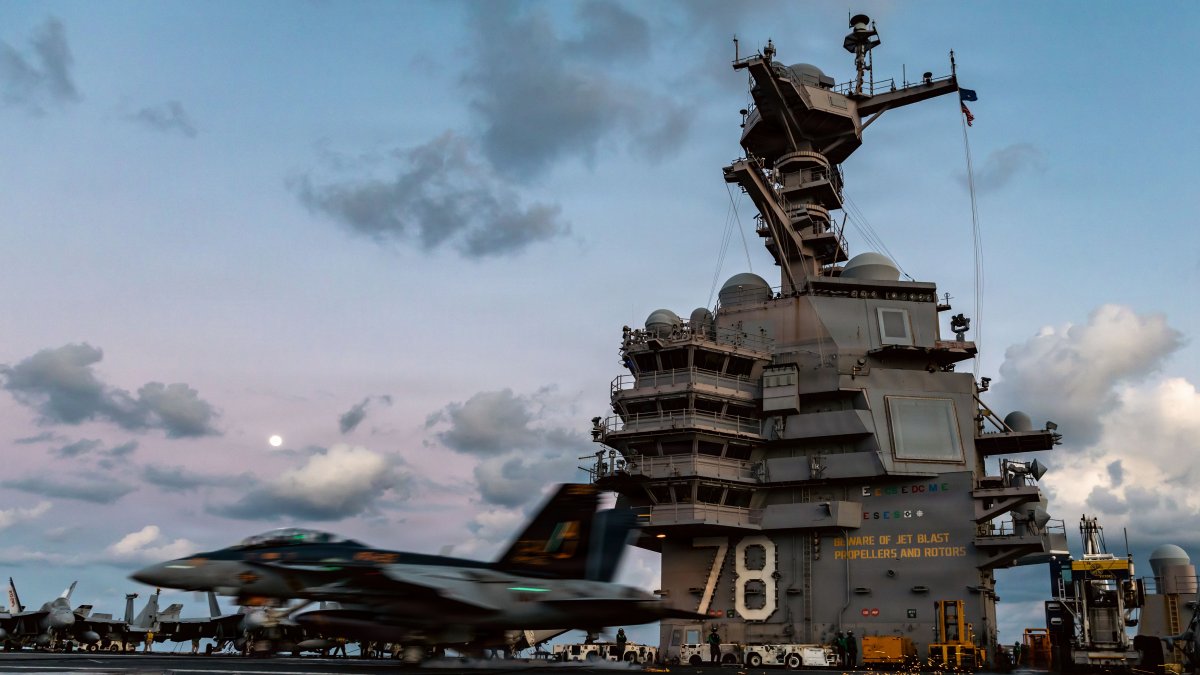
The USS Gerald R. Ford, during Operation “Epic Fury”
I warned back on March 26 that U.S. President Donald Trump would likely end the war on terms that left Iran’s core capabilities intact, declare victory and once again cast Israeli Prime Minister Benjamin Netanyahu as Charlie Brown watching Lucy pull away the football. That is precisely what happened.
Both leaders are now engaged in the time-honored ritual of putting lipstick on a pig—packaging four weeks of Sturm und Drang (“Storm and Stress”) as a historic achievement while hoping that their publics won’t look too closely at what was actually accomplished.
We are overwhelmed by the statistics from the Israel Defense Forces and the Pentagon.
The IDF reports 2,700 infrastructure targets destroyed and 1,400 Hezbollah terrorists killed in the latest engagement. At face value, these figures are impressive. Scrutinized critically, however, they prompt an unsettling question: If Hezbollah was as severely diminished as Netanyahu previously claimed, why were so many targets and fighters still available?
Data without context is not evidence. It is propaganda.
World
US sends more than 10,000 troops to the Middle East as Trump presses Iran to accept peace deal
Emmanuel Alejandro Rondón
The same applies to Iran. Yes, the United States and Israel conducted more than 10,000 strikes each—a staggering figure that reveals little about Iran’s capabilities. But what remains is what matters.
U.S. intelligence assessments indicate Iran retains thousands of ballistic missiles, substantial underground launcher capacity and roughly half its drone arsenal. Its battered navy still threatens Gulf shipping with fast-attack boats. The Strait of Hormuz is effectively closed, with Iran levying tolls on the few vessels allowed through. Its enriched uranium stockpile—sufficient for multiple nuclear weapons—remains within reach of the regime. Its proxy networks in Lebanon, Iraq and Yemen are bruised but not broken, still willing to bleed for Tehran.
And the regime itself—committed to Israel’s destruction, implacably hostile to the United States, and ideologically wedded to radical Islamic dominance—remains in power, already rebuilding with Russian and Chinese assistance. That may not be a defeat, but it is not a victory. At best, it is a pause.
The good news is that U.S. Vice President JD Vance did not let Iran replay the Obama nuclear talks—drawn-out negotiations producing a deal that Tehran violated almost immediately. Former President Joe Biden also spent two years in similarly futile engagement. At least this administration recognized that Iran bargains in bad faith and weaponizes diplomacy.
Trump insisted that Iran reopen the Strait of Hormuz as a precondition for negotiations, but Tehran disregarded him because its leadership believes that it endured the confrontation and that the economic pressure it imposed on the West eroded Western resolve. Instead of capitulating as Trump expected, Iran negotiated from a position of perceived strength—demanding reparations, U.S. military withdrawals from the Middle East and exclusive control of the Strait.
Now, Trump threatens to blockade Iranian ports along the Strait, aiming to squeeze Iran’s economy. Time will tell if this is a real strategy or just bluster.
To his credit, Trump didn’t allow Iran to link Israel’s fight with Hezbollah to the negotiations, though he did pressure Netanyahu to be a “little more low-key” in dealing with the terror group. The cowardly French, who have done nothing to confront the Iranians or Hezbollah, not surprisingly, sided with Iran.
European appeasement of Tehran has led to consequences they now lament. The economic shock hits Europe harder than the United States, yet instead of confronting their own strategic timidity, European leaders urged Washington to stand down. This may bring short-term relief, but it fails to tackle the deeper threat: Iran’s sustained export of radical Islamist ideology, which endangers Europe more than America.
For nearly 50 years, the Islamic Republic waged a sustained, one-sided war against the United States and its allies—seizing hostages, bombing embassies and barracks, plotting assassinations, sponsoring terrorism, arming proxies to kill American soldiers and building the missile arsenal now pointed at every capital in the Middle East. Washington absorbed blow after blow, treating each outrage as an isolated incident rather than a chapter in a long campaign.
Trump finally chose to respond. But he did so with one hand tied behind his back—threatening overwhelming force while stopping short of the decisive action that might have changed the equation. The result is that Iran has been weakened, but the regime, its ideology and its nuclear-weapons program survive.
Now that Iran’s duplicity has been laid bare once more, Trump must resist the pull toward premature negotiations. No deal struck before the original objectives are achieved will be seen as anything other than a lifeline for a regime that survived. Iran’s leaders will declare victory simply by still being in power, and that perception will keep its population oppressed and neighbors endangered.
The hesitation to strike infrastructure that serves both military and civilian purposes must end. War does not offer clean targets, and an enemy that deliberately embeds its war machine within civilian systems has made its own population a shield. That is a moral burden Iran’s regime bears, not the forces trying to dismantle it.
If the Iranian people choose to rise, they should not be left to face their oppressors alone. The United States has a model for this. After World War II, America did not abandon the German people because it sought to destroy the Nazi regime. It helped rebuild a nation once the regime that had hijacked it was gone. The same framework applies here. The Iranian people are not the enemy. Their government is.
But that support must wait until the regime falls. The Nazis were defeated; only unconditional surrender brought lasting peace. Announcements of success, premature ceasefires and face-saving deals for Tehran only pause the conflict. The mission must be finished. Resolve is what matters now.
LATEST