






Iranian official behind Trump assassination plot killed as U.S. prosecutes would-be assassin in NYC
An alleged Islamic Revolutionary Guard Corps (IRGC) operative is currently on trial in Brooklyn for his role in an assassination plot targeting Donald Trump. The U.S. just announced that the leader of the IRGC unit behind the plot has been killed in an airstrike.
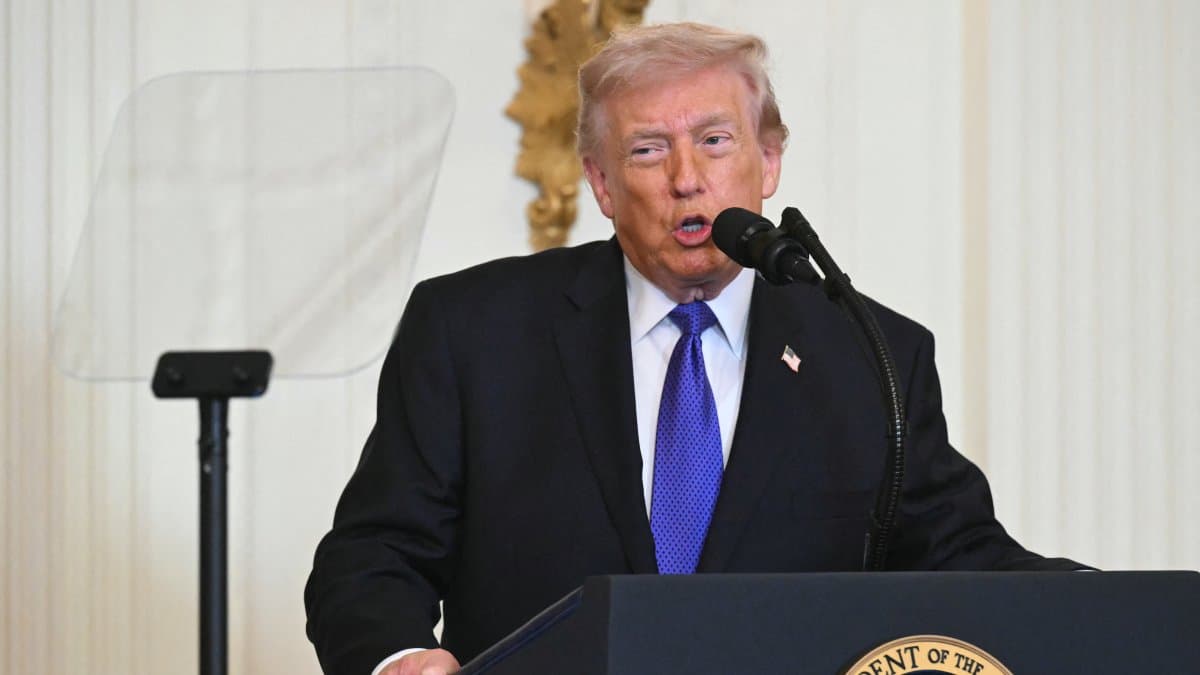

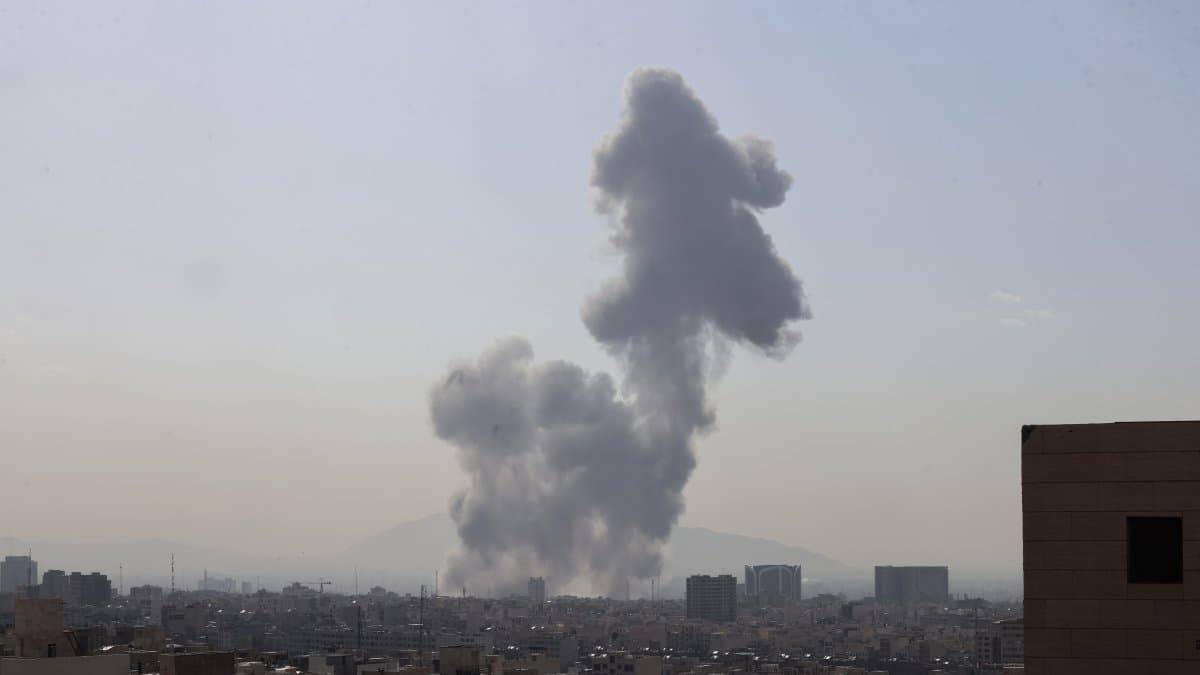
The Islamic Revolutionary Guard Corps leader who was allegedly behind assassination plots aimed at now-President Donald Trump in 2024 has been killed amidst U.S.-Israeli strikes in Iran, Secretary of War Pete Hegseth announced on Wednesday.
“The leader of the unit who attempted to assassinate President Trump has been hunted down and killed. Iran tried to kill President Trump, and President Trump got the last laugh,” Hegseth said.
Israeli media outlets reported on Wednesday that Rahman Mokadam, described as the head of the IRGC’s special operations division, was the Iranian official who had been killed. The exact name of the IRGC official has not been formally confirmed by the U.S. military.
Federal prosecutors have alleged that two Iranian-linked plots to assassinate then-candidate Donald Trump — both allegedly linked to Iranian intelligence services — were launched in 2024 as Iran sought to meddle in the election to stop Trump’s return to the White House, with one of the trials kicking off last week just days before U.S. and Israeli strikes commenced against the Iranian regime on Saturday.
The Justice Department filed charges against Pakistani national Asif Merchant and against Afghan national Farhad Shakeri for their alleged roles in Iranian-backed assassination plots. The former defendant’s somewhat murky plot seemingly targeted Trump, while the latter defendant’s apparently more sophisticated plot was also aimed at the president.
Shakeri remains at large in Iran. Merchant has pleaded not guilty, and the trial against him began last week shortly before the initiation of Operation Epic Fury on Saturday.
Trump: “They tried twice. Well, I got him first"
The U.S. and the Israelis launched a joint attack early Saturday morning against Tehran, killing Iranian leader Ayatollah Ali Hosseini Khamenei and degrading the Iranian military.
Trump said on Sunday night that "I got him before he got me” in reference to the Ayatollah, according to ABC News. “They tried twice. Well, I got him first."
Israeli journalist Amit Segal first tweeted on Wednesday morning that “Israel has eliminated Rahman Mokadam, head of the Islamic Revolutionary Guard Corps special operations division, and the man behind the assassination attempt on Trump on the eve of the 2024 presidential election. Trump was informed of this in the past few hours by Israel.”
Hegseth said during his Wednesday press conference alongside Gen. Dan Caine, Chairman of the Joint Chiefs of Staff, that the IRGC official who had allegedly played a role in the Trump assassination plot had been placed on a target list during Operation Epic Fury, but that killing the IRGC leader had not been a top priority and had not been raised by Trump at all.
“We’ve known for a long time that Iran had intentions of trying to kill President Trump and/or other U.S. officials,” Hegseth said. “And while that was not the focus of the effort by any stretch of the imagination — in fact never was raised by the president or anybody else — I ensured, and others ensured, that those who were responsible for that were eventually part of the target list.”
The war secretary added: “It wasn’t the beginning of the effort — we were focused on missiles and launchers, and that’s the focus — but ultimately, if we had the opportunity to get at those who were trying to get at Americans specifically, we would. And so, we eventually had the opportunity to do that from the air.”
“Iran has even attempted to assassinate the U.S. President”
The Iranian assassination plots are detailed in press releases and court filings by the Justice Department and the FBI and, while prosecutors have not linked the Iranian efforts to the other assassination efforts against Trump at a Butler, Pennsylvania campaign rally in July 2024 and at his Florida golf course in September 2024, the Iran-origin murder-for-hire allegations show the multitude of threats against Trump’s life during the 2024 presidential campaign.
The cases also highlight the lengths to which the Iranian government was seemingly willing to go to attempt to keep Trump out of the Oval Office for a second term.
The Office of the Director of National Intelligence (ODNI) has categorized both Iranian-backed assassination plots against Trump from 2024 as examples of “Notable Attack Planning” by the Iranian regime’s IRGC.
Mike Waltz, the U.S. Ambassador to the United Nations, had brought up the IRGC assassination ploy during a Saturday emergency meeting of the UN Security Council.
“For 47 years, the Iranian regime has chanted, quote, ‘Death to America.’ At every turn, at every opening of its Parliament, it has sought to eradicate the State of Israel,” Waltz said. “It has waged an unending campaign of bloodshed and mass murder. It is responsible for a series of unprovoked armed attacks targeting the United States and Israel, violations of the UN Charter, and threats to international peace and security across the Middle East.”
The Iranian government also repeatedly sought to meddle in the 2020 election as they attempted to stop Trump’s reelection, and in 2024 they carried out hack-and-leak operations against his campaign and, according to prosecutors, assassination attempts against him personally.
Just the News reported that, last week, Marc Elias, the Clinton campaign lawyer who helped fund British ex-spy Christopher Steele’s discredited dossier pushing baseless claims of Trump-Russia collusion in 2016 joined other Democrats in denying confirmed Iranian election influence efforts in 2020 and 2024 aimed at denigrating Trump, calling it a “Big Lie.”
Jurors are made anonymous in an abundance of caution
The jury in the case against Merchant was selected last week, and the prosecution and defense also gave opening statements that day. After he was arrested, the DOJ had successfully sought to keep Merchant detained pending a trial. Merchant pleaded not guilty in mid-September 2024, and has been detained ahead of trial.
Then-U.S. Attorney Breon Peace of the Eastern District of New York (EDNY) had revealed in October 2024 that the DOJ intended to offer into evidence “information obtained or derived from electronic surveillance conducted pursuant to the Foreign Intelligence Surveillance Act.”
U.S. Attorney Joseph Nocella Jr. in January asked the judge to allow the jury that would be selected last week to remain fully anonymous.
“The government respectfully submits this memorandum of law in support of its motion for an anonymous trial jury in this case. Because this case involves terrorism and murder-for-hire charges, and because the defendant admitted to the government [REDACTED], a fair trial requires empaneling an anonymous jury,” Nocella wrote.
The U.S. attorney said in court filings that “many jurors are aware of the political violence and assassination attempts throughout the world and could fear involving themselves in a case that involves those issues by serving as a juror” and “moreover, there is a legitimate concern that jurors in this trial will fear that an associate of the defendant will target them.”
“And public report [sic] has detailed measures taken by [REDACTED] to retaliate against enemies of the Iranian government, even when they were located in the Eastern District of New York,” the prosecutor added, including a footnote which was redacted.
Nocella also argued that “an anonymous jury is also warranted because of the media attention this case has already generated and the publicity likely to result from trial” and that “major media sources have reported regarding this case.” The footnote the DOJ included there pointed to a Wall Street Journal article titled, “U.S. Charges Man with Ties to Iran With Plot to Assassinate Trump and Other Politicians.”
Defense lawyers wanted jurors subject to public exposure
Merchant’s attorneys — Avraham Moskowitz, Christopher Neff, and Joshua Lax — responded last month that the jury should not be granted the full shield of anonymity.
“The government has not alleged that Mr. Merchant has ever obstructed justice, and it makes no assertions that there is a specific concern of any danger related to Mr. Merchant’s case, relying instead on generalized allegations about the dangers posed by the Iranian government and the IRGC,” the defense lawyers told the court.
Judge Eric Komitee. a Trump appointee who is presiding over the case, ruled in late January that the DOJ’s motion to keep the names, addresses, and workplaces of the jury anonymous — including not being shared with the prosecution or defense — would be granted.
“Several attributes of this case favor anonymity. First, this case arises against a relatively fraught background,” Komitee ruled. “In announcing the charges, the government alleged that Merchant had ‘close ties to Iran’ and that the murder-for-hire scheme was ‘straight out of the Iranian regime’s playbook.’ […] Given the nature of the charges, and the current tensions with Iran, anonymity will serve to protect the judicial process.”
The judge also noted: “This case arises at a time when the United States and Iran are deploying increasingly threatening rhetoric towards one another […] Thus, potential jurors may understandably feel significant fear of violence or retaliation as a result of their participation in the proceedings.”
Trial provides new details about murder plot’s link to the IRGC
“This trial is happening in interesting times,” Komitee told the prosecution and defense this week, according to the Associated Press. The outlet said that “an FBI agent testified Tuesday that Merchant told her he had a Revolutionary Guard ‘handler’ and believed the handler would help bankroll the plan.”
“In court Tuesday, an FBI agent opened a window — though a narrow, constrained one — on the government’s basis for pointing a finger at Tehran,” the outlet said. “It stems from what Merchant allegedly told agents in a July 2024 interview.”
The outlet said FBI agent Jacqueline Smith testified that “Merchant said one of his cousins introduced him to a Revolutionary Guard handler at some point in Iran” and that “Merchant said he expected his handler would reimburse $5,000 that Merchant had gotten from his cousin and had given to the supposed hit men, who actually were undercover FBI agents.”
The New York Daily News similarly reported this week that “Smith told jurors that Merchant admitted his cousin worked for the Islamic Revolutionary Guard Corps, also known as the Iranian Revolutionary Guards, and that Merchant had an IRGC handler.”
“The defendant said his IRGC handler, Yousef, told him that if he noticed he was being surveilled, he should act normal,” Smith reportedly told jurors related to a conversation Merchant had with his handler:
Prosecutors and defense teams fight over what evidence can be admitted
Merchant’s lawyers — Moskowitz, Neff, and Lax — over the weekend sought to stop the DOJ from using as evidence information contained within a cell phone that had been provided to the Justice Department by a “foreign law enforcement partner.”
“The Court should preclude evidence of the foreign cellphone because the invocation of the law enforcement privilege deprives the defendant of the ability to challenge the authenticity and reliability of the information on the cellphone and thus, deprives the Court of the information needed to determine the admissibility of the information,” Merchant’s attorneys argued to the judge on Sunday.
The DOJ told the court on Monday that “the government respectfully submits this motion to admit text messages regarding the defendant’s payment of $5,000 to individuals he believed were hitmen for his murder-for-hire plot” and insisted that “the text messages are admissible.”
“In June 2024, after meeting with an undercover law enforcement agent — a person the defendant believed was a hitman — the defendant urgently attempted to obtain $5,000 to pay the hitmen in furtherance of the defendant’s murder plot,” Nocella said in the Monday court filing. “In particular, the defendant contacted his uncle in Pakistan and two of his cousins who lived in Tanzania (Ali Vakil Hyderi and Hasnain Hyderi), and requested they send him the $5,000.”
The prosecutor said that “the government anticipates seeking to introduce two WhatsApp message chains from a device belonging to one of the defendant’s relatives which was obtained by the Federal Bureau of Investigation in Tanzania.”
The DOJ lawyer also told the judge that “the messages also are highly probative of the defendant’s intent to obtain money from overseas in furtherance of his plot.”
Nocella also told the court on Tuesday that “there is absolutely no evidence that the defendant traveled to the United States to hire hitmen to kill politicians out of duress or fear for relatives, as defense counsel claimed at sidebar today.” The U.S. attorney added that Merchant “was in the United States for a prolonged period and did not once avail himself of the opportunity to seek the intervention of the appropriate authorities.”
A decision on admissibility is still pending.
Asif Merchant and the “murder-for-hire” plot targeting Trump
The September 2024 charges brought by the U.S. Attorney’s Office for EDNY alleged Merchant attempted murder for hire and for attempting to commit an act of terrorism transcending national boundaries connected to the alleged plot against Trump. Trump’s name did not appear in the criminal court filings against Merchant, but multiple law enforcement officials told news outlets that Trump was a target of Merchant’s murder plot.
Then-FBI Director Christopher Wray said in August 2024 that “this dangerous murder-for-hire plot exposed in today’s charges allegedly was orchestrated by a Pakistani national with close ties to Iran and is straight out of the Iranian playbook.”
“For years, the Justice Department has been working aggressively to counter Iran’s brazen and unrelenting efforts to retaliate against American public officials for the killing of Iranian General Soleimani,” then-Attorney General Merrick Garland said.
Prosecutors said Merchant allegedly traveled from Pakistan to Turkey and then to Texas to enlist Americans to help him carry out his assassination scheme. Prosecutors said that Merchant was born in the Pakistani city of Karachi and that “in his travel records to enter the United States, Merchant indicated frequent travel to Iran, Syria, and Iraq.”
Merchant was arrested on July 12, 2024, when he was ready to board a flight out of the United States and was charged on July 14, 2024. The day in between — July 13, 2024 — was the same day that Thomas Crooks attempted to assassinate Trump at a rally in Butler, Pennsylvania. Crooks shot Trump in the ear and shot and killed Trump rally-goer and firefighter Corey Comperatore before Crooks was himself killed by Secret Service snipers.
Merchant part of “notable attack planning” by the IRGC
The ODNI now lists Merchant’s scheme as an example of “Notable Attack Plotting” by the IRGC, and summarizes the plot thusly: “Asif Merchant, a Pakistani national, is arrested by U.S. law enforcement for plotting to carry out political assassinations after traveling to Iran.”
The ODNI also wrote a November 2024 report with a subsection on “Iranian Plots Against Former U.S. Officials” which were being carried out by the Iranians in an effort to avenge the killing of Soleimani.
“Iranian security services have generally directed plots from Iran using surrogate networks, often including third-country individuals with access to the United States, to try to maintain some level of deniability for their operations,” the ODNI said. “On 6 August [2024], the U.S. Department of Justice unsealed a criminal complaint against Asif Merchant, a Pakistani national with close ties to Iran, for attempting to orchestrate a plot to assassinate U.S. politicians and government officials on U.S. soil.”
The FBI special agent who wrote the criminal complaint against Merchant compared his plot against Trump to the charges brought in August 2022 against an IRGC member who had allegedly plotted to assassinate former Trump national security adviser John Bolton “likely in retaliation for the death of Soleimani.”
Senate Judiciary Committee Chairman Chuck Grassley, R-Iowa, released an FBI proffer document in September 2024 containing statements from Merchant which were potentially made in exchange for some sort of leniency from federal prosecutors.
The FBI proffer document recounted Merchant’s description of an alleged meeting he had at a safe house in Iran with his handler — Mehrdad Yousef. The FBI document described “Merchant’s work for the IRGC” and “Merchant’s IRGC affiliation” and said that “Merchant cooperated with the IRGC because he was interested in intelligence work and wanted money.”
Merchant also said he thought the IRGC would pay $1 million to everyone who participated in the assassination effort, but that he believed he would only receive $50,000 for his role.
The FBI proffer document recounted Merchant’s description of an alleged meeting he had at a safe house in Iran with his purported handler, Mehrdad Yousef. Merchant allegedly said Yousef told him the target could be Trump but then, after a pause, said it could also be then-President Joe Biden or former UN Ambassador Nikki Haley.
"Merchant reiterated that he did not know who the target was, but he interpreted Yousef's pause to mean that Trump could be a target,” the FBI document said. “Merchant understood that the killing was related to Iran's retaliation for the death of Qassam Soleimani."
"God willing, we are looking to kill Trump"
Roughly two years after IRGC General Qassem Soleimani was killed in a drone strike by the U.S. military on Trump’s orders in early 2020, Khamenei’s official website released a bizarre but threatening animation in January 2022 depicting IRGC forces killing Trump using drones and a robot as the president golfed at his course near Mar-a-Lago.
Amir Ali Hajizadeh, the IRGC aerospace chief who was reportedly killed in an Israeli strike last summer, told Iranian state television in February 2023 that "God willing, we are looking to kill Trump" to avenge Soleimani, saying that Trump, former Secretary of State Mike Pompeo, former CENTCOM Commander General Frank McKenzie, and the “military commanders who issued the order should be killed.”
Iran International, a Persian-language satellite television station based in London which is often critical of the Iranian regime, also detailed multiple other instances of Iranian officials publicly threatening Trump’s life.
Khamenei proclaimed “harsh revenge” against the U.S. and reportedly issued a threatening tweet where he published an image of Trump on a golf course under the shadow of a drone. The Iranian leader later deleted the post. Then-Iranian President Ebrahim Raisi also reportedly claimed around the second anniversary of Soleimani’s death that “if Trump and Pompeo are not tried in a fair court for the criminal act of assassinating General Soleimani, Muslims will take our martyr's revenge.”
More details on the Merchant plot emerged after his arrest in 2024, even as Iran denied being behind it. The Iranian-backed plot spurred multiple stories about the increased threat levels against Trump.
A spokesperson for the Iranian regime said in mid-July 2024 that “these accusations are unsubstantiated and malicious. From the perspective of the Islamic Republic of Iran, Trump is a criminal who must be prosecuted and punished in a court of law for ordering the assassination of General Soleimani. Iran has chosen the legal path to bring him to justice.”
Trump said on Truth Social in late July 2024 that “if they do ‘assassinate President Trump,’ which is always a possibility, I hope that America obliterates Iran, wipes it off the face of the Earth — If that does not happen, American Leaders will be considered ‘gutless’ cowards!”
“IRGC asset” Farhad Shakeri and another “murder-for-hire” plot against Trump
Another Iranian-backed assassination attempt has also been revealed. The DOJ announced a few days after Trump defeated Vice President Kamala Harris that Farhad Shakeri, an Afghan national and alleged IRGC asset residing in Tehran, had been charged in a murder-for-hire plot against Trump.
Shakeri was charged in the Southern District of New York with murder-for-hire, conspiracy to commit murder-for-hire, and other crimes. The Justice Department stated that “Shakeri is an IRGC asset residing in Tehran, Iran.”
The ODNI also lists Shakeri’s criminal endeavors as an example of “Notable Attack Plotting” by the IRGC and says that “a U.S. indictment reveals that the IRGC plans to use a criminal network to conduct murder-for-hire operations against an Iranian-American dissident, Jewish citizens, and then–Presidential candidate Donald Trump.”
Shakeri, Carlisle Rivera of Brooklyn, and Jonathon Loadholt of Staten Island were also charged in November 2024 “in connection with their alleged involvement in a plot to murder a U.S. citizen of Iranian origin in New York.” The target was easily identifiable as Iranian-American activist and journalist Masih Alinejad. Shakeri remains out of reach for U.S. prosecutors, and is, according to the BBC, in Iran.
Shakeri, Rivera, and Loadholt were all charged with murder-for-hire, conspiracy to commit murder-for-hire, and money laundering conspiracy. Rivera pleaded guilty and was sentenced in January. Loadholt pleaded guilty in January and is slated to be sentenced in April.
Shakeri also told the FBI that he had been instructed by Iran to plot a mass shooting targeting Israeli tourists in Sri Lanka. He also said he had been tasked with surveilling two Jewish Americans in New York.
“The Justice Department has charged an asset of the Iranian regime who was tasked by the regime to direct a network of criminal associates to further Iran’s assassination plots against its targets, including President-elect Donald Trump,” Garland said when the charges against Shakeri were made public.
Then-U.S. Attorney Damian Williams for the Southern District of New York said that “actors directed by the Government of Iran continue to target our citizens, including President-elect Trump, on U.S. soil and abroad” and that “this has to stop.”
Iran blames "conspiracy orchestrated by Zionists" for assassination plot claims
Iran has repeatedly denied being behind the plots by Merchant and Shakeri. Their denials took on greater importance after Trump’s win in November 2024 meant he would become president again.
Iranian Foreign Ministry spokesman Esmaeil Baghaei said in early November 2024 that Iranian involvement was “completely baseless” and claimed that “repeating such claims at this juncture is a malicious conspiracy orchestrated by Zionist and anti-Iranian circles, aimed at further complicating the issues between the U.S. and Iran.”
Iranian Foreign Minister Seyed Abbas Araghchi claimed at the time that “as a killer does not exist in reality, scriptwriters are brought in to manufacture a third-rate comedy.”
Trump survived Iran’s assassination attempts, and those of anti-Trump activists in the U.S. The IRGC official allegedly behind the plots has now been killed. It now remains to be seen whether the Iranian regime itself will survive Trump’s second term.
© Just The News
🛠 Do you think there is an error in this article?
Recommendations

LATEST