Iran’s nuclear project leaves no room for illusion
The nuclear talks in Oman may revive, but the truth remains unchanged.

Iran's Bushehr nuclear power plant/ Atta Kenare
We are approaching the moment of truth.
After a dramatic cancellation, U.S. President Donald Trump agreed to revive the farcical nuclear meeting with Iran—manipulated, postponed and even relocated to Oman to appease Tehran—only after pressure from nine Arab states to resume the process.
Predictably, Iran now promises to discuss its nuclear program, even as it drags out preparations to reposition missiles, troops and Revolutionary Guards at its convenience.


Trump has warned Tehran to “be very careful.” His apparent oscillation—between threats of imminent attack and calls for a deal—may not be hesitation at all, but a calculated strategy allowing Washington to define its objectives as realities on the ground evolve.
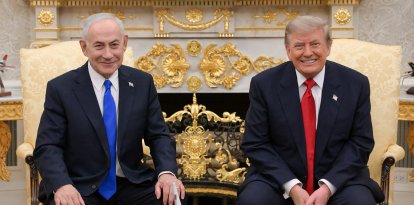
This was the backdrop to the lengthy meeting between Israeli Prime Minister Benjamin Netanyahu and Steve Witkoff, Trump’s envoy for the most serious diplomatic missions. For more than three hours, Netanyahu laid out why neither of the West’s standard expectations—abandoning nuclear ambitions or reforming the regime—can ever succeed.
Iran’s nuclear project is not a policy choice. It is the soul of the regime. Rooted in Shiite messianism, it embodies the belief in the Mahdi’s final arrival and represents the pinnacle of global Islamic power. To abandon it would mean to renounce the regime’s very identity. For leaders who see themselves as divinely appointed, reform would amount to betrayal of a sacred mission.
The same logic applies to Iran’s armed proxies, including Hamas and Hezbollah. These groups sustain a permanent state of conflict that underwrites Tehran’s regional and global influence—an influence reinforced by Iran’s mutually beneficial relationships with China and Russia, both of which profit from Iran’s capacity to keep the Middle East, and the West, in perpetual turmoil.

Even now, with Iran’s economy in collapse and its population in revolt, the regime does not operate according to pragmatism or concern for its people’s welfare. Israel, more than any other nation, understands the cost of pacifist illusions.
There is also the personal dimension of Trump himself. Witkoff may be a pacifist and a businessman, but Trump seeks a peace that aligns with his principles and defines the legacy he intends to leave behind. He promised Iran’s street protesters—and the Western world—that an American “armada” would come to the defense of innocent civilians. He urged resistance against a violent, fascist regime even as young Iranians paid with their lives.
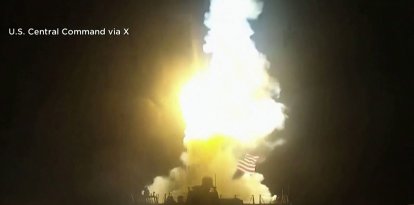
Those promises cannot simply be erased. After the dead filled morgues, abandoning that commitment—as Barack Obama did—would leave an indelible stain. Now that the “armada” has arrived, the question is no longer whether force exists, but whether illusion still does.
As long as Iran envisions a nuclear-armed Middle East and openly seeks Israel’s destruction, no peace plan can hold. There will be no Nobel Prize, no meaningful expansion of the Abraham Accords, and no genuine intercontinental partnership with Europe or India.
Iran has managed to restore the canceled nuclear talks. But after decades of deception, delay and ideological rigidity, the question remains unavoidable: Who can still believe them?
LATEST