Khamenei: An American attack will mean regional war
Meanwhile, Iran conducted missile tests on Saturday.
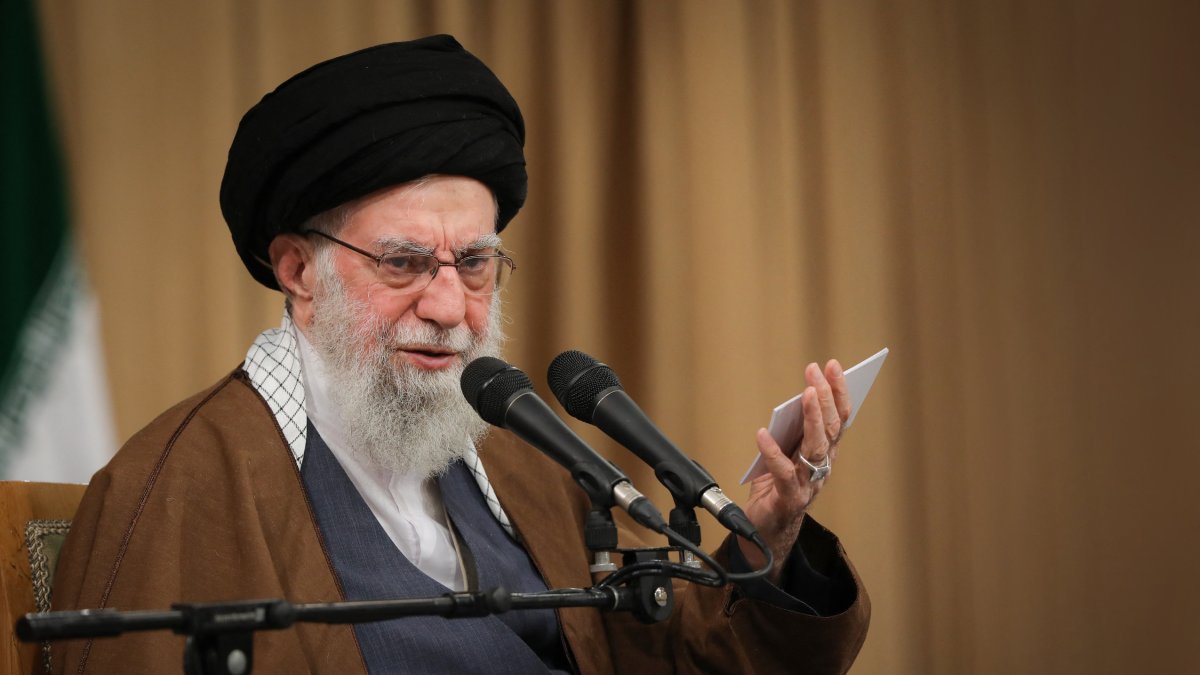
Ayatollah Ali Khamenei addressing a meeting with students in Tehran

An American attack on Iran will spark a wider conflict, Supreme Leader Ali Khamenei again threatened on Sunday.
“The Americans should know if they start a war, this time it will be a regional war,” the Islamic Republic posted on the ruler’s official X account.
Khamenei said the same at Tehran’s Imam Khomeini Hussainiya ceremonial hall and religious-political complex, during an event marking the anniversary of Ayatollah Ruhollah Khomeini’s 1979 return from exile and the start of the 11-day Fajr celebrations of the Islamic Revolution.
Trump says Iranian regime ‘talking seriously’
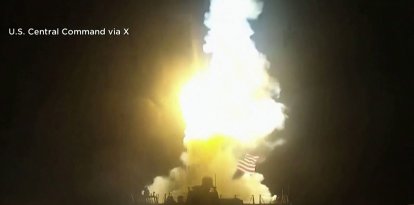
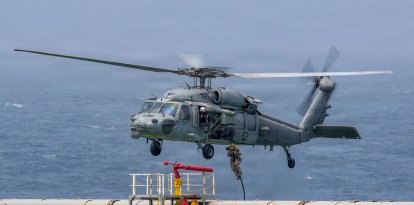
Khamenei spoke amid escalating tensions following his regime’s violent crackdown last month on nationwide protests, as U.S. President Donald Trump pressures Tehran to negotiate over its nuclear program while threatening military action in response to the deadly use of force against demonstrators—and as Washington deploys the USS Abraham Lincoln carrier strike group and other assets to the region.
Over the weekend, deadly explosions occurred in the port city of Bandar Abbas and in Ahvaz, the capital of Khuzestan Province, with blasts also reported elsewhere. Iranian authorities claimed the explosions were caused by a gas leak, and Tasnim News Agency denied reports that IRGC Navy head Commodore Alireza Tangsiri had been assassinated.
Meanwhile, Iran conducted missile tests on Saturday, and a large naval drill is expected on Sunday in the Strait of Hormuz. Israel’s Channel 12 reported that U.S. Central Command has warned Iran not to exploit the drills and is pressing Tehran to scale them back amid fears that a miscalculation could ignite a war.
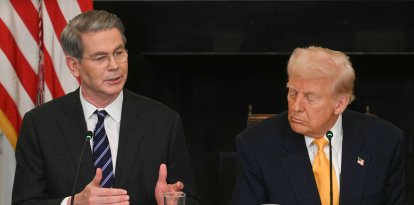
Trump said on Saturday that Iran is “talking seriously” with the United States following his threats of renewed military action and the buildup of a U.S. “armada” in the Middle East.
Tehran is “talking to us, and we’ll see if we can do something. Otherwise, we’ll see what happens… We have a big fleet heading out there,” Trump told Fox News. “They are negotiating.”
He later told reporters aboard Air Force One that “they are talking to us—seriously talking.”
Trump also said the administration had not informed anxious regional allies about possible military strikes, citing security concerns. “Well, we can’t tell them the plan. If I told them the plan, it would be almost as bad as telling you [the media] the plan. It could be worse, actually,” he said.
Tehran’s diplomatic push
Meanwhile, Iranian President Masoud Pezeshkian told Egyptian President Abdel Fattah el-Sisi in a phone call on Saturday, according to a statement from the Iranian Presidency, that “the Islamic Republic of Iran has never sought, and in no way seeks, war, and it is firmly convinced that a war would be in the interest of neither Iran, nor the United States, nor the region.”
Qatar’s prime minister and foreign minister, Sheikh Mohammed bin Abdulrahman Al Thani, met with the secretary of Iran’s Supreme National Security Council, Ali Larijani, in Tehran on Saturday, the Qatari Foreign Ministry said. According to the statement, the meeting focused on de-escalation efforts.
Channel 12 reported that on Saturday, Larijani said the situation differs from external perceptions, describing it as “an artificial media war,” and asserting there is “progress in establishing a framework for negotiations.”
In contrast, Iranian lawmakers on Sunday again called for the destruction of the United States and Israel, chanting “Death” to both nations during a session in which the chamber’s speaker said the Islamic Republic now considers all EU militaries to be terrorist groups.

Politics
Trump sanctions key Iranian figures amid assessments of possible military action
Sabrina Martin
Brussels announced on Thursday that the European Union would designate the Islamic Revolutionary Guard Corps as a terrorist group over its crackdown on protests.
Activity at Iran nuclear sites
Satellite photos indicate Iran has built new roofs and taken other steps at two key nuclear facilities struck last year by the United States and Israel, the Associated Press reported on Friday.
Commercial imagery from Planet Labs PBC shows the Iranian regime has erected coverings over damaged buildings at its Natanz and Isfahan nuclear sites, blocking the only external view available to International Atomic Energy Agency (IAEA) inspectors after Tehran barred them from accessing the facilities.
It marks the first significant activity visible by satellite at any of the Islamic Republic’s damaged nuclear facilities since Israel’s 12-day war with Iran in June.
Experts told the AP the work likely reflects attempts to quietly assess whether stocks of highly enriched uranium or key equipment survived last year’s strikes, rather than the start of full reconstruction.
Satellite monitoring also points to rapid rebuilding at a military complex in Parchin, where analysts say Iran is restoring a site once tied to explosives testing that could support nuclear weapons research—underscoring Western fears that Tehran is trying to preserve or reconstitute elements of its program despite wartime damage.
IAEA Director General Rafael Grossi once more warned on Jan. 20 that the Iranian regime’s standoff over enriched uranium cannot go on indefinitely. Grossi said Iran’s failure to fully account for its stockpile of highly enriched uranium and allow access to three bombed nuclear sites—Natanz, Fordow, and Isfahan—“cannot continue forever,” noting the agency has inspected all 13 other declared facilities.
LATEST