Oct. 7 victims sue Binance for funding Hamas, other terror groups
“The lawsuit alleges Binance’s far more extensive use by Hamas, Hezbollah and other terrorist organizations than publicly disclosed in previous government filings,” Gary Osen, a lawyer for the plaintiffs, told JNS.
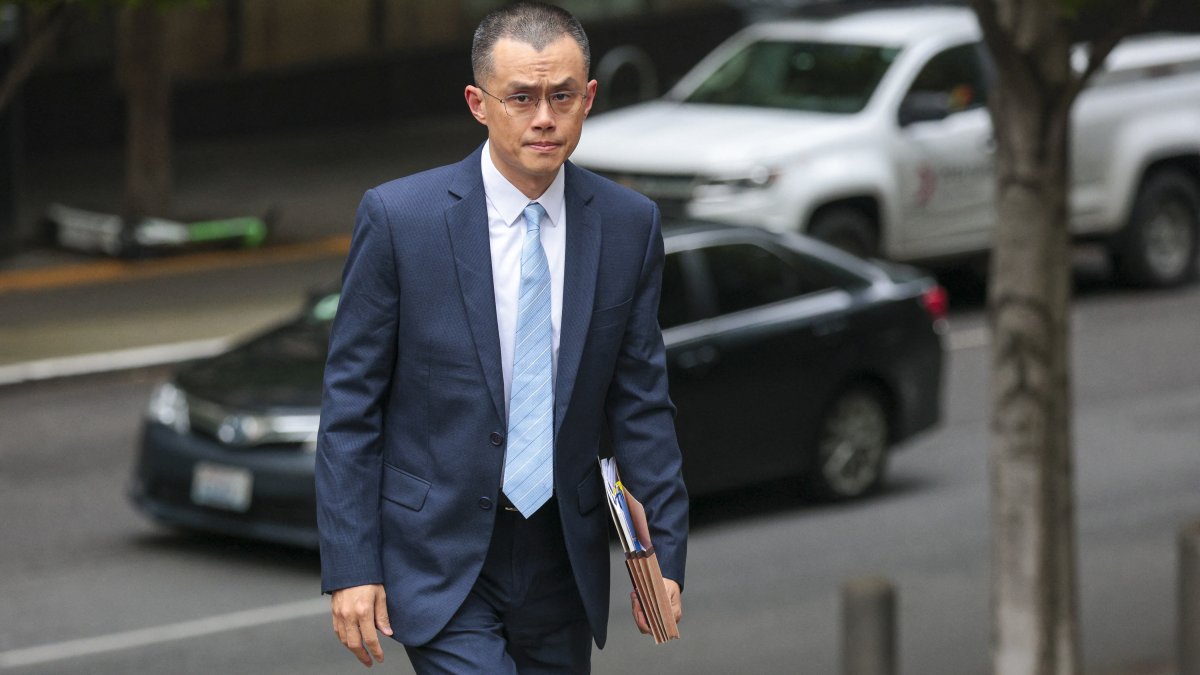
Former Binance CEO Changpeng Zhao

Binance, the world’s largest cryptocurrency exchange, faces a newly filed lawsuit in U.S. federal court alleging that it knowingly assisted Hamas and other terrorist groups before and after the Oct. 7 attacks in southern Israel.
More than 300 American plaintiffs who are the victims or the family of victims of terrorist attacks in Israel claim that Binance, its former CEO Changpeng Zhao and Guangying Chen, who is described in the suit as the company’s de facto chief financial officer, allowed the terrorist organizations responsible for Oct. 7 to send and receive more than $1 billion in crypto transactions in violation of U.S. law.
“Years before Oct. 7, Binance knew that Hamas, the Islamic Revolutionary Guard Corps, Hezbollah, Palestinian Islamic Jihad and other terrorist organizations were all transacting regularly on its platform and nevertheless actively assisted their use of the platform,” the lawsuit stated.
“Binance not only knowingly provided financial services to Hamas,” according to the suit. “It actively tried to shield its Hamas customers and their funds from scrutiny by U.S. regulators or law enforcement—a practice that continues to this day.”
A spokesperson for Binance told JNS that it is aware of the lawsuit but cannot comment on ongoing litigation. The company said that over the past several years it “has executed a wide-ranging transformation of our compliance, anti-money laundering and sanctions framework” and that it is committed to working with regulators and law enforcement.
The suit, which was filed in the U.S. district court for the eastern district of North Dakota, records how Binance employees joked about their role in money laundering, which Zhao and the company pleaded guilty to in 2023.
Binance customers “are here for crime,” its chief compliance officer said in 2020, per the suit. “Another Binance compliance officer joked that the company might as well advertise itself with a banner saying, ‘Is washing drug money too hard these days—come to Binance, we got cake for you.’”


Despite pleading guilty to charges related to financing terrorism, Zhao was pardoned by U.S. President Donald Trump in October.
“A lot of people say that he wasn’t guilty of anything,” Trump told reporters at the time. “He served four months in jail, and they say that he was not guilty of anything.”
“They said that what he did is not even a crime,” he added. “That he was persecuted by the Biden administration, and so I gave him a pardon at the request of a lot of very good people.”
Gary Osen, a lawyer for the plaintiffs, told JNS that the complaint makes clear that the government’s charges against Binance were “strongly supported by the evidence.”
“The lawsuit alleges Binance’s far more extensive use by Hamas, Hezbollah and other terrorist organizations than publicly disclosed in previous government filings,” Osen said.
Plaintiffs in the suit include Yechiel Leiter, Israel’s ambassador to the United States, whose son was killed by a Hamas booby trap in November 2023 while serving with Israeli forces in Gaza, and the family of Hersh Goldberg-Polin, who was wounded at the Nova Music festival, was taken hostage by Hamas and died in captivity.
The plaintiffs are seeking damages under the Anti-Terrorism Act and Justice Against Sponsors of Terrorism Act in a civil jury trial against the respondents.
© JNS
LATEST