ANALYSIS
‘So vulnerable:’ Trump administration’s MAHA chiefs declare war on kids’ screen addiction
Parents are being given a toolkit to unplug their kids dubbed the 5 D’s: discuss, do, delay, divert and disconnect.
Overweight, nearsighted, depressed and anxious. Many of America’s children are in the midst of a health crisis, and the Trump administration’s MAHA chiefs are declaring war on a primary cause: kids’ addiction to their tablet, phone and video screens.
“They are so vulnerable. So we had to sound the alarm, and here we are. We're doing something about it,“ said Dr. Stephanie Hirodopoulos, the director of national health communications for the U.S. Surgeon General.
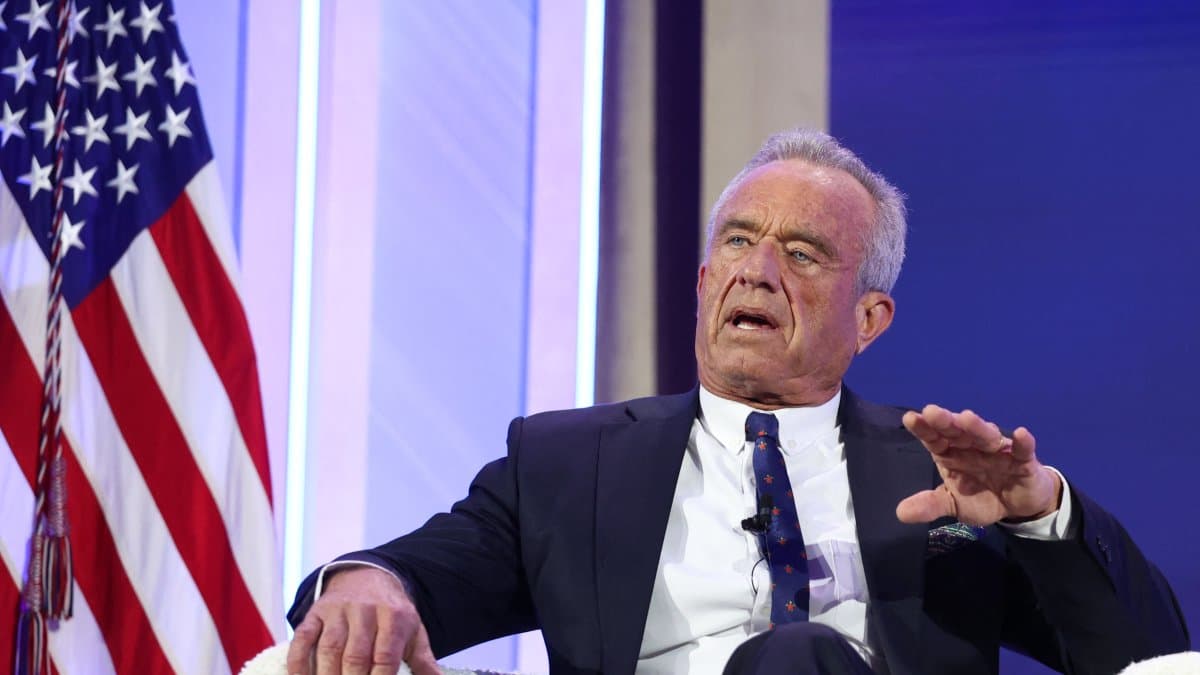
Last week, most of the government’s top medical experts — including Health and Human Services Secretary Robert F. Kennedy Jr., NIH Director Dr. Jay Bhattacharya and Medicare and Medicaid chief Dr. Mehmet Oz — assembled with Big Tech executives, educators and state officials to devise an action plan for getting children off their devices and into other life activities.
The plan is dubbed the 5 D’s: discuss, do, delay, divert and disconnect. And the Surgeon General has created a toolkit for parents as well as a children’s book for families to read together titled The Magic Tablet.
“Talk to your family," Hirodopoulos said. "Be all on the same page. Make sure that you just carve out times, like family meals. We should interact, with eye contact and social interaction. And then at night, put that phone away and get a good night's sleep. And if you're in a car with your family, talk to them, tell stories."
She said there was growing awareness at the event of the health dangers of children’s digital addiction.
“Forty percent of kids by 2050 will be having nearsightedness, meaning they can't see far," Hirodopoulos continued. "We need to make sure that kids are getting screened earlier in life, but they are not being exposed to tablets and phones too close that are straining their eyes.
"We have a large percentage of the population that is obese, and really being on screens does cause sedentary behavior, and then does cause problems with not being active and crowding out all the normal activity that we should be doing in life.
“And we know the anxiety, depression, but more importantly, neurocognitive, memory, attention, literacy issues, and just poor academic scores.
Hirodopoulos said the administration is buoyed by early successes: families are cooking healthier with the MAHA message spreading, 40 states have some form of bans on cellphones in classrooms and most of the Big Tech giants attended last week’s Live Real Life forum.
There was, however, one noticeable absentee: Google’s YouTube.
The administration also scored a major deal with Facebook’ parent company, Meta, which operates Instagram, and agreed to pay $17 billion to 51 states and territories to settle claims its products were made addictive to children.
Meta agreed to several new standards to protect kids, including disabling push notifications for teenagers at certain times like school time.
At the symposium, Kennedy urged the rest of the industry to follow Meta’s example.
“Children spend enormous amounts of their waking time in technology ecosystems, and that is why big tech has to act to protect our children,” he said.
🛠 Do you think there is an error in this article?
Recommendations







LATEST