Teen vaping: A silent epidemic in high schools
Federal organizations are maintaining a constant alert about underage vape use, warning of serious damage to lung and brain development.

A young girl smokes an electronic cigarette

Vaping among teens has established itself as a major health concern in middle and high schools in United States. Although the industry often presents electronic cigarettes as a less harmful alternative to tobacco, scientific evidence gathered in the country shows that these devices are generating a new generation of young people dependent on nicotine.
Federal organizations such as the Centers for Disease Control and Prevention (CDC) and the Food and Drug Administration (FDA), along with entities such as Truth Initiative, are maintaining a constant alert about underage vape use, warning of serious damage to lung and brain development.
What is vaping and why does it impact American youth?
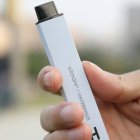
Vaping is the act of inhaling an aerosol generated by electronic devices such as e-cigarettes, disposable vapes or pods systems (such as JUUL or Vuse). These devices heat a liquid that almost always contains nicotine extracted from tobacco, plus flavorings and other chemicals.
Factors of attraction in the U.S. market:
- Variety of flavors: According to data from the National Youth Tobacco Survey (NYTS), fruit and candy flavors are the main reason why U.S. students initiate consumption.
- Availability: Despite age restrictions, access to disposable devices remains a challenge in school communities.
- Perception of safety: Aggressive marketing has led many young people to mistakenly believe they are only inhaling flavored water vapor.

Myths: Aerosol is NOT simple water vapor
One of the most prevalent myths in schools across the country is that vaping has no consequences because there is no smoke. However, the aerosol emitted by these devices contains hazardous substances detected by federal laboratories:
- Nicotine: Present in the vast majority of products sold in the U.S., highly addictive to the adolescent brain.
- Heavy metals: Microparticles of lead, nickel and tin released from heating coils.
- Volatile Organic Compounds (VOCs): Chemicals that can cause irritation and long-term damage.
- Carcinogenic chemicals: Agents such as formaldehyde that are formed when e-liquid is heated.

Elf Bar disposable electronic cigarettes with vape flavor are displayed in a store.
Health risks and brain development.
The U.S. Surgeon General’s office has stated that nicotine use in any form by young people is unsafe. Specific risks include:
- Damage to brain development: Nicotine can alter the formation of neural connections in areas that control attention, learning and impulse control until age 25.
- EVALI: The outbreak of vape-associated lung injuries identified by the CDC demonstrated that these products can cause serious hospitalizations.
- Future addiction: American teens who vape have a significantly increased risk of starting to smoke conventional cigarettes in the future.

Current statistics on youth vaping in the U.S.
Currently, about 1.63 million students in the United States report having vaped in the past month. Of this total, the vast majority (1.21 million) are in high school, while 410,000 are middle school students.
Beyond the number, what alarms experts is the intensity of the addiction.
Over 87% of these young people use products with sweet or menthol flavors. In addition, nearly four out of 10 students who use electronic cigarettes do so frequently (more than 20 days per month), indicating an already established physical dependence on nicotine.
Warning signs: How to identify vaping in the home
Because the smell of the aerosol dissipates quickly, parents should be on the lookout for other physical and material indicators:
- Unusual scents: Chewing gum or fruit fragrances that have no clear source in the room or clothing.
- Health changes: Increased thirst (vaping dehydrates the mouth), frequent nosebleeds or a persistent cough without flu-like symptoms.
- Material findings: Small metal parts, empty plastic cartridges or devices that look like unknown chargers.
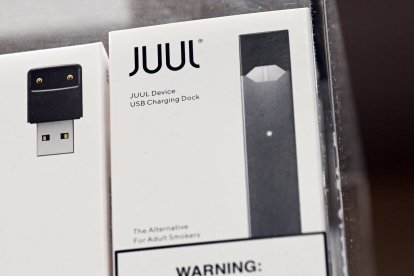
The JUUL Labs Inc. electronic cigarette vape and its USB charging base.
Protecting the future of students
LATEST