The island Denmark can't defend but refuses to sell: Why Trump is right about Greenland
Trump is exploring new possibilities, including giving money to every Greenlander, but all options are up in the air. Another alternative would be a Free Association agreement like the one with the Marshall Islands, guaranteeing self-government, but with unlimited military access for the U.S.

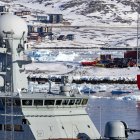
A sailboat in the High Arctic region, off the west coast of Greenland.
Donald Trump's obsession with the United States owning Greenland has unsettled many people, especially in NATO, but also allies in Washington. The president keeps explaining that it is a strategic interest, pointing out that the island is teeming with Russian and Chinese ships, every time some analyst describes it as a whim.
The White House has stated that various options are being considered for integrating the self-governing Danish territory into the United States. It is clear that Denmark could not protect the island militarily, but relies on the NATO umbrella and the internal conflict that such coercive action would represent for the organization. Those who wish to maintain the status quo argue that in reality, no official ownership to the United States is required for it to maintain a military presence; that in fact it exists. Furthermore, the 1951 treaty signed between Washington and Copenhagen already grants the United States the option to expand military presence in Greenland.
The U.S. military maintains only one base on the island, but the treaty allows it to greatly expand its presence, build, install, maintain and operate military bases throughout Greenland, house personnel and control landings, takeoffs, movements and operations of ships, aircraft and vessels. These facilities make Trump's detractors fail to understand the president's ambitions more, and consequently allege imperialist-colonialist intentions and bizarre obsessions. Trump, much more simply, just said that renting is not the same as owning and that Greenland's geostrategic importance merits a more solid status.
The island is giant and rich. It has deposits of natural resources, such as oil, gas and rare earth minerals. It is barely populated, and has been under Danish control since before the existence of the United States. Those who accuse Trump of colonialism omit the fact that Copenhagen acquired it as a colony in 1721, precisely because of Denmark's imperial ambitions.
During World War II, when Denmark was occupied by Nazi Germany, Washington, fearing that Germany might use Greenland as a bridge to the United States, signed an agreement with Copenhagen's diplomacy. This allowed the Americans to expel German weather bases that had been set up and were transmitting crucial information. The United States continued to maintain its presence during the Cold War, but when the Cold War ended, the presence was reduced until only the Pittufik Space Base remained.

But American interest in the island is older. As early as 1867, Secretary of State William H. Seward bought Alaska from Russia, and this deal was viewed with derision and skepticism by the international community and by more than a few internal enemies. As is the case with Trump now, few understood his long-term vision. Again, the strategic value and wealth of the land soon shifted the world's gaze from that move. Seward also had Greenland in his sights. But Congress did not go along with these attempts. As always, "short-termism" swallowed up the plan.
In 1910, the U.S. ambassador to Denmark, Maurice Francis Egan, proposed a deal that would give Denmark the Philippine island of Mindanao in exchange for Greenland and the Danish West Indies. But again, support was not forthcoming to finalize the offer for the entire package to Denmark, although the Danish West Indies, now the U.S. Virgin Islands, were acquired.
Truman returned to the subject at the height of the Cold War, offering the Danish government $100 million in gold for the island. Copenhagen refused, but offered the U.S. the freedom to put military facilities on the island, an offer that materialized with the signing of the security treaty in 1951. As at that time, Copenhagen has no interest in selling its Arctic territory, which over the years has undergone many changes. At present, Denmark would not even have the last word; and a consultation with the Greenlandic people, who are fewer than 60,000, would be necessary.
In these days, the issue has resurfaced with fervor, since the president and several of his officials heated up the controversy, which, by the way, has once again aroused the hysteria of his detractors who have alleged the everlasting criticism for possible violations of international law, and a long and well-known etcetera.
Mette Frederiksen, the Danish prime minister, said that if the United States wanted to take Greenland by force, then NATO and the system of global security that has existed since the end of World War II would come to an end. A group of NATO leaders issued a statement asserting that "Greenland belongs to its people," but, interestingly, acknowledging the colonial holdovers that force Denmark to be included in the final decision.
The reaction seems to be an overreaction. From what is known so far, Marco Rubio declared to members of Congress that the objective is not to invade but to buy the island. The reasons have to do not with simple obsession but with a key need going forward: to secure trade and military routes.
China has declared that it seeks an ambitious "polar silk road" through Russia's Arctic ports. Its provocative incursions and investments could grant it that control if nothing stands in its way. The United States cannot sit idly by. The island is a rare earth power. In the face of China's advance in this regard, Greenland would be an important alternative source, and above all, that wealth must be prevented from falling under Beijing's control. The strategic value is fundamental for the United States.
Denmark would not be able to defend Greenland, as it was unable to do in World War II, and would therefore depend on outside help as it did then. The onus would fall on NATO, since the country's defense budget is insignificant for such a challenge. Copenhagen's defense investment in its semi-colonial possession is a mockery. Denmark's defense force for Greenland was so absurd that it is not even worth listing. As soon as Trump showed interest in acquiring Greenland, the Danes promised to expand the endowments and budgets, but even if they doubled them, they would still be ridiculous. Looking at the moves by NATO members in recent conflicts, it is clear that only the U.S. can defend the island.
Despite the Danish government's rhetoric against military action, it has been open to the U.S. expanding its military presence in Greenland. Before the new year, Trump began seeking negotiations directly with the local government, given that Greenland's status as a Danish territory allows it to achieve independence by a vote of a simple majority of its population. This referendum is the goal of the party that governs Greenland, but if independence is achieved, it is clear that the government would subsist on U.S. aid.

World
Marco Rubio revealed to congressmen and senators that Trump plans to buy Greenland
Luis Francisco Orozco
Trump is exploring new possibilities, including giving money to every Greenlander, but all options are up in the air. Another alternative would be a Free Association Agreement like the one governing the Marshall Islands, guaranteeing self-government, but with unlimited military access for the U.S. In any case, beyond the cynical Danish indignation, the frivolous analyses of Trump haters and the childish anti-imperialist narrative, it would seem that sooner rather than later, the Trump administration will control Greenland. Better than sitting back and watching the icy island become a link in the Silk Road. Because that precious territory cannot be defended with press releases from Copenhagen, but with military force to ensure that the Arctic continues to speak the language of freedom, and not that of the Chinese Communist Party.
LATEST