The Trump administration anticipates the largest tax refunds in history by 2026
Kevin Hassett, the director of the White House National Economic Council, stated this.

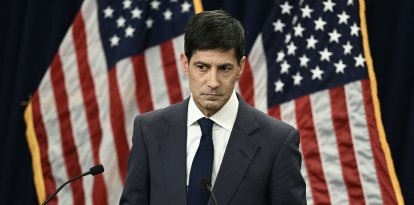
Scott Bessent with Trump at the White House/ Andrew Caballero- Reynolds.

The White House anticipates the largest tax refunds in history by 2026. As Kevin Hassett, director of the National Economic Council, stated, provisions in the Big Beautiful Bill will return tens of millions of dollars to taxpayers starting next year.
The bill, which some Republican lawmakers now refer to as the Working Families Tax Cuts Act, contains many provisions that will take effect at the close of the next fiscal year.
Specifically, legislation signed by Donald Trump in July raised the standard deduction for all taxpayers to $32,000 for couples and $16,100 for singles, which automatically reduces taxable income.


The law also temporarily increased the deduction limit for state and local taxes (SALT) from $10,000 to $40,000 for many families and workers.
Add to this two of the president's most publicized policies: taxes on tips and overtime. Tip recipients can deduct up to $25,000 in tip income, while workers who earn overtime can deduct up to $12,500.
"We didn’t pass the Big Beautiful Bill until the middle of the summer, so a lot of the tax changes which affected last year were not in any tax forms filled out in the beginning of the year," Hassett, one of the candidates to be the next Fed chairman, told Fox News.
">"You're going to see the biggest tax refund season of all time," says NEC Director Kevin Hassett on 2026.
— Rapid Response 47 (@RapidResponse47) December 21, 2025
"We're going to have a plan, a big plan, to announce sometime soon in the new year that's going to be really good news for [homebuyers]." pic.twitter.com/c6vQWsSYkU
Hassett's remarks came as the White House seeks to push an affordability message that will give the GOP momentum heading into the 2026 midterm elections. Until many provisions of the law take effect in 2026, the president celebrated lower prices for some everyday goods, such as gasoline and eggs.
This was in addition to recent statements by Treasury Secretary Scott Bessent, who gave more specifics on the numbers: "I think we're going to see $100 billion to $200 billion of refunds, which could be between $1,000 and $2,000 per household."
"The bill was passed in July. Working Americans didn't change their withholding, so they're going to be getting very large refunds in the first quarter," he added in an interview with a local NBC station in Philadelphia.
However, the private sector was more optimistic. An analysis by JPMorgan anticipated that more than 100 million Americans would receive tax refunds averaging $3,743.
LATEST