ANALYSIS.
Nvidia's strength tinges markets green despite concerns over Fed's next moves
The technology company, the world's first $5 trillion company, delivers better-than-expected results and leads Wall Street and Asian markets to close positive, overcoming uncertainty about Jerome Powell's rate decisions.
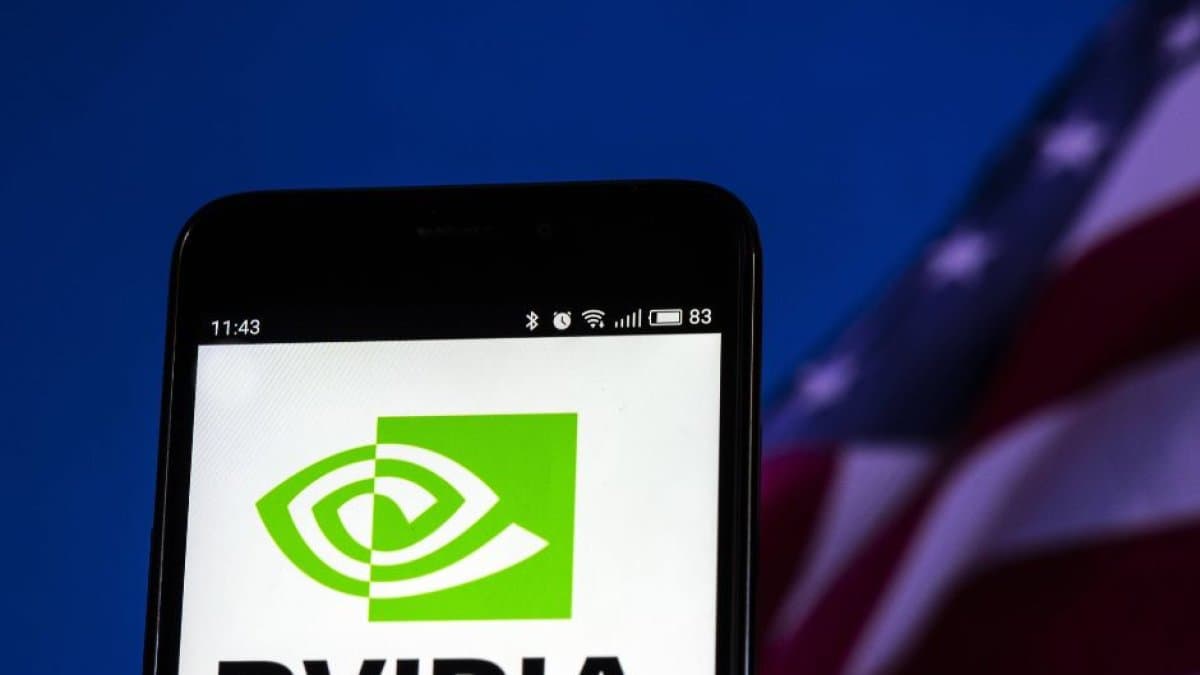

The world's largest company demonstrated its power by erasing uncertainty from global markets and pushing them into the green after a day filled with uncertainty about the Federal Reserve's next steps. Nvidia delivered better-than-expected results that gave Wall Street and Asian markets the boost they needed to close in the green.
Although the close of the New York Stock Exchange came just before the release of the results of the only company in the world with a value of more than $5 trillion, it was already clear the results would beat expectations.
Those who did have accurate data were the Asian markets, which experienced a widespread day of rebound on the back of the chip giant's excellent Q3 2025 results. The figures presented by Nvidia allayed much of the fears of overvaluations in the technology sector and the possibility of a sharp correction after this year's record rally.
Nvidia earned 65% more than in the same quarter in 2024, $31.9 billion
Nvidia posted a net profit 65% above results for the same period last year, reaching $31.9 billion, with record revenue of $57 billion in that quarter. The group's shares were up nearly 3% in post-closing electronic trading that reached 5% afterwards.
The key to the tech's beating expectations is backed by the strong demand for its more sophisticated chips. Something the company's CEO, Jensen Huang bragged about, downplaying recent concerns about a possible prick to the AI bubble.
Jensen Huang accuses those who talk about an AI bubble of a "simplistic view"
"There has been a lot of talk about an AI bubble. From our point of view, we see something very different, he noted." In his view, those who are fueling the concerns are starting from a "simplistic view of what's happening with capex and investment" and don't know" what's going on beneath the surface of the AI boom."
Huang dismantled the idea that there is a bubble with three reasons: The first, that data processing, advertising recommendations, search systems and engineering are turning to GPUs because of the need to integrate AI, and this will force the replacement of core processor-based infrastructure with new models built on Nvidia's chips.
The second reason is that AI is not limited to being incorporated into existing applications and programs, but will be key and will make it possible for the creation of new ones with superior performance to existing ones.
The latter has to do with "agentive AI" - applications that can operate with little user input and that require far more computing power to reason and plan.
A golden future for Nvidia
And this presents a golden future for Nvidia, as, according to Huang, it is lthe only company capable of addressing all three of these scenarios. "When considering infrastructure investments, keep these three fundamental dynamics in mind," he said.
Something that it seems that executives are listening to, since the technology company's CEO presented revenue forecasts that are also higherthan expected for the next few years.
Fed brings uncertainty back to investors.
According to the report, Fed leaders, led by Jerome Powell, do not look favorably on a third consecutive rate cut, given the state of the economy, especially due to price rises.
This is a major blow to investors, who had taken for granted continuous cuts until 2026. Confidence that has been key to this year's stock market rally, helped by a more accommodative labor market.
"Many participants suggested that, based on their economic outlook, it would probably be appropriate to keep the target range unchanged for the rest of the year," the minutes read. The Fed chairman noted after the decision to cut rates last month that a December hike was "not a foregone conclusion."
🛠 Do you think there is an error in this article?
Recommendations

LATEST