Nvidia to supply 260,000 artificial intelligence chips to South Korea
The tech giant said it is working to "expand the Asian country's artificial intelligence infrastructure with more than a quarter of a million GPUs in its sovereign clouds and AI factories."
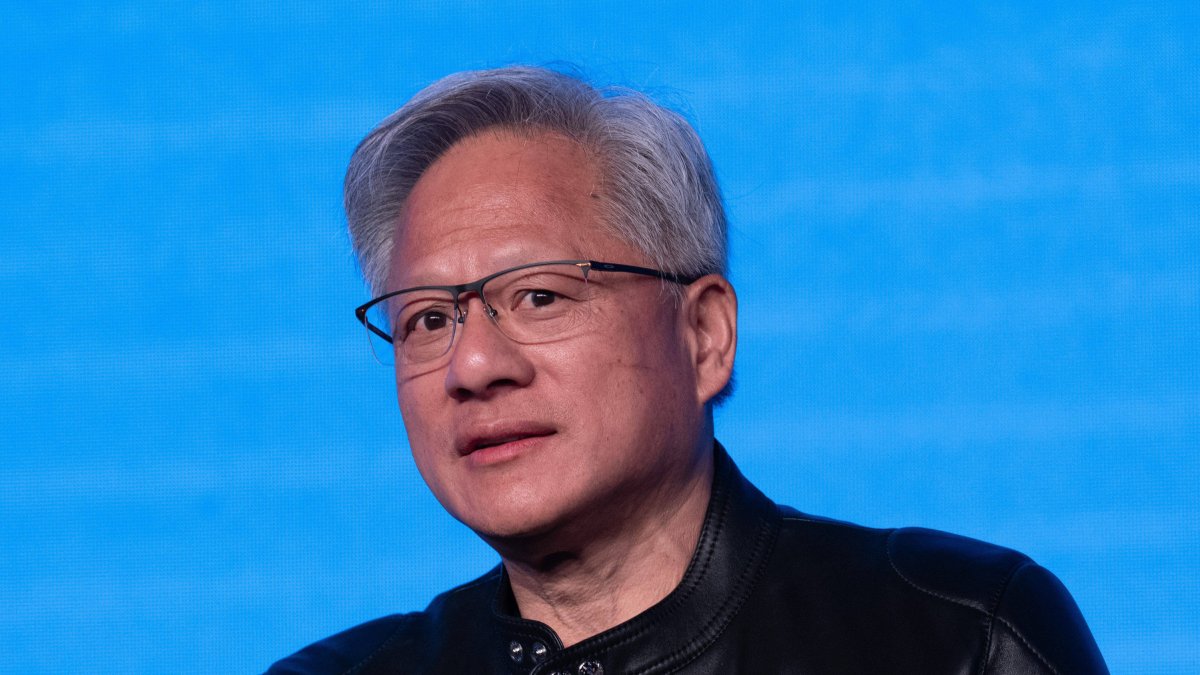
Jensen Huang, Nvidia CEO

Tech giant Nvidia announced Friday that it will supply 260,000 of its most advanced chips to South Korea, after its chief executive, Jensen Huang, met with South Korean President Lee Jae Myung, who has said he wants to turn his country into a powerhouse of AI.
The Asian country is home to two of the world's leading memory chip makers, Samsung Electronics and SK hynix, which produce chips essential to AI and data centers required for that technology.
Lee and Huang met Friday on the sidelines of the Asia-Pacific Economic Cooperation (APEC) forum summit in the southern city of Gyeongju.
Following the meeting, Nvidia said it is "working with South Korea to expand the Asian country's artificial intelligence (AI) infrastructure with more than a quarter of a million Nvidia GPUs (graphics processing unit) in its sovereign clouds and AI factories."
What does the deal consist of?
Following Friday's negotiations, 50,000 of the chips will go to a new AI factory built by Samsung Electronics. Another 50,000 chips will go to SK Group and as many to automaker Hyundai Motor Group.

NAVER Cloud, which operates the leading South Korean search engine, will receive 60,000 of the chips to expand its AI infrastructure.
The remaining 50,000 chips will be shipped to the National AI Computing Center, cloud services and IT providers across South Korea.
Nvidia, first company to surpass $5 Trillion market capitalization
Shortly after the opening of Wall Street, its share price stood at $210.90 (+4.91 %), pushing it over the $5 Trillion barrier.
Markets reached this data thanks to optimism about United States trade deals, the artificial intelligence sector and an expected rate cut by the Federal Reserve.
LATEST