ANALYSIS
50% punitive tariffs on Brazil take effect amid 'witch hunt' claims against Bolsonaro
The new tariffs include key Brazilian exports such as meat and coffee. Lula condemned the move as an attack on Brazil’s sovereignty and lashed out at Eduardo Bolsonaro, calling him a “traitor to the homeland” for campaigning from the U.S. to defend his father.
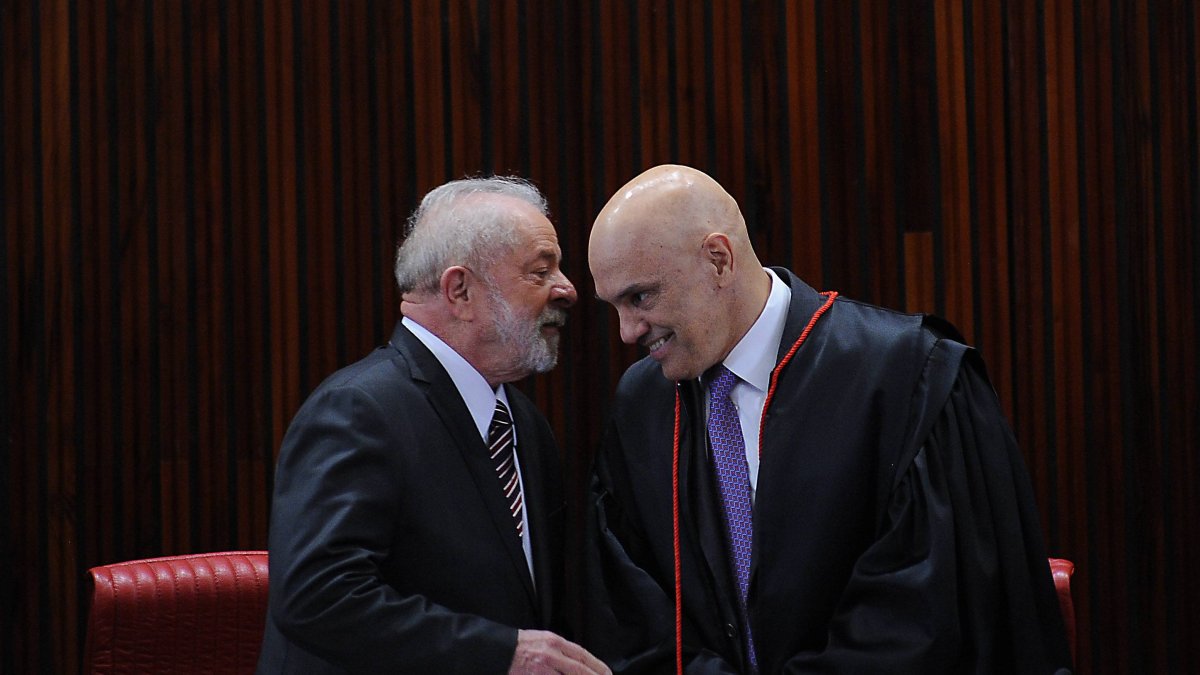
Lula da Silva chats with judge Alexandre de Moraes.

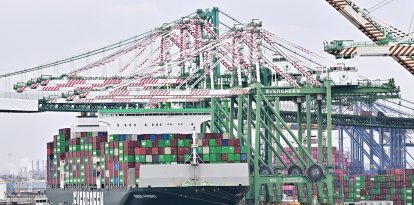
The 50% tariffs on Brazilian imports to the United States — including key products like coffee and meat — went into effect Wednesday. The measure is Donald Trump’s response to what he calls the Lula da Silva government’s “witch hunt” against former Brazilian president Jair Bolsonaro, who was sentenced to 12 years of house arrest by Supreme Court Justice Alexandre de Moraes.
The U.S. exports more to Brazil than it imports, but President Trump expressed concern over the policies of the South American giant, calling them an “unusual and extraordinary threat.”
This prompted him to order an increase in customs tariffs from 10% to 50% on many Brazilian products starting Wednesday. However, Trump granted an extension for goods that were shipped before August 7 and are set to arrive in the United States before October 5.
Some of Brazil's star products are spared from tariffs... for the time being
Trump excluded essential Brazilian exports such as orange juice, energy, civilian aircraft and parts, fertilizers, precious metals, cellulose pulp, and pig iron from the new tariffs. However, coffee and meat were included.
According to the Brazilian government, 36% of the country’s exports to the United States will be hit by the new tariffs, a situation that has infuriated Lula.
Lula: "Our sovereignty is being attacked"
"I think we Brazilians are on trial," Lula declared Tuesday at the Itamaraty palace, the foreign ministry's headquarters. "Our democracy is being questioned, our sovereignty is being attacked, our economy is being assaulted (...) In no tariff cut applied to other countries was there any attempt to injure the independence of the country's powers," he added.
The progressive leader, who plans to run in the 2026 elections, took aim—without naming him—at Eduardo Bolsonaro. The congressman, son of the former Brazilian president, maintains close ties with Trump-aligned leaders and has been leading a campaign from the United States in defense of his father.
“This interference in our internal affairs was supported by true traitors to the homeland,” Lula said, adding that he has ruled out calling Trump “because he doesn’t want to talk.” Trump’s anger—expressed in July through two letters, one criticizing Lula’s Brazil and the other showing support for Bolsonaro—has further strained relations between the two countries.
Far from the complicity between Lula and Biden
The cordiality displayed by Lula and former U.S. Democratic President Joe Biden during the Brazilian leader’s 2023 visit to the White House—when both positioned themselves as defenders of democratic values—is now a thing of the past.
Trump has also targeted Brazil’s judicial system, imposing sanctions on Supreme Court Judge Alexandre de Moraes—who oversees Bolsonaro’s trial—for “authorizing arbitrary arrests” and “suppressing freedom of expression.”
Despite growing pressure, Moraes has not hesitated to place Bolsonaro under house arrest for violating a ban on social media use as part of his trial.
Brazil, the first in Trump's new wave of tariffs
Back in April, Trump imposed a universal minimum tariff of 10%, which continues to apply to products from many of his partners, including most Latin American countries.
Mexico has 90 days to negotiate these tariff hikes, although it already faces extra tariffs of 25% on products not covered by the United States-Mexico-Canada Agreement (USMCA).
Additionally, Trump imposed sector-specific surcharges of 50% on steel, aluminum, and copper, and 25% on automobiles and auto parts that aren’t protected under the USMCA.
LATEST