ANALYSIS: This is the situation in countries that have not yet reached an agreement after Trump's tariff deadline
Trump's strategy, based on the use of tariffs as a tool to pressure trading partners, has generated tensions, frantic negotiations and a national and international debate on these measures.
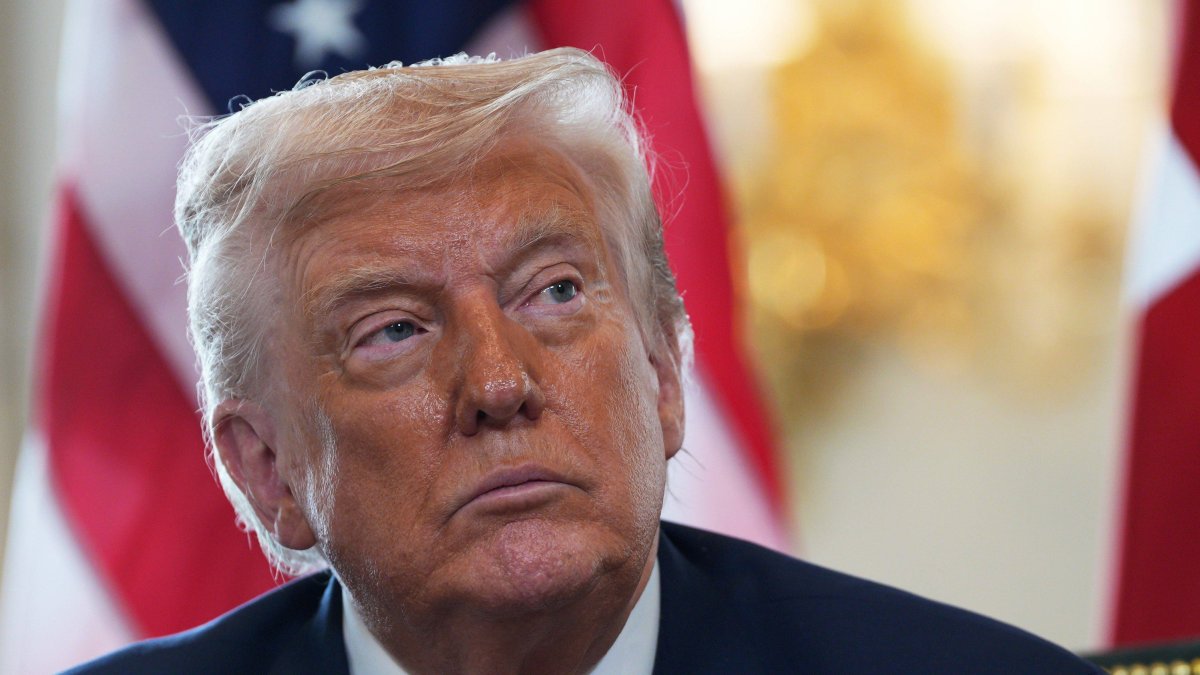
President Donald Trump (File)

As the August 1 deadline set by the Administration of President Donald Trump for countries to negotiate trade deals or face "reciprocal" higher tariffs approaches, economic and political uncertainty is intensifying globally.
Trump's strategy, based on the use of tariffs as a tool to pressure trading partners, has generated tensions, frantic negotiations and a nationwide legal debate on the presidential authority to impose these measures.
Judicial situation: A crucial debate over emergency powers
On Thursday, the U.S. Court of Appeals for the Federal Circuit examined the legality of the tariffs imposed by President Trump under the International Emergency Economic Powers Act (IEEPA) of 1977.
This law gives the president the authority to impose economic sanctions in response to an “unusual and extraordinary threat," during a national emergency.
Trump has used IEEPA to justify initial tariffs in February against Canada, China and Mexico, citing the fentanyl crisis as an emergency, and later in April to establish a 10% base tariff globally, with higher rates for certain countries, under the guise of trade deficits.
During the hearing, Judge Timothy Dyk, an appointee of former President Clinton, expressed skepticism about the Trump Administration's interpretation of IEEPA, noting that it seemed unlikely that Congress would have granted the president the authority to unilaterally restructure the carefully crafted tariff system after years of legislative work.
“It’s really kind of asking for an extraordinary change to the whole approach," Dyk said. Similarly, Judge Jimmie Reyna, an appointee of former President Obama, also questioned the existence of a national emergency justifying these measures, asking, “has there been no national emergency?”
For its part, the Department of Justice (DOJ), represented by Assistant Attorney General Brett Shumate, defended the legality of the tariffs, arguing that IEEPA has historically been one of the "most powerful tools" to protect national security, foreign policy and the economy.
Shumate noted that Congress has given presidents "broad discretion" to address national emergencies, and that tariffs are a legitimate means of pressuring trading partners.
For his part, President Donald Trump defended his position and noted on Truth Social:
“To all of my great lawyers who have fought so hard to save our Country, good luck in America’s big case today. If our Country was not able to protect itself by using TARIFFS AGAINST TARIFFS, WE WOULD BE “DEAD,” WITH NO CHANCE OF SURVIVAL OR SUCCESS. Thank you for your attention to this matter!”
Canada in the middle: Not only trade but also geopolitical tensions
Canada, a major U.S. trading partner, is in a delicate position due to trade tensions and a recent geopolitical dispute. Trump has threatened to impose a 35% tariff on Canadian imports starting Aug. 1, citing not only trade issues, but also Canada's "failure to stop the flow of drugs" into the United States, particularly fentanyl.
In addition, President Trump pressed trade negotiations regarding the decision by Canadian Prime Minister Mark Carney to announce Canada's support for recognition of Palestine as a state in September.
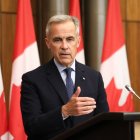
In a post on Truth Social on Wednesday, Trump expressed his frustration, "Wow! Canada has just announced that it is backing statehood for Palestine. That will make it very hard for us to make a Trade Deal with them. Oh’ Canada!!!”
In this way, the Republican president staked out the position of those Western allies who support the creation of a state for Palestine, a move that Trump has described as a "reward for Hamas" in the context of the ongoing war and the Israeli hostage situation.
Thus, trade negotiations with Canada, described by Carney as "intense," have stalled. In that regard, Trump noted last Friday that "we haven't had much luck with Canada" and suggested that the country might simply face tariffs without reaching an agreement, stating, "It's not really a negotiation."
Who hasn't reached an agreement: Countries on the chopping block
With hours to go before the August 1 deadline, several key U.S. trading partners have failed to reach agreements to avoid the tariffs announced by Trump. Among them are Mexico, China, Taiwan, India, Brazil and Switzerland, each facing specific challenges in their negotiations with the Republican Administration.
Mexico
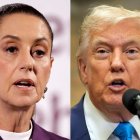
Total U.S. goods trade with Mexico was estimated at $839.9 billion in 2024 and as of today faced a 30% tariff effective August 1, up from 25% previously imposed because of the fentanyl crisis. However, President Trump postponed the tariff increase for a 90-day period, after holding a telephone meeting with his Mexican counterpart, Claudia Sheinbaum. The Republican announced an extension while the two seek to reach an agreement. But despite efforts to resolve tensions, negotiations will continue for these 90 days, and Mexico remains under pressure over issues related to drug trafficking and illegal immigration.
China
Trade negotiations between the United States and China, the world's two largest economies (whose U.S. imports from China in 2024 totaled $439 billion, according to the Office of the United States Trade Representative), concluded Thursday in Stockholm without a final agreement to avoid a return to extremely high tariffs as of Aug. 12.
The two nations had agreed to a temporary pause that reduced U.S. tariffs on China to 30% and Chinese tariffs on the United States to 10%. However, without an extension of this pause, both countries are preparing to impose historic tariffs that could cripple bilateral trade. Despite the lack of an agreement, the Treasury secretary, Scott Bessent (who had traveled to Stockholm to negotiate), and the U.S. trade ambassador, Jamieson Greer, described the two-day talks as "very constructive." Greer added that the decision on a possible extension of the tariff pause rests with President Donald Trump.
On Tuesday, Trump expressed optimism after receiving a briefing from Bessent, stating, “I just had a phone call from Scott Bessent. They had a very good meeting with China, and it seems that they’re going to brief me tomorrow. We’ll either approve it or not."
Trump also mentioned plans to meet with Chinese President Xi Jinping in late 2025.
Taiwan
Taiwan, which has faced a 32% tariff since April, is close to reaching a deal, but its future depends in part on negotiations between the U.S. and China. However, both Taiwanese and U.S. authorities still continue to negotiate.
India
Despite rumors that a deal with India was close, Trump denied on Tuesday that such a deal had been finalized and threatened a 25% tariff. As Trump was returning from his trip from Scotland (where he reached a 15% tariff deal with the European Union), he noted to reporters that "India has been a good friend, but India has charged basically more tariffs, almost more than any other country," Trump said aboard the Air Force
In addition, he criticized India's purchases of Russian military equipment and energy “when everyone wants Russia to STOP THE KILLING IN UKRAINE."
Brazil
Brazil faces a 50% tariff, one of the highest ever announced, in part due to the criminal prosecution of ex-president Jair Bolsonaro, a Trump ally. President Luiz Inácio Lula da Silva has rejected Trump's demands and defended Brazilian sovereignty, urging the resumption of trade negotiations.

Politics
Treasury sanctions Brazilian Judge Alexandre de Moraes for human rights violations
Agustina Blanco
So far, no agreement has been reached and the tariffs imposed remain in place.
Switzerland
Switzerland remains optimistic of signing a trade deal to avoid the 31% tariffs imposed by Trump. The president, Karin Keller-Sutter, noted: “I do hope that we can find a solution together," however, with just one day to go before the deadline, so far there is no news on the matter.
Cambodia and Thailand
Following a ceasefire with Cambodia, Thailand hopes to restart trade negotiations. For his part, the U.S. Commerce Secretary Howard Lutnick, said in an interview with Sean Hannity on Fox News: “And you know what we did today? We made trade deals with Cambodia and Thailand." But, he gave no further details.
Meanwhile, Vice Prime Minister and Finance Minister Pichai Chunhavajira, offered an update on the ongoing tariff negotiations with the United States on Thursday, revealing that Thailand submitted the final draft of its tariff proposal and is confident as it hopes to receive a response by Aug. 1.
Trump Administration stands firm
Countries such as Mexico, China, Taiwan, India, Brazil, and Switzerland face an uncertain future. Although some preliminary agreements have softened tariff rates for certain countries, the short timeframe for negotiations continues to generate uncertainty in world trade.
LATEST