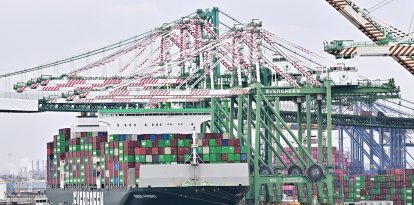
Trump announced a new round of tariffs on more than a dozen countries: South Korea, Japan and Malaysia among those affected
The measure will take effect on August 1, following the conclusion of the 90-day pause previously decreed to facilitate bilateral negotiations.

U.S. President Donald Trump

President Donald Trump announced a new round of tariffs on imports from 12 countries, with rates ranging from 25% to 40%, as part of his plan to boost U.S. manufacturing and correct longstanding trade imbalances. The measure, which is part of his vision of economic sovereignty, will take effect on August 1, following the conclusion of the 90-day pause previously decreed to facilitate bilateral negotiations.
The countries included in this new phase of trade action span different regions of the world. Myanmar and Laos will face a 40% tariff, followed by Cambodia at 36%, Bangladesh and Serbia at 36%, Indonesia at 32% and Bosnia and Herzegovina at 30%. In addition, a 25% tariff will be applied to imports from Malaysia, Kazakhstan, Tunisia, South Korea and Japan.
Reversal of the trade truce
The decision coincides with the end of the tariff pause announced in April, when the Trump administration temporarily suspended reciprocal tariffs as a gesture of good faith toward countries with which it was engaged in talks. That suspension ends on July 9, although Trump will sign an executive order to extend the effective date of the new tariffs until August 1, giving countries one last chance to opt for a U.S.-friendly approach.
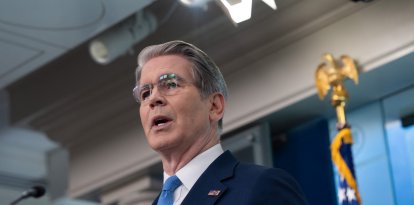
Press secretary Karoline Leavitt confirmed that more tariff letters will be sent in the coming days and stated that the president's trade policy seeks to protect the American worker, defend the middle class and revitalize the country's manufacturing base. He stressed that the new tariffs are the result of a deliberate process, guided by the interests of the American people.
Clear incentives and conditions
Currently, the United States maintains a 10% across-the-board tariff on imports from more than 180 countries, established under the Trump administration.
Progress on agreements and long-term strategy
When the tariff pause was enacted, the White House economic team aimed to reach 90 trade agreements within 90 days. To date, deals have been finalized with the United Kingdom and Vietnam, and progress has been made on establishing a framework for a future understanding with China. Despite the challenges, the team remains committed to obtaining fair agreements that favor the national economy.
Asked if the delay until August 1 indicated any difficulty, Leavitt was blunt: "No. It's an acknowledgement that this administration is doing what's best for the American worker and we want the best deals possible for our workers, for our manufacturing base, for our middle class."
LATEST