Iran responds to the latest US attack with its most significant retaliation in weeks against US bases in the region
The U.S. airstrikes against Revolutionary Guard targets were aimed at leaders of Iran's theocratic military.
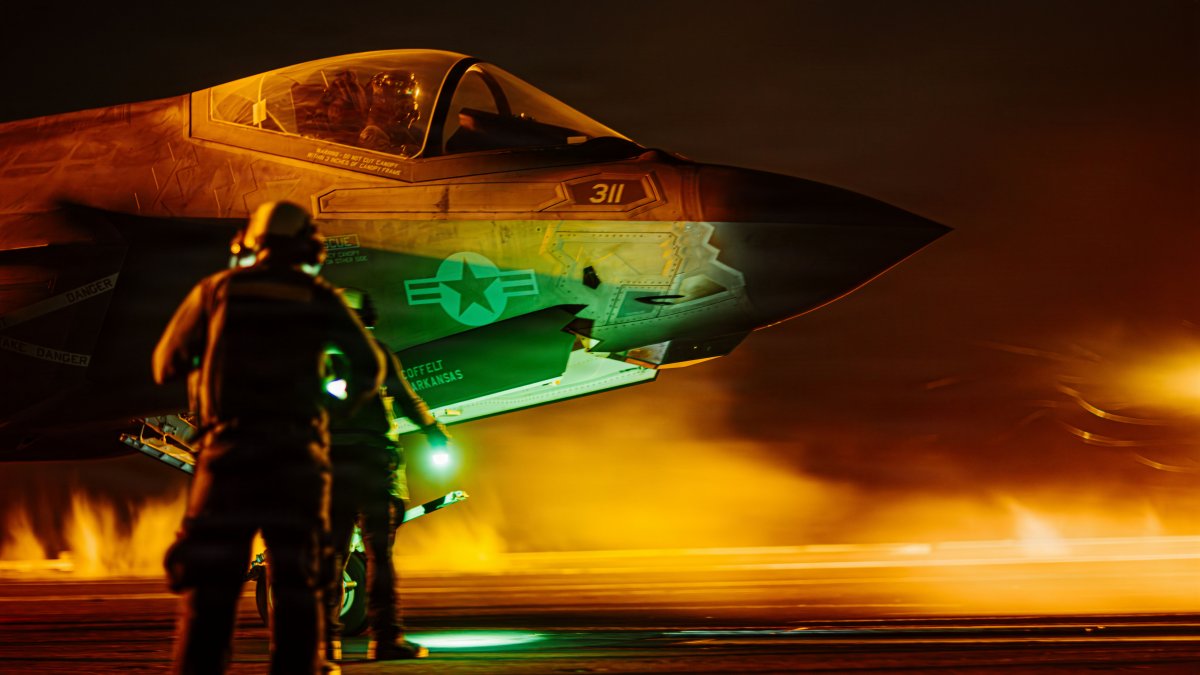
An F-35C Lightning II on the deck of the USS George Washington

Iran launched the largest response in weeks to the latest U.S. attack on targets within its territory. The Iranian regime bombed U.S. bases in Jordan, the United Arab Emirates, Kuwait, Bahrain and the autonomous region of Iraqi Kurdistan.
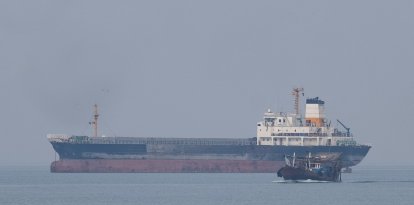
The Revolutionary Guards also noted that the two Saudi-flagged oil tankers struck by missiles on Monday night into Tuesday, caught fire after hitting mines in the Gulf while sailing outside the route designated by Iranian authorities.
A claim that CENTCOM described as "Iranian disinformation" intended to intimidate ships seeking to use the strait. So far, it is known that two Filipino sailors from the SIDR lost their lives in the attack. So far, it is known that two Filipino sailors from the SIDR lost their lives in the attack.
Qalibaf calls the U.S. "Satan"
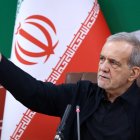
The tone from Tehran has returned to one of defiance, following the tentative attempt at appeasement by President Masoud Pezeshkian. The lead Iranian negotiator, Mohamad Baqer Qalibaf, called the United States "Satan." "If a power acts like Satan, chooses targets like Satan, and kills like Satan, it is Satan," Qalibaf stated in a post on X, reviving the epithet regularly used against Washington since the 1979 Islamic Revolution.
The latest round of fighting began on Sunday, when Washington struck Iranian targets in the first known attacks of this kind in several weeks. Tehran's forces responded by striking U.S. troops in Jordan and the United Arab Emirates.
Donald Trump stated that Sunday's "forceful" attacks on Sunday were "in retaliation for the Iranians' failed attempt to lay sea mines in the strait" and for "the Iranians' launch of eight missiles—all of which were successfully intercepted—against our military base in Jordan."
Oil prices continue to rise and have now surpassed $90 per barrel
Although Brent had already crossed that threshold some time ago, the price per barrel continued to rise until it exceeded $95 (95.06). Meanwhile, WTI, the U.S. benchmark, reached $90.29.
According to Iranian television, Tuesday's U.S. offensive caused explosions in the south of the country, along the Strait of Hormuz and on an island in the Gulf. According to the same source, there was another U.S. attack on an airport in the southern province of Kerman.
Iranian casualties
In the southern province of Khuzestan, seven people were killed and eight others were injured, the official IRNA news agency reported.
For their part, the Revolutionary Guards stated that four members of their aerospace force were killed in a U.S. attack in the western province of Kermanshah, and that three paramilitary personnel were killed in an attack on Lavan Island in the Gulf.
"Coordinated missile and drone attack" in retaliation
The Revolutionary Guards claimed that their retaliatory attacks included "a coordinated missile and drone strike against U.S. bases in Erbil," in Iraqi Kurdistan, which destroyed a maintenance center, warehouses and the "guidance system of a U.S. surveillance airship," according to a statement released by the state-run IRNA news agency.
They also announced a ballistic missile attack on a U.S. Marine training camp in Jordan, in the Gulf of Aqaba, near the borders with Israel and Saudi Arabia, according to the Iranian news agency Tasnim.
The Iranian Red Crescent accuses the U.S. of causing civilian deaths at a wedding
"Following a U.S. missile strike, shrapnel struck a home in the city of Kuhestak, in the Sirik district, where a wedding was being held," the organization wrote on X.
The military did not comment, but according to Central Command (CENTCOM) spokesperson Tim Hawkins, "the U.S. military never attacks civilians, unlike the Iranian Revolutionary Guards."
The war in the Middle East began in late February with the U.S. and Israeli offensive against Iran, which killed its supreme leader, Ayatollah Ali Khamenei, on the first day. The United States has also been enforcing a naval blockade on Iranian ports and economic sanctions that are suffocating the regime.
The fragile April ceasefire between the United States and Iran collapsed following Iranian attacks on commercial vessels in the Strait of Hormuz, where incidents have continued.
Israel warns it will "respond with great force" if attacked by Iran
Israel Katz noted that Israeli forces were prepared for a possible attack by Iran during the Jewish holiday season, which begins in mid-September. "For now, they are launching attacks throughout the region, except against us," he said at a conference organized by the Israeli news portal Ynet and the newspaper Yedioth Ahronoth.
"There is a possibility that they will attack us. We are prepared for that on the defensive front. If Iran attacks, Israel would respond with great force, regardless of any other party. Our planes are ready to take off."
LATEST