US secretary of energy arrives in Caracas to negotiate historic oil agreement
His trip coincides with Chevron's separate announcement of plans to expand operations in Venezuela.
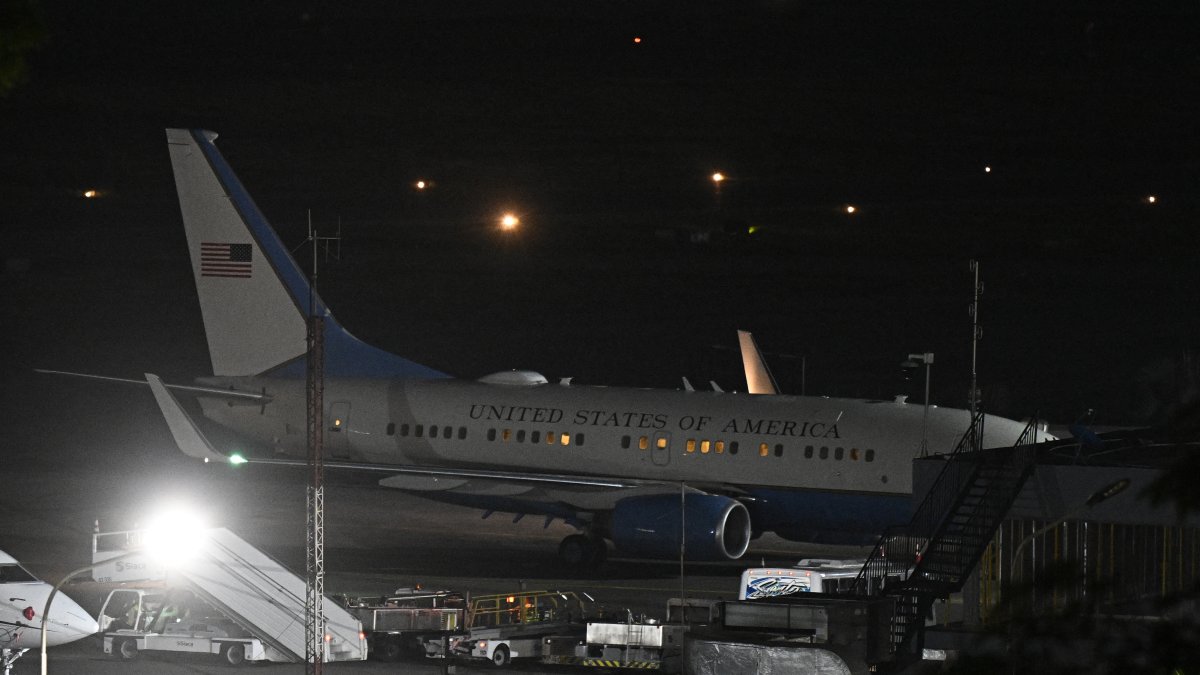
The plane carrying Energy Secretary Chris Wright after landing in La Guaira

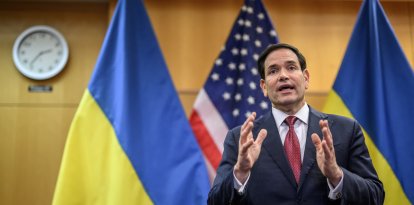
(With information from AFP) U.S. Energy Secretary Chris Wright arrived in Caracas on Tuesday to finalize a historic agreement with the Venezuelan government granting access to one-fifth of the country's oil reserves.
In the midst of a war against Iran that triggered a sharp rise in gasoline prices, President Donald Trump surprised everyone on Friday by announcing an agreement to exploit oil fields in Venezuela equivalent to 65 billion barrels of crude oil.
Footage broadcast by the state-run channel Venezolana de Televisión (VTV) showed the arrival of the delegation led by Wright at Maiquetía International Airport, which serves Caracas. No statements were made.
Secretary Wright, who arrived at 8:30 p.m. local time (12:30 a.m. GMT), will lead "tomorrow's meetings" on Wednesday in Caracas, a U.S. official told reporters on condition of anonymity.
His trip will coincide with Chevron's separate announcement of plans to expand operations in Venezuela, the source said.
Interim regime official Delcy Rodríguez confirmed Trump's announcement, emphasizing that her country will maintain sovereignty over its hydrocarbon resources, as stipulated by the Constitution.
On Tuesday, the ruling-party-dominated parliament and the Venezuelan Armed Forces backed the agreement.
"We support, approve, and agree with all the terms of the recent strategic agreement the country has reached with the United States," Defense Minister General Gustavo González López said in a brief statement broadcast on VTV.
"Transforming a political disagreement into an economic cooperation agreement is simply a decision to pursue peace; it is not a form of subordination," González López added.
Venezuelan soil holds the world's largest reserves of black gold (estimated at more than 300,000 million barrels), but production remains very limited.
Since the U.S. military operation that led to the capture of former President Nicolás Maduro in January, the Trump administration has focused on relaunching the exploitation of Venezuela's oil and gas resources.
This agreement, which drew criticism from Venezuelan opposition figures and some pro-government sectors, does not hinder Venezuela's long-term democratization plans, the U.S. source told reporters.
"Above all, it strengthens the U.S. national interest (...) in having the ability to purchase oil at an affordable price," the source explained.
And at the same time, "it will lead to a prosperous Venezuela, which will then allow it to become a stable republic," the source explained.
"In no way hinder the democratic transition"
These negotiations with an interim government, which Washington recognized only after Maduro's fall, "in no way hinder the democratic transition that must take place," the source insisted.
Washington's plan remains to first stabilize and revive the Venezuelan economy—heavily dependent on hydrocarbon exports—so that a future opposition government can inherit a country that is on its feet and has resources, the source explained.
Trump has repeatedly praised Rodríguez for his cooperation in aligning with Washington's geostrategic objectives.
Betancourt's role
Shortly before announcing Wright's trip to Caracas, the White House detailed in an explanatory note the complex agreement to indirectly control Venezuela's oil resources.
"Venezuela's interim authorities have granted North American Blue Energy Partners (NABEP), a private oil company that is the country's second-largest private oil producer and a proven operator, 100-year concessions for 17 oil fields with proven reserves of approximately 65,000 million barrels," the note explains.
"At no cost to the U.S. taxpayer, NABEP has granted the U.S. Department of War's Office of Strategic Capital a 35% equity stake in its parent company," the text added.
NABEP was founded by Venezuelan investor Alejandro Betancourt, who has been under investigation by Spain and Switzerland for at least several years for money laundering, though those investigations were later closed.
When asked why Washington chose to negotiate with Betancourt, the U.S. source replied: "We verified his track record through our system. He faces no charges in the United States for violating any of our laws."
"This doesn't just happen here, but in other parts of the world as well: sometimes you have to deal with the dynamics that already exist in order to get where you want to go," the source noted.
LATEST