ANALYSIS
They rob the dead and the survivors: Outrage erupts in Venezuela as regime forces loot earthquake victims
Public anger is directed at police and military personnel accused of rummaging through the rubble in search of money, in a pattern that is repeating itself across the country and that authorities are unable to contain.
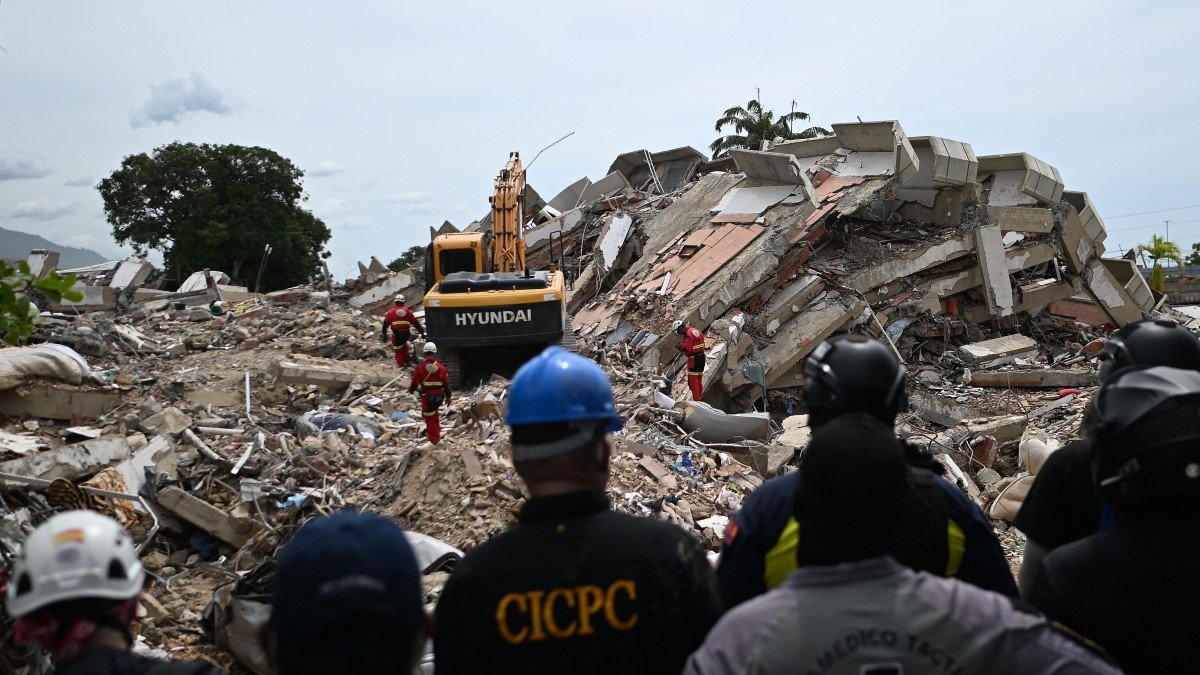
Volunteers stand motionless while rescue workers conduct acoustic searches for survivors

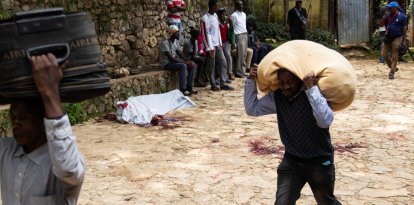
Amid the worst natural disaster in Venezuela in over a century, a scene is playing out repeatedly, sparking tremendous outrage among Venezuelan citizens: regime officials on the ground are being accused of stealing money and belongings from earthquake victims instead of rescuing them. The most widely shared case involves a police officer who was confronted by residents in La Guaira after being caught—according to the complainants—trying to keep a wad of dollars found in the rubble.
According to local media, the incident occurred at the Vallarta residences in Playa Grande, where an agent from the Scientific, Penal, and Criminal Investigations Corps (CICPC) was surrounded by family members and neighbors who accused him of stealing belongings (a wad of bills) instead of helping to sift through the rubble. In the video, which went viral, people can be seen snatching the money from him and tearing it up in front of the cameras, amid shouts of “shameless” and demands that they not take advantage of others’ suffering. The official, who was reportedly detained, denied the allegations, claimed there was no evidence against him, and argued that he was merely “holding onto evidence.”
The agent’s identity had caused confusion on social media, but an official statement from the CICPC ultimately confirmed the arrest. According to the statement, four officials—identified as Aguilar Reyes Maya, Fredy Rafael Lugo Oliveros, Roger Andrés Omaña, and Josué Jhonatan Burgos Sánchez— were “permanently and irrevocably” removed from their posts and referred to the 68th National Prosecutor’s Office, which has jurisdiction over corruption cases. The agency described the incident as “reprehensible individual conduct” that undermines its reputation. That characterization, however, clashes with the widespread nature of the allegations, which reveal a pattern that repeats itself in different parts of the country. And that is precisely why a fundamental question remains: whether the arrests will lead to actual convictions or whether Delcy Rodríguez’s regime is seeking, in the face of clear popular discontent, to give the appearance of control over the scandal.
The case, in fact, is far from an isolated incident. In the days following the June 24 earthquakes, there was a surge in videos exposing officials and security forces engaging in similar behavior. In one, recorded near a patrol of the so-called “Cuadrantes de Paz,” a group of civilians accuses the uniformed officers of “extorting” workers—that is, demanding money from them—instead of joining rescue efforts or transporting supplies to Caracas and La Guaira. In another, officers on motorcycles are accused of directly participating in the looting of businesses in La Guaira. The allegations are widespread, and VOZ, along with several international media outlets, has documented it throughout its coverage of the emergency.
Criticism has come from local politicians as well as international reporters. Opposition leader Andrés Velásquez, former governor of Bolívar state, accused the military and police officials of being “depraved thieves.” Dutch journalist Thomas van Linge, in turn, described the growing public outrage against the soldiers who, he reported, “are just standing around, petting their gun as they seem indifferent to saving lives.” In one of the videos he shared, a local resident challenges the uniformed officers to show the same brutality amid the rubble that they display when suppressing protests on the Francisco Fajardo Highway in Caracas.
Opposition leader Juan Pablo Guanipa directly criticized the Armed Forces. “The videos of soldiers, under orders from the corrupt Military High Command, confiscating or preventing the entry of aid collected by our people are unacceptable,” he said. Guanipa contrasted the military’s actions with those of 1999, when—he recalled—the Armed Forces mobilized to assist victims of the Vargas landslide, and blamed Chavismo for having eroded the institution’s operational capacity “to prevent them from speaking out against corruption, human rights violations, and the surrender of sovereignty to Cuba.”
Discontent is mounting over a government response that has been criticized from the very beginning for its slowness, the militarization of the affected areas, and the obstacles placed in the way of rescue workers. The official death toll itself continues to rise: the regime, through the president of the pro-government National Assembly, Jorge Rodríguez, raised the toll to 1,943 dead and 10,571 injured—figures that no independent source has been able to verify. While families continue to search for their loved ones among the ruins, videos of uniformed personnel rummaging through the rubble are fueling a mistrust that Chavismo, for now, has been unable to contain.
LATEST