Diosdado Cabello, Chavismo's Second-in-Command With a $25M Bounty, Goes Viral for Blocking US Rescuers: Lawmakers Now Demand His Extradition
According to a source who spoke to VOZ, Cabello allegedly aggressively stopped a SUV carrying U.S. rescue workers who were searching for two people in distress.
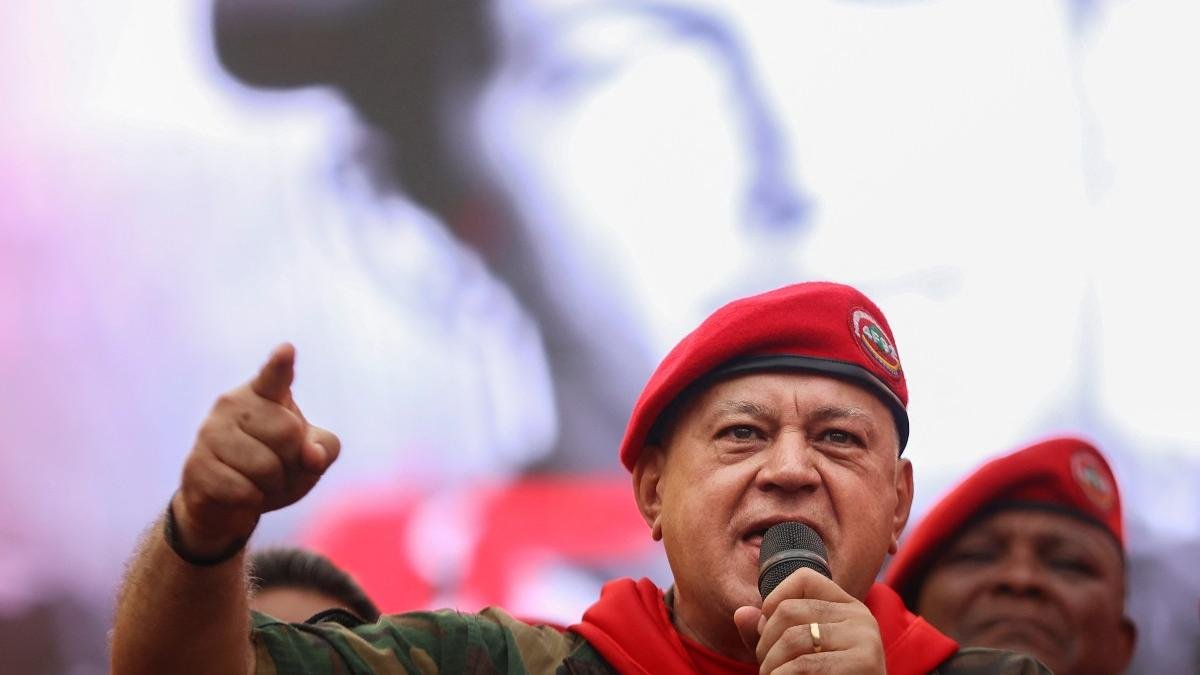
Diosdado Cabello, accused of narco-terrorism in the U.S., in a file photo

On June 28, in the devastated state of La Guaira, an altercation occurred that upset the U.S. government and Venezuela’s interim authorities: Diosdado Cabello, the second-in-command of Chavismo, identified by Washington as the leader of the feared Cartel de los Soles and the country’s current interior minister, aggressively stopped a van carrying U.S. rescue workers who were searching for two people in danger, according to a witness to the incident who requested anonymity and revealed details to VOZ, in addition to the recordings shared on social media regarding the exchange between the two officials.
According to what the person told VOZ, Cabello allegedly aggressively stopped a truck carrying American rescue workers who were searching for two people in danger. According to that source, the Chavista leader sought to position himself at the forefront of the rescue efforts, amid criticism of the delayed response by the regime of Delcy Rodríguez, and ordered any vehicle passing through the area to stop, including motorcycles, cars, and even helicopters, arguing that they needed to work in silence to locate survivors.
What happened next has since gone viral on social media and in some news outlets: a group of armed Venezuelan police officers aggressively stopped the Americans’ SUV, and Diosdado himself stepped in front of the vehicle and even banged on the hood to block their path. The rescuers got out and confronted him; one of them, who appears in the videos, accused him of sabotaging their work. The Chavista minister insisted that they could not move forward and suggested that his men push the SUV with the engine off. In the video, the rescue worker, visibly annoyed, can be heard telling him that someone was screaming for help very nearby and demanding that he move out of the way: “There's somebody right over here crying for help,” “Back up, back up.” In the end, faced with Diosdado’s insistence on “the solution” of pushing the vehicle to pass quietly, the rescuer concluded: “I'm not happy with this situation.”
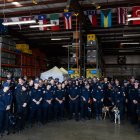
Cabello, 63, has served as Minister of the Interior, Justice, and Peace since 2024 and is accused by Washington of narco-terrorism and of leading the Cartel de los Soles, a drug trafficking network composed of high-ranking officials and military officers. A $25 million reward has been offered for his capture, and he faces ongoing legal proceedings in the United States, similar to those of former dictator Nicolás Maduro, who was captured by U.S. forces in January. He is considered the main architect of the Chavista repression and, as minister, heads the country’s police and intelligence agencies.
The Department of State, however, sought to downplay the incident and put the matter to rest. In statements to the NTN24 network, a spokesperson described the confrontation as “an unfortunate misunderstanding between a member of a U.S. urban search and rescue team and the interim Venezuelan authorities” and emphasized that “both sides were clearly trying to save lives in the wake of the devastating earthquakes.” VOZ was unable to identify the rescuer who confronted Cabello or determine how their work proceeded after the altercation.
World
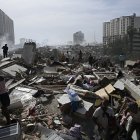
The United States steps up aid to Venezuela after earthquakes leave more than 1,700 dead
Williams Perdomo
In the United States, however, the clip sparked a wave of outrage among lawmakers.
Representative Carlos Giménez (R-FL), a former firefighter, called for the minister’s arrest: “While the US increases its presence in #Venezuela, we should pick-up thug Diosdado Cabello and bring him to justice so he can stop impeding the distribution of aid to those impacted by the earthquake.”
🚨While the US increases its presence in #Venezuela, we should pick-up thug Diosdado Cabello and bring him to justice so he can stop impeding the distribution of aid to those impacted by the earthquake. pic.twitter.com/QN23iJYZv3
— Rep. Carlos A. Gimenez (@RepCarlos) June 29, 2026
His colleague Mario Díaz-Balart demanded that “it is time for Diosdado Cabello to be extradited from Venezuela to face justice for his crimes.”
Es hora de que Diosdado Cabello sea extraditado desde Venezuela para enfrentar la justicia por sus crímenes. pic.twitter.com/jM1jG4Ej2M
— Mario Díaz-Balart (@MarioDB) June 30, 2026
Representative María Elvira Salazar was also harsh: “Only a criminal would stand between rescue workers and people trapped beneath the rubble. And that’s exactly what Diosdado Cabello is. The Delcy Rodríguez regime must understand this with absolute clarity: it must allow all humanitarian aid arriving from around the world to enter Venezuela.”
Only a criminal would stand between rescue workers and people trapped beneath the rubble.
— Rep. María Elvira Salazar (@RepMariaSalazar) June 29, 2026
And that’s exactly what Diosdado Cabello is.
The Delcy Rodríguez regime must understand this with absolute clarity: it must allow all humanitarian aid arriving from around the world to… https://t.co/qiHmYGTNAD
Meanwhile, Senator Rick Scott issued a direct warning: “Anyone who gets in the way of that, including Diosdado Cabello, will be held accountable and face consequences.”
U.S. and international rescue workers, including our military, need to be able to do their jobs in Venezuela without interference. They’re there to save lives.
— Rick Scott (@SenRickScott) June 29, 2026
Anyone who gets in the way of that, including Diosdado Cabello, will be held accountable and face consequences. This…
The altercation took place amid a catastrophe of historic proportions. According to the toll released by the regime, without independent verification, the 7.2- and 7.5-magnitude earthquakes left 1,719 dead, 5,034 injured, and 15,866 people homeless—figures announced by the president of the pro-government National Assembly, Jorge Rodríguez, brother of Delcy Rodríguez. A preliminary assessment by NASA and researchers at Oregon State University, based on satellite data that has not yet been verified on the ground, estimates that approximately 58,870 buildings were damaged or destroyed. The number of missing persons remains disputed: independent records cite more than 68,000, while the United Nations puts the figure at more than 50,000.
World
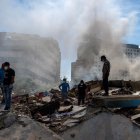
The state arrived late: Looting and military abuses expose Delcy Rodríguez's earthquake failure in La Guaira
Emmanuel Alejandro Rondón
The interim administration of Delcy Rodríguez is also facing harsh criticism for its response. Testimonies collected by VOZ agree that, during the first few days, the official response was virtually nonexistent, with few firefighters and ambulances and no command structure to coordinate efforts. Added to this were widespread looting and allegations against police and military personnel accused of participating in looting and theft of victims’ belongings from the rubble, along with the militarization of La Guaira through a checkpoint that volunteers denounced as a new obstacle. Simón Bolívar International Airport, the main gateway for aid, was severely damaged, prompting the United States to send a contingent of its Air Force to repair it. A large portion of the resources—nearly 1,000 metric tons of supplies and more than 3,600 rescue workers from 30 countries—was concentrated in La Guaira, to the detriment of areas such as El Junquito, where residents have set up makeshift camps.
One of the most heartbreaking tragedies occurred near Maiquetía Airport, where a hotel housing more than 140 Venezuelans recently deported from the United States—including seven minors—collapsed. Their families fear that most of them have died. Despite everything, international teams continue the search for survivors: U.S. rescue workers managed to pull a nine-month-old baby and her mother alive from the rubble after they had been buried for nearly three days.
LATEST