From hiding to the Nobel Prize: this was the dangerous operation for María Corina Machado to escape from Venezuela
Although Machado did not make it to the ceremony in time, the mission was successful and her daughter, Ana Corina, replaced her at the award reception.
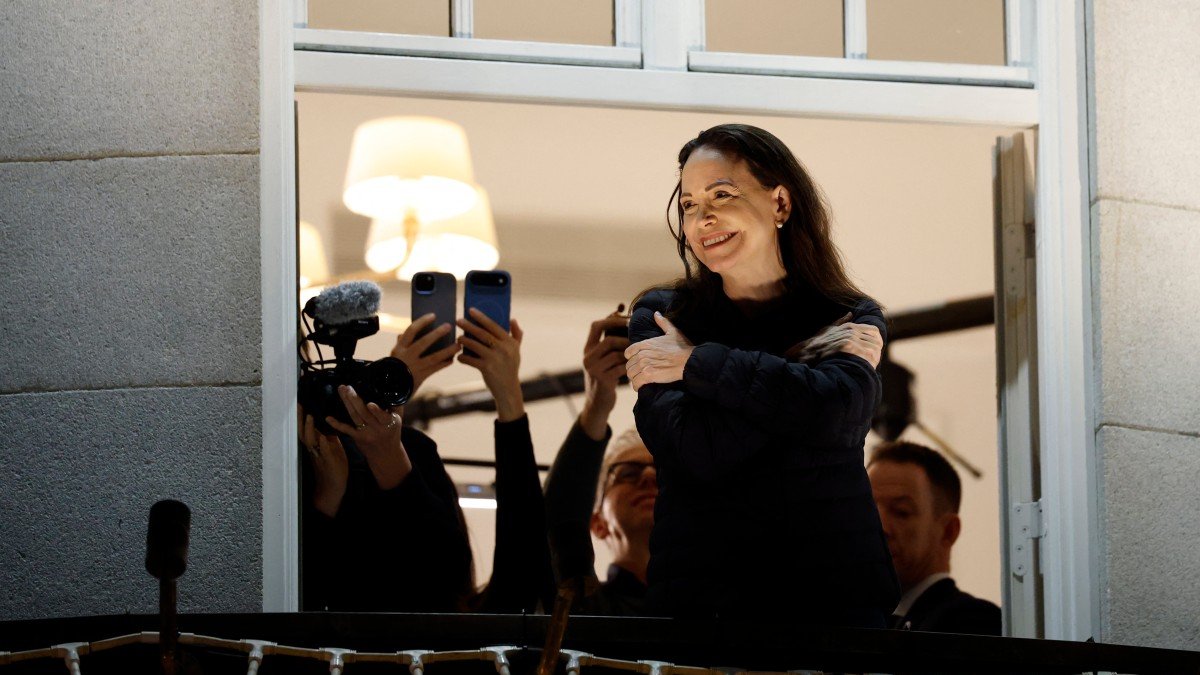
Maria Corina Machado waves to supporters from a balcony of the Grand Hotel in Oslo

As rumors swirled that María Corina Machado, Venezuelan opposition leader and Nobel Peace Prize winner, had allegedly left Venezuela and evacuated with the help of the United States, the reality was far from the unfounded versions on social networks.
On Monday afternoon, within hours of the ceremony organized in Oslo, Norway, Machado was still in Venezuela, in a secret refuge in Caracas, as he prepared for the odyssey of leaving the countryafter remaining more than a year in hiding through a carefully designed secret operation.
It was then that 'the journey' began. Disguised and wearing a wig, Machado began a journey from the capital to a fishing village on the coast. On that journey, accompanied by two men, Machado managed to evade up to ten military checkpoints—better known as alcabalas—in a total of ten hours of travel, reported The Wall Street Journal, citing people with knowledge of the operation close to the flamboyant Nobel Peace Prize winner.
World
Amidst chants and tears, Venezuelans celebrate María Corina Machado's Nobel Prize in Oslo
Williams Perdomo
The opposition leader arrived at the coast at midnight, rested for a few hours and, at 5:00 AM, boarded a typical wooden boat bound for Curaçao. The crossing was dangerous and the group of three faced strong winds and rough seas that caused delays in the operation.
According to the WSJ, the operation was designed and carried out in secret, with preparation taking about two months, and was ultimately executed "by a Venezuelan network that has helped other people to flee the country."
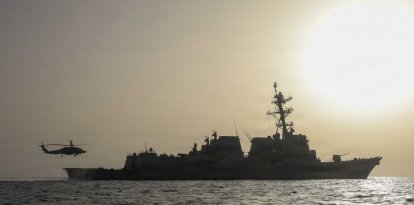
The chronicle of the escape detailed that, before leaving for Curaçao, the extraction group made "an important call" to the U.S. Army to inform them that Machado was on the boat. The purpose of the call was to avoid a potential air strike by mistake by the U.S. Army, which has already sunk more than 20 'narco-boats' in its unprecedented and notable deployment in the Caribbean Sea and Pacific.
“We coordinated that she was going to leave by a specific area so that they would not blow up the boat,” a person close to the operation told the WSJ. The Trump administration was aware of the secret operation, but it is unclear how much support it provided to Machado, an ally of theWhite House.
However, as the speedboat carrying Machado bound for Curacao was plying the Caribbean Sea, a pair of U.S. Navy F-18s entered the Gulf of Venezuela, allowing themselves to be observed by flight-tracking systems. The aircraft spent about 40 minutes flying in tight circles near the route from the coast to Curaçaoin what experts said was the closest incursion of U.S. aircraft into Venezuelan airspace since the U.S. military deployment in the Caribbean began.
It is unclear whether those maneuvers were related to Machado's escape.
The Nobel laureate arrived in Curaçao around 3 p.m. Tuesday, where she was met by a private contractor specializing in extractions and provided by the Trump Administration, the WSJ reported.
After the long journey and crossing by land and sea, Machado checked into a hotel and spent the night on the island.
Then, on Wednesday morning, while the historic ceremony was taking place in Oslo, an executive jet provided by a partner in Miami took off from Curacao for the Norwegian capital, making a stopover in Bangor, Maine.
Machado finally arrived in Oslo on Wednesday night, where she was reunited with her children, Ana Corina and Ricardo Sosa Machado; several old friends from the struggle; political allies from all over the world, including the U.S.; and thousands of Venezuelans who welcomed her with chants, tears, and hugs.
The opposition leader, who greeted the crowd from the balcony of the Grand Hotel in Oslo, went down to the street where she greeted, shook hands and hugged the Venezuelans who came to Norway to accompany her even in the early morning, before the inclement Nordic cold.
🎥 COBERTURA | @MariaCorinaYA, a su salida del Grand Hotel en Oslo, saluda a @wperdomod, corresponsal de @Voz_US https://t.co/LkFW71xOho pic.twitter.com/OYSdRTjbKI
— VOZ (@VozMediaUSA) December 11, 2025
El abrazo que necesita toda Venezuela.
— María Corina Machado (@MariaCorinaYA) December 11, 2025
Gracias!! pic.twitter.com/ozQgFQzGjq
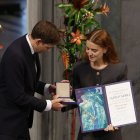
Although Machado did not arrive in time for the ceremony, the mission was a success, and her daughter, Ana Corina, replaced her at the award reception, reading a speech written by the opposition leader and saying that her mother "will be back in Venezuela very soon."
According to reports, Machado will most likely indeed return to Venezuela, but not before touring Europe and, especially, the United States, where she will meet with allies and key players.
LATEST