House gives go-ahead to $901 billion military defense bill
The package advances to the Senate after a 312-112 vote, after four Republicans changed their vote in the previous proceedings.
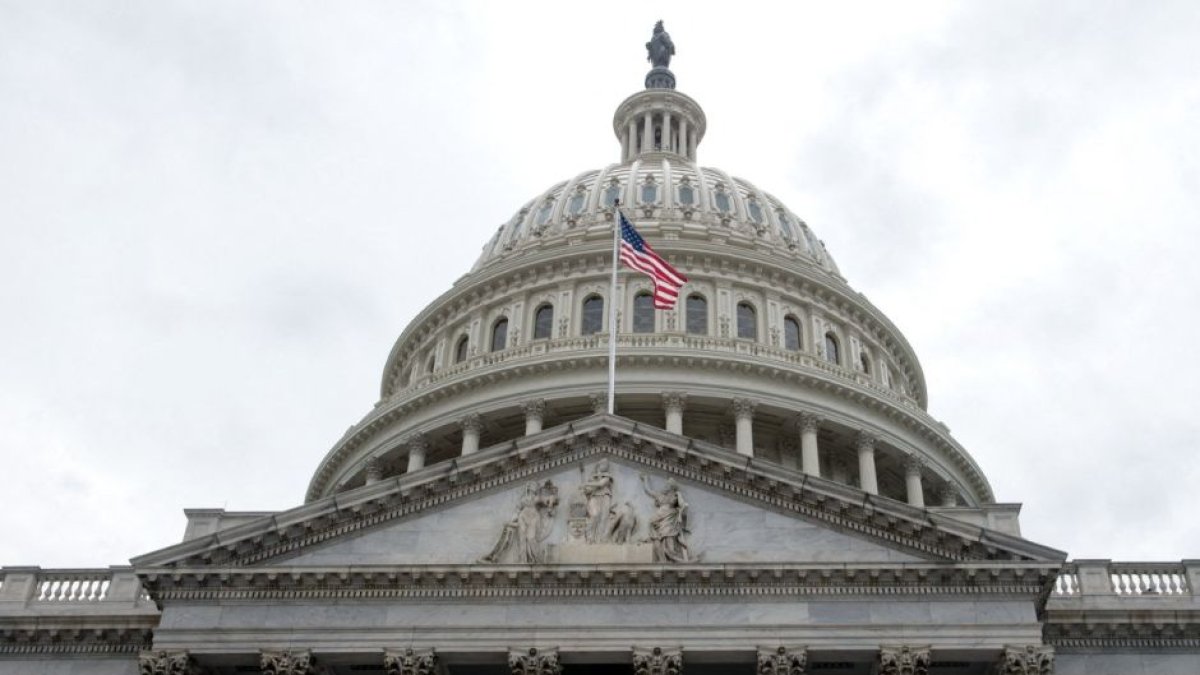
The U.S. Capitol in Washington, DC.

The House of Representatives approved this Wednesday the National Defense Authorization Act (NDAA) by 312 votes to 112, advancing a $901 billion package for the Pentagon. The legislation now moves to the Senate, where a vote is expected on a text already negotiated between the two chambers, the result of weeks of talks between Republican leaders.
Passage was secured after a very close procedural vote (215-211) in which four conservative Republicans -Anna Paulina Luna, Marjorie Taylor Greene, Tim Burchett and Lauren Boebert—switched their votes and allowed the initiative to move forward, in the face of opposition from Democrats.
Internal tensions, but conservative gains
Some Republicans opposed the package for including $400 million annually for Ukraine and for not prohibiting the Federal Reserve from pushing a Central Bank Digital Currency (CBDC). Still, the final version incorporates several conservative priorities: elimination of DEI policies at the Pentagon, $20 billion in cuts to programs deemed obsolete, and a 4% pay raise for enlisted personnel.
The bill also maintains limits on changes to military presence in Europe and South Korea and withholds part of the Defense secretary's travel budget until the Pentagon turns over recordings of anti-drug operations near Venezuela.

Competition with China and federal oversight.
On the federal oversight front, the law requires the FBI to report when investigating presidential candidates or aspirants for federal office. IVF coverage for military families and a proposal on the regulation of artificial intelligence were left out of the final text.
Finally, the NDAA repeals two former Iraq-linked war authorizations and keeps the 2001 counterterrorism authority unchanged.
LATEST