Colombia welcomes Maduro leaving power, but in exchange for not being persecuted
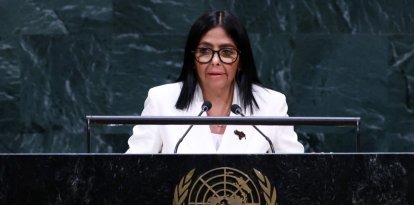
According to the Colombian Minister of Foreign Affairs, the Venezuelan dictator could consider leaving power if he received personal security guarantees.

Colombian President Gustavo Petro

Colombia expressed its support for a transition plan that would allow Nicolas Maduro to cede power to an interim government tasked with organizing new elections. The proposal, which has gained momentum in diplomatic circles in Washington, Caracas and other capitals, comes at a time when the United States maintains a reinforced military presence in the Caribbean and is evaluating stronger responses to the Venezuelan regime.
Although this possible agreement is being circulated as an alternative to avoid a direct intervention, there are no signs that President Donald Trump is considering accepting such a proposal. According to Colombian Foreign Minister Rosa Villavicencio, Maduro could contemplate leaving power if he receives personal security guarantees.
Bogota affirms that Maduro could accept a negotiated exit
From Madrid, Villavicencio assured that the Venezuelan dictator would be willing to cede control to a third party that conducts a legitimate electoral process, as long as he is protected against any eventual judicial proceedings. "He could leave without necessarily ending up in prison, someone else could come in to lead that transition and allow for elections that are legitimate," he said.
In Venezuela, there is no official confirmation of Maduro's willingness to consider such an agreement. According to Villavicencio, Colombian President Gustavo Petro has not spoken directly with Maduro, but his team maintains communication with the regime's diplomats.

Regional support for new elections and need for opposition support
Possible U.S. intervention
The debate comes as the Trump administration maintains a tough stance against regional drug trafficking. The U.S. president warned this week that he could order strikes against targets linked to suspected cartels in Venezuela, Colombia and Mexico.
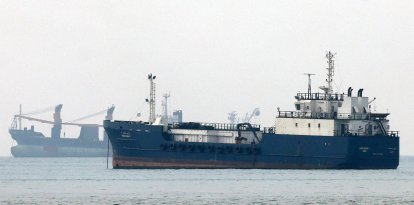
U.S. forces have already sunk drug trafficking vessels in the Caribbean and Pacific since September, actions that Colombia fears could escalate into direct conflict.
Villavicencio said a military operation "could trigger a humanitarian crisis that would be very difficult to manage."

Tensions between Bogota and Washington complicate Colombia's role
Relations between Colombia and the United States have deteriorated since the beginning of Trump's second term. The U.S. president has called Colombian President Gustavo Petro "lunatic" and an "illegal drug leader," in addition to cutting aid and withdrawing his visa.
This confrontation, according to analysts, weakens Colombia's position as a possible guarantor of a Venezuelan transition.
LATEST