UN mission accuses Venezuela's National Guard of 'systematic violations and crimes against humanity'
These abuses have been documented since 2014 "in the context of protests and actions of political persecution," the group of investigators added.
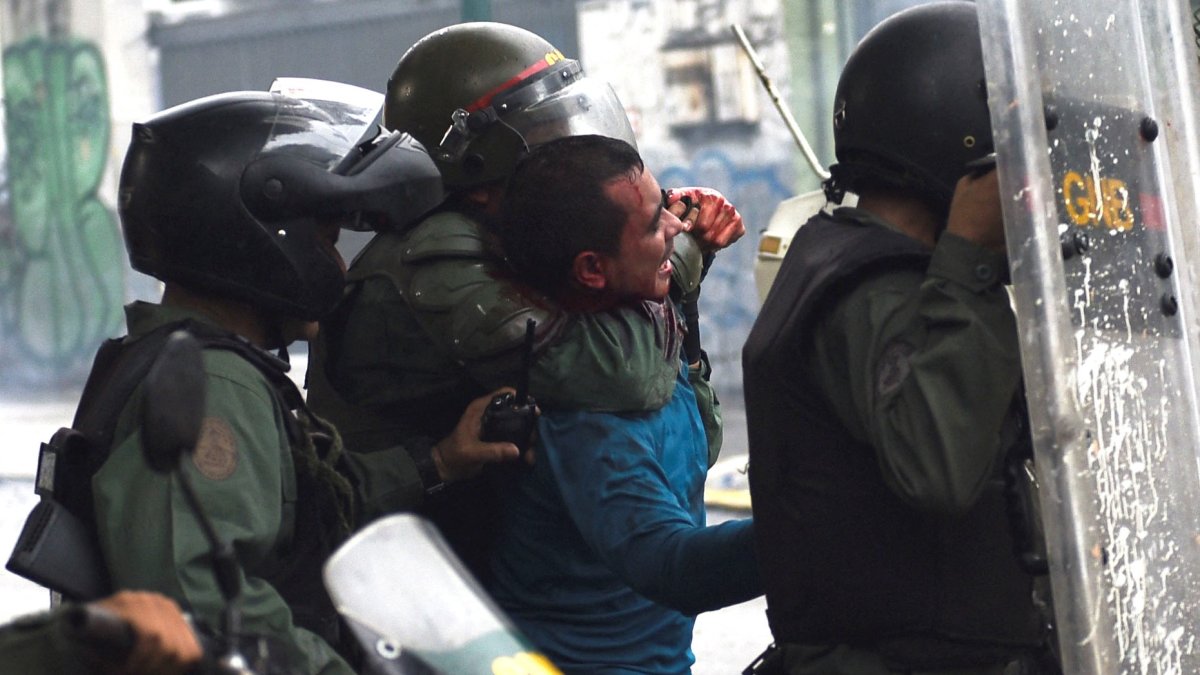
Repression in Venezuela by Maduro's police forces.

The Bolivarian National Guard (GNB) of Venezuela has been responsible for "serious violations and crimes against humanity" for more than 10 years, a United Nations mission stated in its latest report.
The independent international fact-finding mission on the Bolivarian Republic of Venezuela, created in 2019, assured that members of the GNB committed "executions, arbitrary detentions, sexual and sexist violence, as well as acts of torture and other cruel, inhumane or degrading treatment."
These abuses have been documented since 2014 "in the context of protests and actions of political persecution," the group of investigators added.
"Systematic and coordinated repression against opponents"
In September 2019, the U.N. expanded its monitoring of the situation in Venezuela with the creation by the Human Rights Council of this independent international fact-finding mission.
This mission, which does not express itself on behalf of the organization, documented facts that according to it "demonstrate the role of the GNB in the systematic and coordinated repression against opponents or those perceived as such for more than a decade," denounced Marta Valiñas, president of the mission, in a statement picked up by AFP.

The security forces of Nicolas Maduro's regime, including the GNB and police, are frequently accused of abuses, usually during the repression of opposition demonstrations.
Acts of violence at GNB facilities
United States, Europe and many countries in Latin America do not recognize the results of the 2024 election that saw Maduro embark on his third six-year term. The opposition accuses the regime of fraud.
During the strongest protests in 2014, 2017, 2019 and 2024, the GNB "made excessive use of force, especially making inappropriate use of lethal and non-lethal weapons," the mission added in that report published in Geneva.

Politics
Former Venezuelan general warns in letter to Trump that Delcy and Jorge Rodriguez are the "real brains" behind the Cártel de los Soles
Emmanuel Alejandro Rondón
The mission also mentioned "massive arbitrary detentions," and acts of violence in GNB facilities.
"The acts of torture, ill-treatment and sexual violence that we have verified, including assaults and rapes, are not isolated incidents. They are part of a pattern of abuses that seek to punish and break the victims," Valiñas said.
"The Mission has reasonable grounds to believe that GNB officials played a determining role in the crimes under investigation," she added.
Reinforced impunity
The report also mentions a "structural impunity" in the country, with cases of "investigations that do not progress," "long procedural paralysis," or "manipulation of evidence."

World
Documentary on María Corina Machado kicks off Nobel Peace Prize events in Oslo
Carlos Dominguez
According to the investigators, the persistence of these abuses is testimony to the "failures" of the political system and Venezuelan responsibility, which according to them "contributed to reinforcing impunity."
"The persistence of these crimes and the absence of adequate justice demand a firm response from national and international control mechanisms," Valiñas pointed out.
Death of a former opposition governor in regime custody
Opponents and organizations denounced on Saturday that he had been going months without receiving medical attention and considered his death a direct consequence of the conditions of confinement imposed by the regime of Nicolas Maduro.
Díaz was arrested in November 2024 by the Bolivarian National Intelligence Service (SEBIN) in the state of Portuguesa and remained for more than a year in this detention center described as "hell on earth," under conditions of isolation and with limited access to visitors.
Before being detained, the former governor criticized the failure to disseminate the detailed results of the presidential elections of July last year and publicly denounced the electricity crisis that affected Nueva Esparta in November, which the government attributed to alleged attacks by the opposition.
LATEST