Bolivia: after the electoral defeat of the left, justice opens the process for the release of political prisoners
The Supreme Court of Justice ordered the immediate review of the judicial cases of former president Jeanine Añez and political prisoners Luis Fernando Camacho and Marco Antonio Pumari.
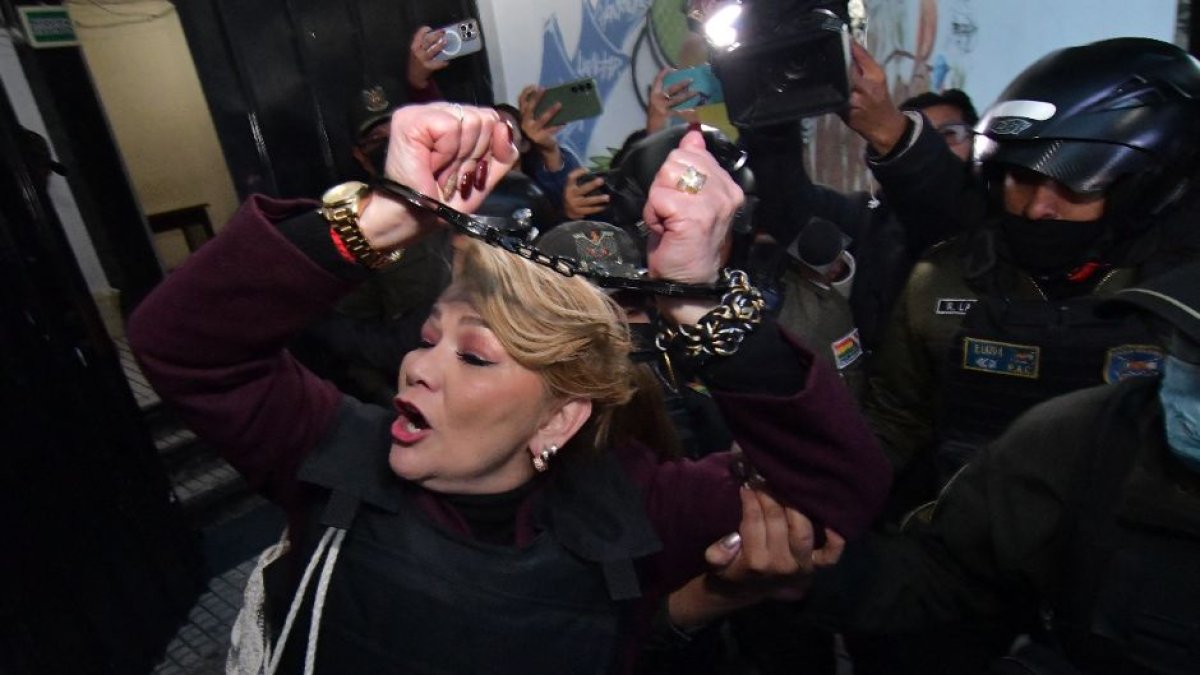
Former Bolivian president Jeanine Áñez

Bolivia: Following the electoral defeat of the Movement Towards Socialism (MAS), the Bolivian Supreme Court of Justice (TSJ) ordered on Friday the immediate review of the judicial processes that keep imprisoned former president Jeanine Áñez and political prisoners Luis Fernando Camacho and Marco Antonio Pumari. The measure, which must be applied by the departmental courts within a maximum period of 24 hours, seeks to verify if the preventive detentions comply with the terms and guarantees established by law.
The decision comes after years of complaints about the abusive use of preventive detention against opponents of the Movimiento al Socialismo, in a context in which the government of Luis Arce has been accused of using the justice system to silence dissidence.
A review that could open the door to liberation
Although the TSJ did not directly order the release of the three leaders, human rights lawyer Tamara Suju explained that the review is equivalent, in practice, to recognizing that the legal deadlines have already been met. According to Suju, Áñez, Camacho, and Pumari "should be released, since they all met those deadlines and were illegally extended to keep them in prison."
This means that, if the judges apply the law according to the TSJ's mandate, the release of the opponents would be imminent.
Proceedings against the opponents
Luis Fernando Camacho, governor of Santa Cruz, and Marco Antonio Pumari, former civic leader of Potosí, are being held under accusations linked to the so-called "coup d'état I", a process that is still pending before the Constitutional Court. Both were protagonists of the mobilizations that precipitated Morales' departure in 2019.

International support
The TSJ's decision was celebrated by organizations that have denounced the political persecution in Bolivia. Foro Madrid, an international alliance in defense of freedom, called the announcement a "cause for celebration and joy" and recalled that the imprisonment of Áñez, Camacho, and Pumari was the result of a "corrupt, criminal, and dictatorial system."
The organization urged that those responsible for these arrests be held accountable before international bodies and linked the case to the realities of repression in countries such as Venezuela, Cuba, and Nicaragua.
LATEST