Argentina: The conflict between Milei and his vice-president, an announced rupture that shakes the Government
The coexistence between the two was always tense, and recently the rupture became irreversible. A review of the most important clashes between Milei and Villarruel.
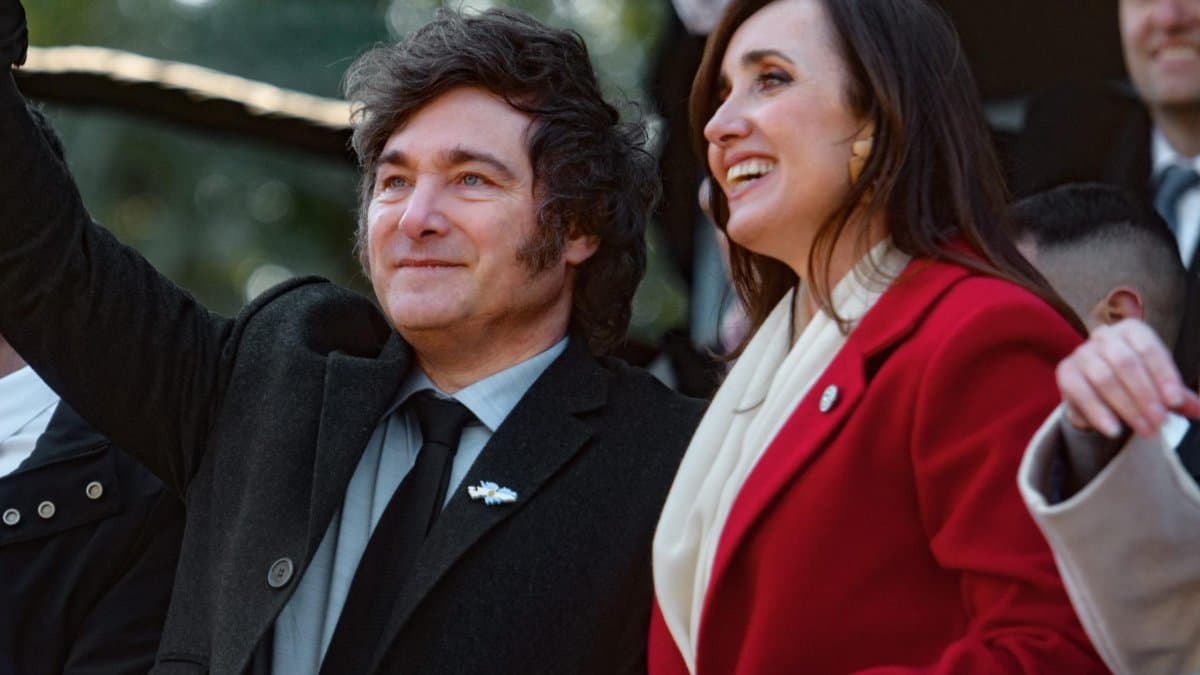

The relationship between Argentina's president, Javier Milei, and his vice president, Victoria Villarruel, was a ticking time bomb from the start of their alliance. Their ideological and personal differences, barely concealed during the 2023 campaign, recently exploded into an internal political crisis in La Libertad Avanza (LLA), the ruling party.
While Milei embodies libertarianism, which promotes high levels of economic and individual freedom, Villarruel, daughter of a retired lieutenant colonel of the Argentine Army who was a veteran of the South Atlantic Conflict (Malvinas War/Falklands War), is more aligned with a conservative nationalism, with a strong Catholic imprint and a discourse focused on the defense of the Armed Forces.
Milei, perhaps belatedly, realized that this political caste which he has decided to fight since he entered politics in 2021, is not alien to Villarruel.
Milei's decision to choose her as running mate remains an enigma: some speculate that it was a strategic wink to capture the vote of the more traditional right, while others believe that Villarruel knew how to silence their differences during the campaign, generating an illusion of harmony, since both shared common enemies: the left and Kirchnerism, a current of Peronism that governed from 2003 to 2015 uninterruptedly, and then did it again from 2019 to 2023.
However, the coexistence between the two was always tense, and recently the rupture became irreversible.
The origins of the conflict
The beginning of the conflict dates back to the early days of the Libertarian administration. According to several sources, the differences arose when Milei failed to keep his campaign promise to give Villarruel control of the Ministries of Security and Defense, areas that the vice-president considered key to her political project. Instead, the president chose to appoint Patricia Bullrich and Luis Petri, figures coming from Juntos por el Cambio, a center-right political force that competed with LLA in the 2023 elections, which generated a first break in the relationship.
The rejection of Milei's mega decree
Another turning point occurred in March 2024, when Villarruel, in her role as president of the Senate, called a session that allowed the rejection of the mega DNU (Decree of Necessity and Urgency) 70/2023, a fundamental measure for Milei's economic plans. This decision was interpreted by the presidential entourage as a betrayal, unleashing a wave of criticism from the Casa Rosada (seat of government) and a smear campaign orchestrated by the president's most loyal followers, with Congresswoman Lilia Lemoine as one of the main spokespersons.
"The little ham"
An iconic moment that encapsulates the tension between the two occurred in a 2024 interview during an interview with Argentine journalist Jonatan Viale. When asked about his relationship with Milei, Villarruel responded with a phrase that became a meme: "Javier is like a poor little ham between Karina and me." The statement, said in a jocular tone, referred to the influence of Karina Milei, sister of the President and Secretary of the Presidency, in the Government's decisions and to Villarruel's position as a figure who, according to her, tried to balance that dynamic.
The phrase did not go down well in the presidential environment, and Karina would have taken the statement as a personal provocation, intensifying her animosity towards the vice-president, with whom she had clashed as a result of a controversy generated by a viralized video in which the Argentine soccer player Enzo Fernández appears singing racist chants against France after winning the Copa América with his country's national team. On that occasion, Villarruel defended the sportsman and pointed against the French, accusing them of being colonialists, for which the President's sister decided to go to the French Embassy in Buenos Aires to apologize.
The conflict over the candidacy of a judge for the Supreme Court
Villarruel has also repeatedly criticized the fact that Milei presented as candidate for the Supreme Court of Justice the controversial judge Ariel Lijo, whom some voices in journalism and politics accuse of having delayed corruption cases of Kirchnerism.
The photo with 'Isabel' Perón
Another conflict arose after Villarruel was photographed in October 2024 with María Estela Isabelita Perón, ex-wife of the authoritarian president Juan Domingo Perón and president of the country from 1974 until his overthrow in 1976, and unveiled a bust in her honor at the Casa Rosada.
In an interview, Milei said: "I would not have done it". And he added: "For me, the case of Mrs. María Estela Martínez de Perón does not enhance women, on the contrary. I do not believe that she reached that position because of her intellectual and professional merits.”
Controversy over senators' raises
In April 2024, the senators approved an increase of 120% in their per diems, going from approximately 1,800,000 pesos to 4,000,000 gross per month. This was voted by a show of hands in a session without public debate, which generated controversy and Milei pointed the finger at the Senate, presided by Villarruel.
In August of the same year, a 6.5% increase in per diems was approved, raising salaries to 9 million pesos (more than 7,000 dollars). Milei expressed his repudiation of the increase and argued that the senators were "disconnected from reality" due to the harsh economic crisis inherited. He called the increase a "mockery" and a "betrayal" to workers.
In June 2025, Milei replied to a message on social networks calling to shut down Congress after senators adjusted their salary by 4%.
Milei avoids greeting Villarruel
Throughout 2025, the disagreements multiplied. One of the most notorious episodes occurred on May 25 - the day on which the May Revolution is celebrated, a milestone that marked the road to independence - during the Tedeum at the Metropolitan Cathedral, when Milei avoided greeting Villarruel, a gesture that did not go unnoticed and was widely commented in the media.
Milei justified his actions on social networks. "ROME DOES NOT PAY TRAITORS. If you are good with the bad guys (that is, with those who betray, lie, slander, insult and dirty for a mere advantage) you end up being very bad with the good guys," he wrote.
More recently, on July 9, the absence of Milei at the ceremony for the Independence Day in the province of Tucumán, where Villarruel was present, evidenced once again the fracture between the two.
🇦🇷 | ROMA NO PAGA TRAIDORES
Durante las celebraciones por el 25 de Mayo, el presidente Javier Milei le negó el saludo al jefe de Gobierno Jorge Macri y a la vicepresidente Victoria Villarruel. pic.twitter.com/9uArr8y13x
The most recent critical point occurred after a series of crossed statements after Villarruel received harsh criticism from the Casa Rosada and from Milei's followers for enabling a session in the Senate, where a retirement increase became law and more funds for the provinces were approved. These measures cause damage to the fiscal surplus that the Government intends to preserve.
After Milei accused the Vice-President of being a "traitor", of "being "disconnected from reality" and of "not understanding the effort of the Argentine people", Villarruel suggested that the Government should save on "trips" and intelligence services instead of cutting benefits to retirees and disabled people.
The political consequences
The rift between Milei and Villarruel not only affects the internal dynamics of the Government, but could also have electoral implications in the face of the 2025 legislative elections.
According to surveys, Villarruel maintains a relatively high positive image, although she has lost ground since the beginning of the term, going from 55% approval in February 2024 to 35% in 2025. However, her support base remains significant, positioning her as a figure with the potential to challenge Milei's leadership within LLA.
On the other hand, Villarruel's isolation in the Senate, where she has lost key allies, and her lack of a political structure of her own limit her ability to maneuver.
An increasingly distant reconciliation
The conflict between Milei and Villarruel shows no signs of reconciliation. While the president seeks to consolidate his leadership and move forward with his fiscal adjustment agenda, the vice-president insists on defending her role as president of the Senate and her commitment to institutionality, which is seen by many as mere excuses to justify her behavior as part of the political caste. However, the constant public crosses and the lack of direct dialogue between the two suggest that the crisis is far from being resolved.
🛠 Do you think there is an error in this article?
Recommendations
LATEST