






ANALYSIS
The 'heir to Jobs' who shone in his own right: Tim Cook's legacy as Apple's CEO
From operational manager to architect of sustainable growth: after 15 years leading the company, Cook transformed Apple into a powerhouse of innovation, efficiency, and values.
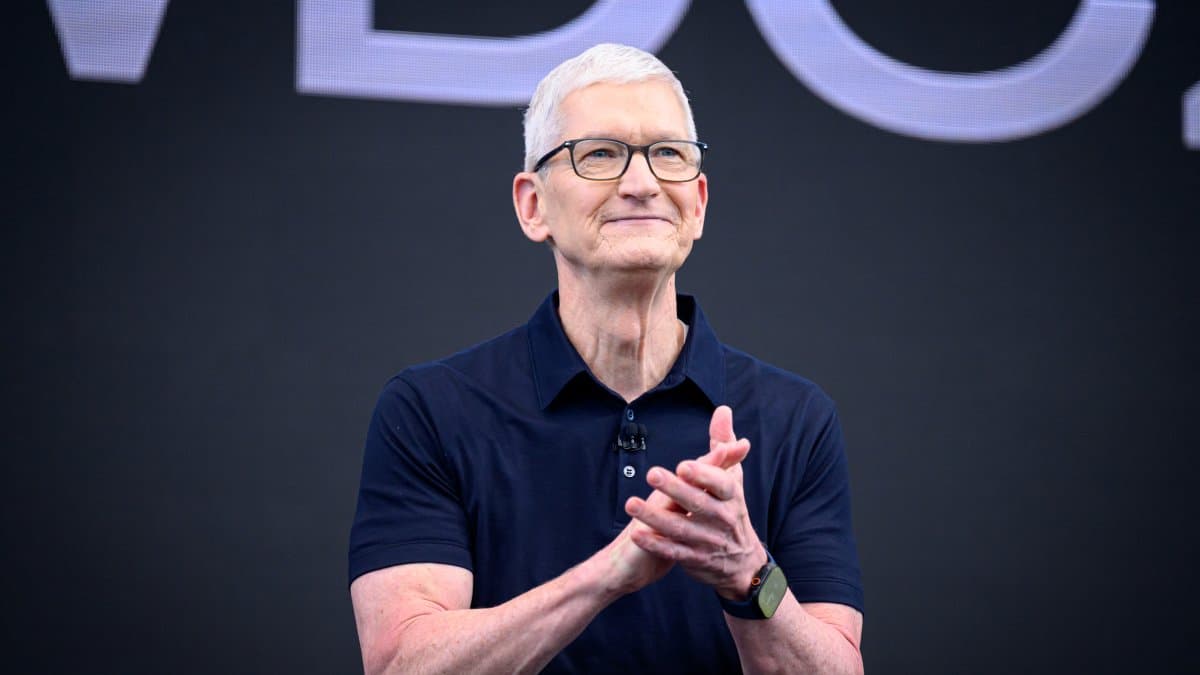

This Monday, Tim Cook is handing over the executive reins of Apple to John Ternus. After 15 years at the helm of the company, Cook's legacy is one of the most solid and enduring in the company's history. While the market valued Apple at about $350,000 million in 2011, today it stands at around $4.6 trillion. The company went from generating about $108 billion annually to nearly $400 billion, with a diversification that extends beyond the iPhone.
From 'Jobs' heir' to the star of growth
When Cook took over as Apple's CEO, many saw him as an operational manager, not as a design visionary. While Jobs was the company's creative icon, Cook proved to be the opposite. He led the company to unprecedented expansion in products and services, with a focus on the global supply chain and operational efficiency that turned Apple into a machine with unbeatable margins. His legacy is not just the numbers, but having turned Apple into a hub of sustainable innovation and profitability.
Society
Google Maps Renames Lake Ontario "Lake America" in the U.S., but Not in Canada
Carlos Dominguez
Products that changed the market
Apple Watch and AirPods: accessories that generate billions in revenue and create new usage habits.Apple Vision Pro: the first mass-market AR/VR headset.Services: Apple Music, Apple TV+, Apple Arcade, Apple Pay and iCloud+ surpassed $109,000 million in revenue in 2025, making services account for more than 25% of total revenue.The company reduced its reliance on the iPhone (which now accounts for only about 50% of revenue) and diversified into Mac, iPad, wearables and hardware.

Tech & Science
OpenAI, Anthropic, Google, Microsoft and 130 other companies warn: A wave of AI-powered cyberattacks is coming
Emmanuel Alejandro Rondón
From CEO to executive chairman: Cook isn't leaving entirely
Cook will not be leaving Apple entirely. After handing over the CEO role to John Ternus, he will become executive chairman, a position in which he will remain involved in global relations, policy and strategic matters. His message to employees was clear: "I am healthy. My energy is high, and I plan to be in this new role for a long time."
Ternus, a 25-year hardware veteran, is the internal successor whom Cook personally selected. Cook described him as someone with "the mind of an engineer, the soul of an innovator, and the heart to lead with integrity and with honor."
Arthur Levinson, who has served as Apple's non-executive chairman for the past 15 years, will become its lead independent director effective this Tuesday. "Tim’s unprecedented and outstanding leadership has transformed Apple into the world’s best company. He’s introduced groundbreaking products and services time and again, and his integrity and values are infused into everything Apple does," said Levinson.
Society
Apple defies United Kingdom and refuses to create 'backdoor' in encrypted data
Carlos Dominguez
Tim Cook, the engineer who built the Apple empire
His career began at IBM, where he spent 12 years eventually rising to head the North American distribution division. After brief stints at Intelligent Electronics and Compaq, Steve Jobs recruited him in March 1998 as senior vice president of worldwide operations. His talent for logistics, reducing inventory and optimizing the supply chain, led him to become Chief Operating Officer in 2004. In 2009 and 2011, he served as interim CEO during Jobs' medical leaves, until he was named CEO on Aug. 24, 2011, following the founder's resignation.

Scale, logistics and sustainability
Tim Cook leads an Apple that has grown to unimaginable proportions. When he took over as CEO in 2011, the company's market capitalization was around $350 billion; today it exceeds $4 trillion and even approached $5 trillion during his final months at the helm of the company. Revenue has nearly quadrupled.
Cook's greatest contribution was transforming logistics. He reduced inventory, optimized the global supply chain, and turned Apple into a machine with unbeatable costs and margins. This allowed the company to fund innovation and expansion without losing operational control. Cook also drove sustainability: he reduced the company's carbon footprint by more than 60% below 2015 levels, while maintaining revenue growth that nearly quadrupled.
The company's global presence expanded under his leadership. Cook drove expansion in emerging markets and made India a strategic pillar: the company now assembles about a quarter of its iPhones there. Production was diversified to India, Vietnam, and other countries to mitigate the geopolitical risks of dependence on China.

Economy
Anthropic surpasses OpenAI in revenue for the first time in the second quarter
Emmanuel Alejandro Rondón
Challenges and debates surrounding his legacy
Despite everything, analysts agree that Cook leaves his successor, John Ternus, a solid legacy. The new CEO takes the helm of a company valued at about $4 trillion dollars, with revenue that has more than quadrupled in 15 years and a base of more than 2.5 billion active devices. The legacy is clear: Cook not only kept Apple at the top, but also left it more resilient, diverse and prepared for the future.
🛠 Do you think there is an error in this article?
Recommendations




LATEST