ANALYSIS
Two decades after 'An Inconvenient Truth': What does the data say about Al Gore's predictions?
Two decades ago, Al Gore’s film "An Inconvenient Truth" warned of an imminent climate collapse. However, according to Danish expert Bjorn Lomborg, the data from these past 20 years paints a different picture: despite global warming, humanity is now much safer in the face of disasters and has significantly strengthened its resilience.
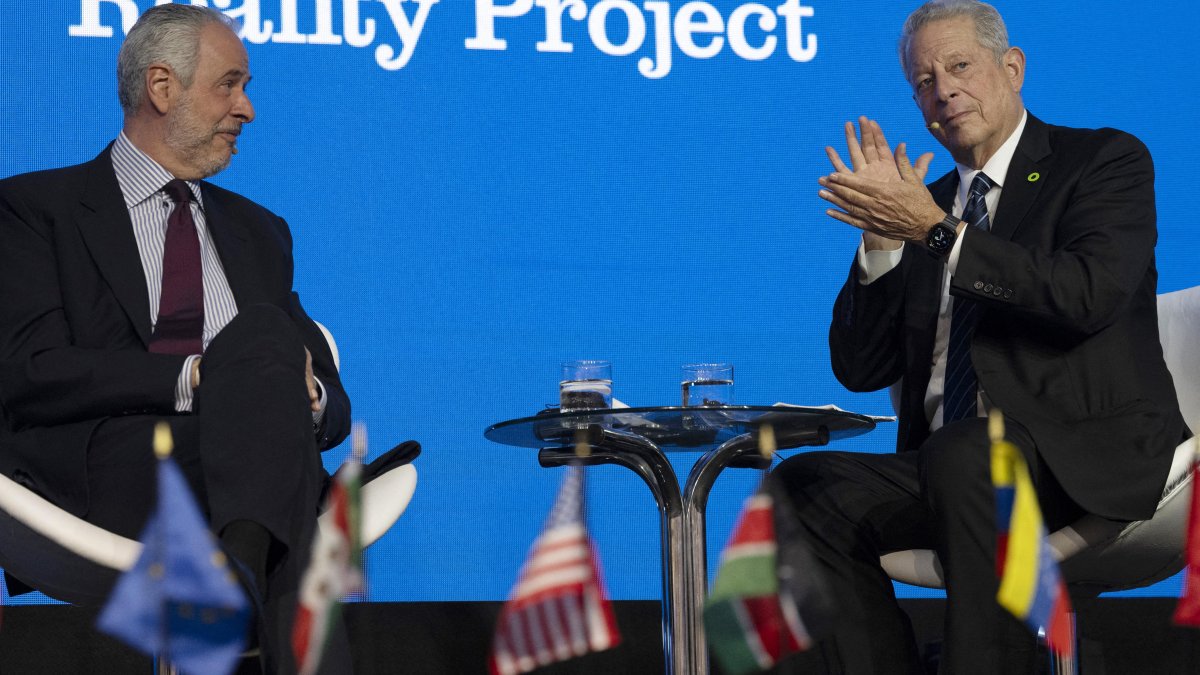
Former U.S. Vice President and founder of the Climate Reality Project Al Gore

Twenty years ago, the film "An Inconvenient Truth," starring former U.S. Vice President Al Gore, became a global benchmark on climate change. With striking images and an urgent message, it warned of a catastrophic future driven by global warming: more frequent and destructive hurricanes, uncontrolled wildfires, polar bears on the brink of extinction, and increasingly deadly climate-related disasters. The film called for immediate and decisive action to reduce emissions.
However, according to an article from Bjorn Lomborg, president of the Copenhagen Consensus and visiting scholar at the Hoover Institution at Stanford University, published in The Financial Post, two decades later, the global data paints a more nuanced picture that calls for rigorous evaluation.
Far from confirming an imminent collapse, the available evidence suggests that humanity has made significant progress in resilience, although real challenges remain that require pragmatic solutions.
Deaths from climate-related disasters: A dramatic decline
One of the documentary’s central messages was that climate change was causing increasingly frequent and deadly climate-related disasters. However, global figures from the last century paint a very different picture: even though the world’s population quadrupled, deaths caused by these events have fallen dramatically.
In the 1920s, climate-related disasters claimed an average of nearly 500,000 lives each year. Today, that figure has fallen below 10,000 deaths per year, which represents a decrease of more than 97%.
According to the author, “richer, smarter societies have made us dramatically safer, proving adaptation and resilience work far better than alarmism suggests.”
This does not mean denying the reality of climate change, but it does cast doubt on the idea of an inevitable and out-of-control humanitarian catastrophe.
Hurricanes, wildfires and polar bears: Predictions vs. Reality
Gore’s film predicted an increase in the frequency and intensity of hurricanes due to climate change. However, global satellite data since 1980 shows a slight decrease in both the frequency and total energy of these phenomena.
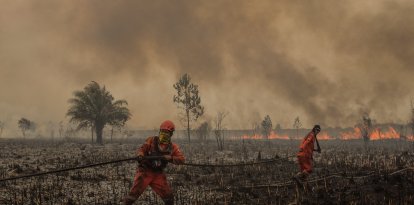
Something similar is happening with wildfires. According to NASA data cited by Lomborg, the area burned annually worldwide has decreased by more than 25% over the past 25 years. Although recent fires in the United States have been severe (due to poor forest management, according to the author), the Dust Bowl of the 1930s was approximately five times worse. On other continents, the trend is downward.
Regarding polar bears, presented as a symbol of an imminent ecological collapse and supposedly drowning due to melting ice, the population has increased from around 12,000 in the 1960s to more than 26,000 today. Lomborg points out that the main historical threat was hunting, not climate change.
Stagnation of the energy transition
The film promoted aggressive emissions reductions as a feasible solution. However, fossil fuel consumption has continued to grow, driven by its accessibility and reliability, which support economic development. Global emissions have reached record highs almost every year since 2006.
According to the International Energy Agency, in 2006, 82.6% of the world’s energy came from fossil fuels; in 2023, according to the author, that proportion was 81.1%. At the current rate, it would take more than six centuries to reach zero emissions. Although solar and wind energy have become considerably cheaper, their intermittency requires backup systems—generally fossil-fuel-based—which double the costs. Batteries, with few exceptions, only provide power for minutes, not hours.
The global cost of climate policies since 2006 exceeds $16 trillion. In the U.S., the Inflation Reduction Act allocated hundreds of billions to green technologies, but the efforts of wealthy countries—accountable for only 13% of projected emissions for the rest of the century—have a limited impact.
The author notes that emerging economies such as China, India and Africa are driving most of the increase. Even if wealthy nations were to achieve net-zero by mid-century, the effect on global warming by 2100 would be less than 0.1 degrees Celsius, according to models from the Intergovernmental Panel on Climate Change (IPCC).
Economic impacts and lessons for the future
Bjorn Lomborg asserts that climate change is a real problem, but the most robust projections indicate that it could reduce global GDP by around 2–3% by 2100. To put this in context, the U.N. estimates that the average citizen will be 4.5 times wealthier by the end of the century. However, "climate impacts reduce that to 'only' 4.35 times richer."
The biggest mistake in "An Inconvenient Truth," according to Lomborg, was failing to prioritize smarter approaches.
"We need to prioritize innovation. R&D [Research and development] to achieve better batteries, advanced nuclear and fusion could slash costs, making clean energy cheaper than fossil fuels. Adaptation, including sea walls, drought-resistant crops and early warnings, saves lives cheaply. And development lifts billions out of poverty, building resilience," he says.
LATEST