Winter Storm: What is the Alberta Clipper phenomenon that will drop temperatures from Montana to Michigan?
Two fast-moving systems from Canada will bring heavy snow, high winds and a sharp drop in temperatures to the northern part of the country.

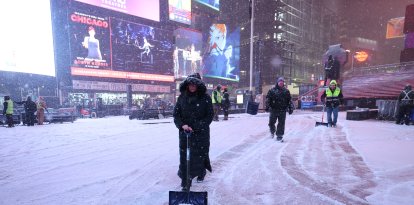
File image of a winter storm in Michigan.

From Montana to Maine, northern states are suffering this week from the arrival of two winter storms migrating in from Canada.
Authorities have issued several local alerts, calling for extreme cold weather preparations. They also asked, in the face of possible heavy snowfall, to be careful when taking the wheel and to be aware of updates from transportation services.
Called Alberta Clippers, they are fast-moving low-pressure systems that bring heavy snowfall and freezing temperatures.
Their name explains both their geographic origin and their speed:
- Alberta alludes to the fact that they usually come from that Canadian province, one of the northern neighbor's 13 federal entities. Although, in reality, clippers can originate in different parts of the Prairies or Rocky Mountains of Canada. This week's storm originated in the latter.
- The word clipper refers to ancient vessels used to cross the Atlantic. They had a reputation for speed.
"These storms are most common in late fall and winter, and since they form at high latitudes, they often bring cold, polar air with them," explains meteorologist Alex Sosnowski, of the specialist site AccuWeather.
They also usually come accompanied by strong, dry winds, like those expected in the coming weeks. Despite these common characteristics, AccuWeather warns that no two clippers are the same, so it is important to be aware of weather alerts on each occasion.
What will the Alberta clipper track look like?
The clippers entered the country early this week from the Canadian Rockies, moving south and east.
They brought moderate to heavy snowfall to the northern plains and upper Midwest panhandle. The first clipper was felt moderately on Monday, although the second one entered just afterward.
The NWS warned of possible snowfalls of 4 to 8 inches (10 to 20 cm) in northeastern North Dakota and the central Great Lakes area.
"This clipper system is forecast to quickly intensify, producing an expanding area of very strong and gusty winds to accompany the snow," it also forecast.
By Tuesday morning, it will have migrated into the lower Great Lakes. It will reduce temperatures in the Interior Northeast region as well. Both areas will see snowfall rise through Wednesday, while it will be dropping in the northern Plains.
Showers were expected further south in the Ohio Valley on Wednesday, then moving north to the Atlantic Coast.
LATEST