Bill to name Cuban embassy's street in Washington 'Oswaldo Payá Way' blocked
Ted Cruz said he was "saddened" by the decision, blamed Democrat Cory Booker for the denial, and asserted that "the only thing that has changed is that Donald Trump is President now, and Democrats are committed to complete obstructionism - even on issues of human rights they have previously supported."

Cruz speaking at CPAC/ Saul Loeb

Republican Senator Ted Cruz on Thursday criticized the blocking of his bill to rename the street in front of the Cuban embassy in Washington “Oswaldo Payá Way,” in honor of the Cuban dissident allegedly murdered by the regime in Havana.
"Today [Sen. Cory Booker] blocked passage of my bipartisan bill to rename the street outside of Cuba's embassy in D.C. as ‘Oswaldo Payá Way,’ which is designed to confront the Cuban regime with the legacy of Payá, a dissident who they murdered because he advocated freedom," Cruz wrote on X, alongside a video of his speech in Congress.
">Today @SenBooker blocked passage of my bipartisan bill to rename the street outside of Cuba's embassy in D.C. as “Oswaldo Payá Way," which is designed to confront the Cuban regime with the legacy of Payá, a dissident who they murdered because he advocated freedom.
— Senator Ted Cruz (@SenTedCruz) October 15, 2025
I am saddened… pic.twitter.com/BBBmNc8m1n
The Republican, who said he felt "saddened" by the decision, blamed Democrat Cory Booker for the refusal, and assured that "the only thing that has changed is that Donald Trump is President now, and Democrats are committed to complete obstructionism - even on issues of human rights they have previously supported."
Cruz recalled in his message that the Senate had already unanimously backed the bill to rename the street in front of the Cuban diplomatic headquarters in Washington.
"The hearts of Cuban-Americans in New Jersey and across the country are heavy at the Senator's objection. Meanwhile, the Cuban communist government is cheering," added the 54-year-old politician.
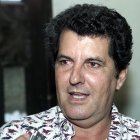
Democratic Sen. Cory Booker's response
Cory Booker, while honoring Cuban freedom fighter Oswaldo Payá, opposed Senator Ted Cruz's bill, calling it a "direct violation of the District's right to self-governance."
Oswaldo Payá Way, a remembrance of the fighter
In August, lawmakers Mario Díaz-Balart and Debbie Wasserman Schultz took up the bipartisan bill to rename the street in front of the Cuban embassy in Washington, D.C., “Oswaldo Payá Way,” in honor of the founder and leader of the Christian Liberation Movement, Oswaldo Payá Sardiñas, who was allegedly assassinated by Cuban state security forces.
Payá died at the age of 60 on July 22, 2012, after a car accident allegedly orchestrated by the Castro regime, in which young activist Harold Cepero also died.
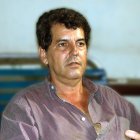
The bill was also reintroduced by Senators Ted Cruz (R), Richard Durbin (D), John Curtis (R) and Rick Scott (R).
Who was Oswaldo Payá?
He was founder of the Christian Liberation Movement (MCL), a peaceful opposition organization that advocated democratic reforms in Cuba. He promoted the Varela Project, an initiative that consisted of collecting signatures to ask the Cuban government for a referendum on freedoms such as speech, assembly, multiparty elections, amnesty for political prisoners, etc. In 2002, he managed to present more than 11,000 signatures to the National Assembly, and subsequently another 14,000.
He was internationally awarded. Among other recognitions, he received the Sakharov Prize for Freedom of Thought from the European Parliament in 2002.
Payá died in a car accident on July 22, 2012, in the province of Granma, Cuba.
According to official statements, he died in a traffic accident, when the car in which he was traveling left the road and hit a tree. The accident also left other passengers injured, such as Spaniard Ángel Carromero and a Swede.
Claims by the Payá family and human rights organizations allege that it was not an accident, but that Cuban state agents were involved in provoking the collision. In 2023, a report by the Inter-American Commission on Human Rights (IACHR) determined that there is serious and sufficient evidence to conclude that state agents were involved in his death.
LATEST