







Federal judge orders closure and partial dismantling of 'Alligator Alcatraz' detention center for environmental damage
"The project creates irreparable harm in the form of habitat loss and increased mortality of endangered species in the area," Judge Williams rebuked.
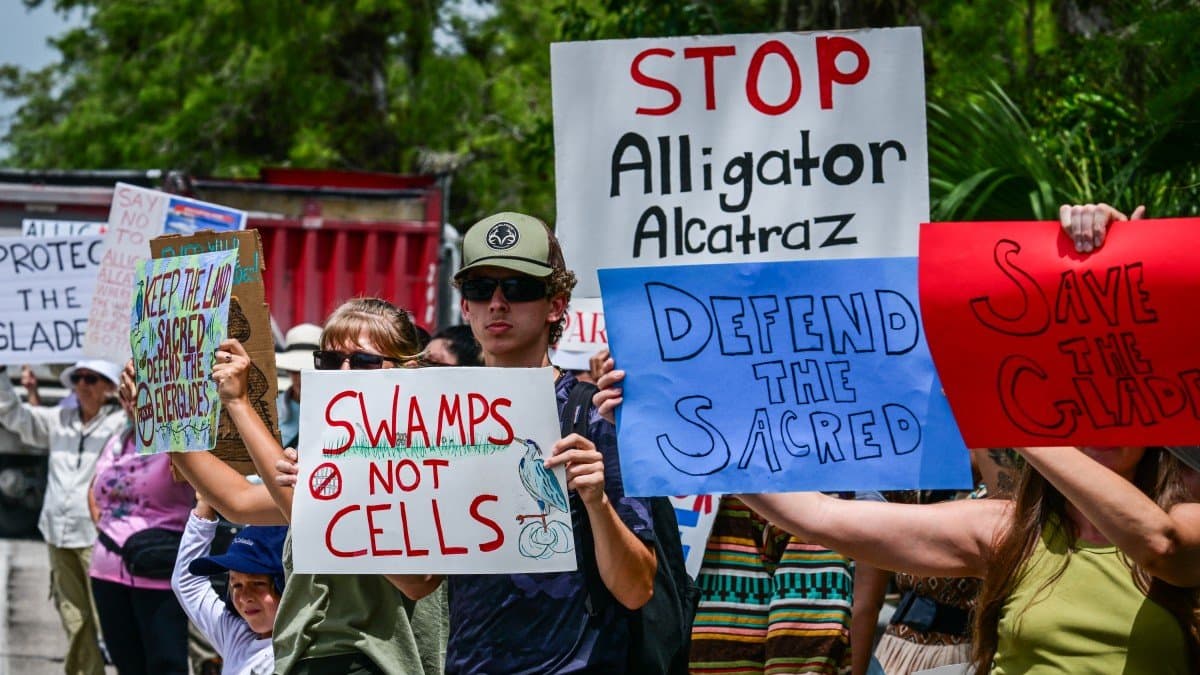

The future of the immigration detention center known as Alligator Alcatraz was in question on Thursday, after a federal judge ordered the closure of the site and the partial dismantling of its facilities due to environmental damage.
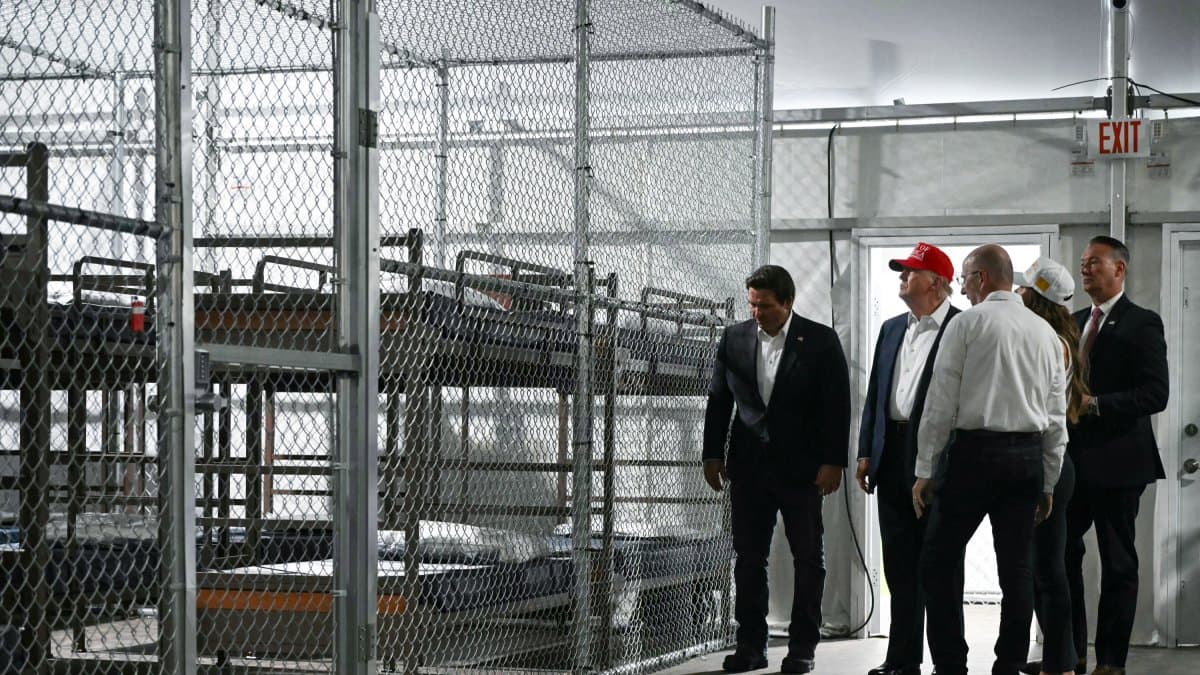
The decision, issued by Judge Kathleen M. Williams of the Federal District Court in Miami, represents a major setback for the project pushed by the Trump administration and Florida's Republican governor, Ron DeSantis.
Williams ruled that state and federal authorities violated environmental law by failing to conduct an impact review before erecting the facility in the middle of the Everglades ecosystem. In her ruling, the judge said the facility poses a significant risk to both the wetlands and the Miccosukee Indian communities that depend on those lands.
"The project creates irreparable harm in the form of habitat loss and increased mortality to endangered species in the area," Judge Williams rebuked.

Politics
DeSantis accuses Newsom of putting Americans at risk with his "sanctuary policies"
Joaquín Núñez
According to The New York Times, the Trump administration argued that review under the National Environmental Policy Act (NEPA) did not apply in the case because the facility is operated by the state of Florida, despite housing federal detainees.
Meanwhile, Governor Ron DeSantis claimed that his authority stemmed from an agreement with the federal government that, in practice, delegated immigration enforcement powers to Florida.
However, Williams ruled that federal immigration enforcement is the "primary driver" of the Alligator Alcatraz. She specifically cited that the facility is subject to federal funding, standards, and guidelines. Thus, it is also subject to federal environmental laws.
"If it walks like a duck, quacks like a duck, and looks like a duck, then it's a duck," the judge ruled. She gave authorities 60 days to relocate detainees and remove infrastructure such as fences, lighting towers and electrical generators, as well as prohibit any additional construction on the site.
The case is part of a strategy by Governor DeSantis, who has made the strict application of immigration law a hallmark of his state administration, becoming a direct ally of the White House. Florida, punctually, became a pioneer in directly operating an immigration detention center under agreements with the federal government. In fact, there are plans to open a second facility in a vacant prison near Jacksonville.
This agreement between the White House and the Sunshine State is inspiring other states to take similar steps.
The state is expected to appeal the decision, but the ruling strengthens claims brought by environmental organizations and the Miccosukee tribe, which had denounced the lack of consultation and the impact on their ancestral lands of the migrant center. Scientists and activists also warned that the facility threatens species such as the Florida cougar, which is marked as an endangered species.
🛠 Do you think there is an error in this article?
Recommendations







LATEST