Retired Lieutenant Commander Jesús Romero warns of the national security risks that the new Democratic members of Congress could pose
Romero expressed concern that figures such as Abdul El-Sayed, Alexandria Ocasio-Cortez (AOC), and Ilhan Omar might serve on key congressional committees.
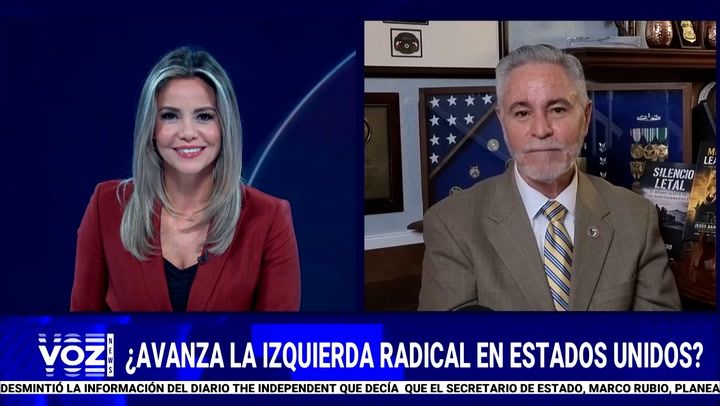
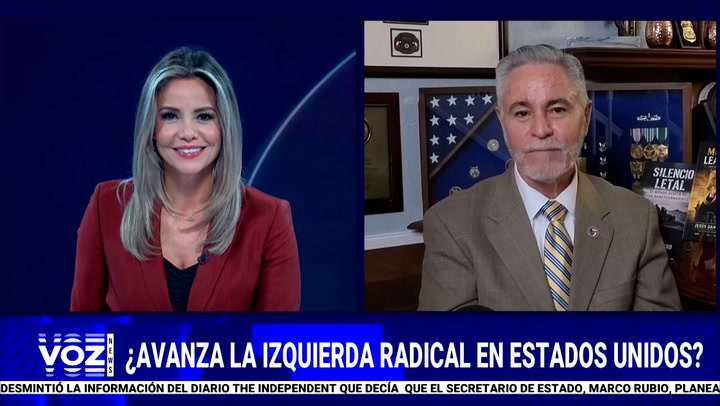
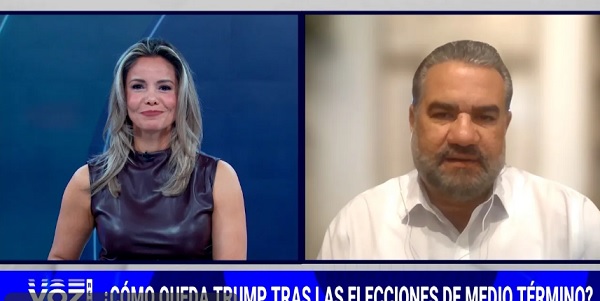
Jesús Romero and Karina Yapor.
Retired Commander Jesús Romero, former director of U.S. naval intelligence, warned of potential national security risks posed by some of the new Democratic members of Congress linked to the party's most radical and socialist wing. During an interview with Karina Yapor on Voz News, Romero expressed concern that figures such as Abdul El-Sayed, Alexandria Ocasio-Cortez (AOC), and Ilhan Omar might come to hold positions on strategic congressional committees, particularly those related to intelligence and defense.
"If some of these individuals start taking over committees like the Intelligence Committee or the Armed Services Committee, I would be extremely and deeply concerned because it's not what they're doing for us, but what they're doing for themselves," Romero stated. The former director of naval intelligence also considered it necessary to investigate possible connections between relatives of some of these representatives and radical elements in other countries. "I don't think—I don't want to think—that this is happening in the United States, but we've actually seen examples of this in the past, when there have been representatives and senators who've had ties to extremists and countries like China and Iran itself," he added.
During the conversation, Romero also analyzed the resounding electoral setback suffered by the Republicans and argued that the results should serve as an opportunity to assess the direction of the country and of the Democratic Party itself, which, in his view, is experiencing significant internal divisions. "They have internal problems, where we now see these radicals—radicals driven by ideology," he noted, before warning that some of these new representatives have begun to openly show their intentions to confront the Trump administration. In that regard, he mentioned that some have proposed issuing subpoenas against Republicans and government officials.
The former military officer also linked the rise of these political movements to what he considers a departure from the Judeo-Christian principles upon which the United States was founded. Romero singled out states such as Minnesota and Michigan, where, he explained, voters have repeatedly supported candidates of these political leanings. "This means that the American ideology based on Judeo-Christian principles is being pushed further and further away from our American politics—or at least from how this country was founded—and I think that's a serious problem," he said. He also advocated greater political participation by Hispanics and lamented the lack of Latino representation proportional to the community's demographic weight.
Politics
From the Church to Washington, DC: Religious leaders elected to Congress this year
Joaquín Núñez
When addressing Abdul El-Sayed's election results and the controversies surrounding his possible family ties to the Muslim Brotherhood, Romero stated that he would like to see an investigation to clarify the concerns raised. However, he insisted the problem also relates to voters' decisions and to the need for citizens to scrutinize the principles of those who aspire to represent them.
Elsewhere in the interview, when asked what conservatives should do to regain ground after the election, Romero urged Republicans to reaffirm the values that have historically defined the party. "I think we should return to the principles that the Republican Party stands for and remind ourselves what those principles are so we can move forward," he said. Among these, he highlighted the importance of the Christian faith and warned about what he considers a troubling rise of Islamism in the West. "We're already seeing what happened in Europe, and well, here, unfortunately, it seems to be heading in the same direction; let's hope we don't reach those levels," he concluded.
You can watch the full interview by clicking on the video below.
🛠 Do you think there is an error in this article?
Recommendations






LATEST