ANALYSIS
US invites Venezuela's interim regime to G20 energy ministerial in Houston, seeking to shift the center of the oil industry away from the Middle East
Interior Secretary Doug Burgum and Energy Secretary Chris Wright are co-chairing the summit in Houston, which runs through Wednesday and brings together the G20 economies.
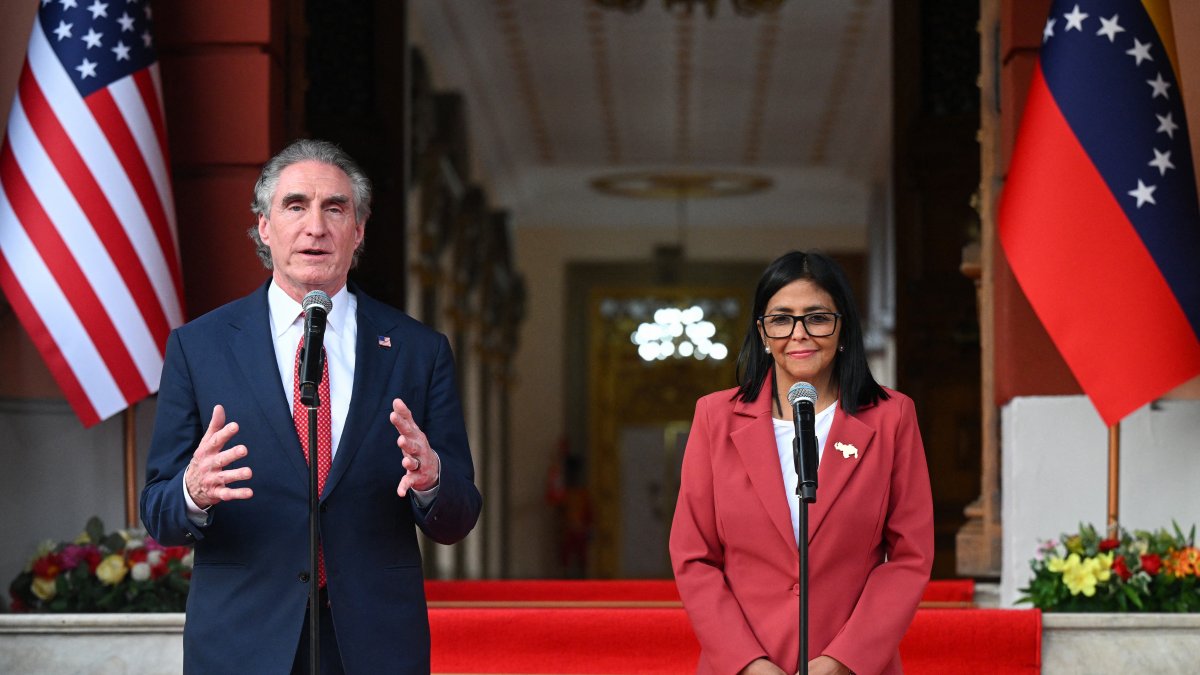
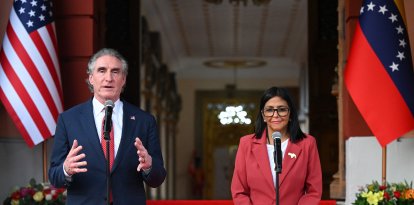
Doug Burgum and Delcy Rodríguez in Caracas—File photo.

A Venezuelan delegation will participate this week, as a guest, in side events and bilateral meetings at the G20 Energy Ministers' Meeting in Houston. U.S. officials confirmed this on Monday. Washington is presenting the move as a step toward shifting the "geopolitical center of oil" from the Middle East to the Western Hemisphere, amid market turbulence.
Who will participate
Interior Secretary Doug Burgum and Energy Secretary Chris Wright are co-chairing the summit in Houston, which runs through Wednesday and brings together the G20 economies. According to Bloomberg, Venezuela will be represented by the Minister of Hydrocarbons, Paula Henao, and Jovanny Martínez, executive vice president of PDVSA, both officials from the Chavista-led oil sector. They will not participate in the closed-door ministerial sessions.
Participants include delegations from China, India, Japan, and Germany, along with major producers such as Canada and Saudi Arabia. Russian diplomats indicated that Moscow will send officials to Houston. Two weeks ago, the presence of Russian Finance Minister Anton Siluanov at a preliminary G20 meeting in North Carolina sparked controversy among European allies.

Politics
A risky political move ahead of the legislative elections? The White House's strategy on Venezuelan oil faces harsh criticism
Andrés Ignacio Henríquez
Washington's argument: "The center of the oil industry is shifting"
The Trump administration frames the invitation to Caracas as part of a strategy to diversify supplies in light of the war in the Middle East and the disruptions that have sent prices soaring.
Burgum told Fox Business that Washington wants to redraw the global energy map and bring Venezuela into that effort. He stated: "The goal is for the geopolitical center of the oil industry to shift away from the Middle East—we have all these concerns about disruptions in the Middle East—and move to the Western Hemisphere."
"Venezuela's involvement comes at a time when the Trump administration and Caracas are intensifying their energy cooperation, expanding opportunities for U.S. companies, and seeking new energy agreements in Venezuela," Burgum's office told AFP.

Updates
Will Cilia Flores be released from prison? Defense requests house arrest in NY citing health concerns
Andrés Ignacio Henríquez
Agreement, crude oil, and pressure at gas stations
The impact on consumers is clear: AAA's national average for diesel is around $6.20 per gallon, an all-time high. Regular gasoline is trading well above its pre-war level (around $3 per gallon in early 2026; now it exceeds $4.30). The political impact of these prices on the November midterm elections remains, for now, a matter of speculation; it is not part of the G20 announcement.
LATEST