Cost of living, immigration and Cuba: Elliot Rodríguez debates with Voz News anchor Karina Yapor
During the conversation, which featured several exchanges and heated debate, Rodríguez focused much of his remarks on inflation, the high cost of living in South Florida, and the Trump administration's immigration policies.
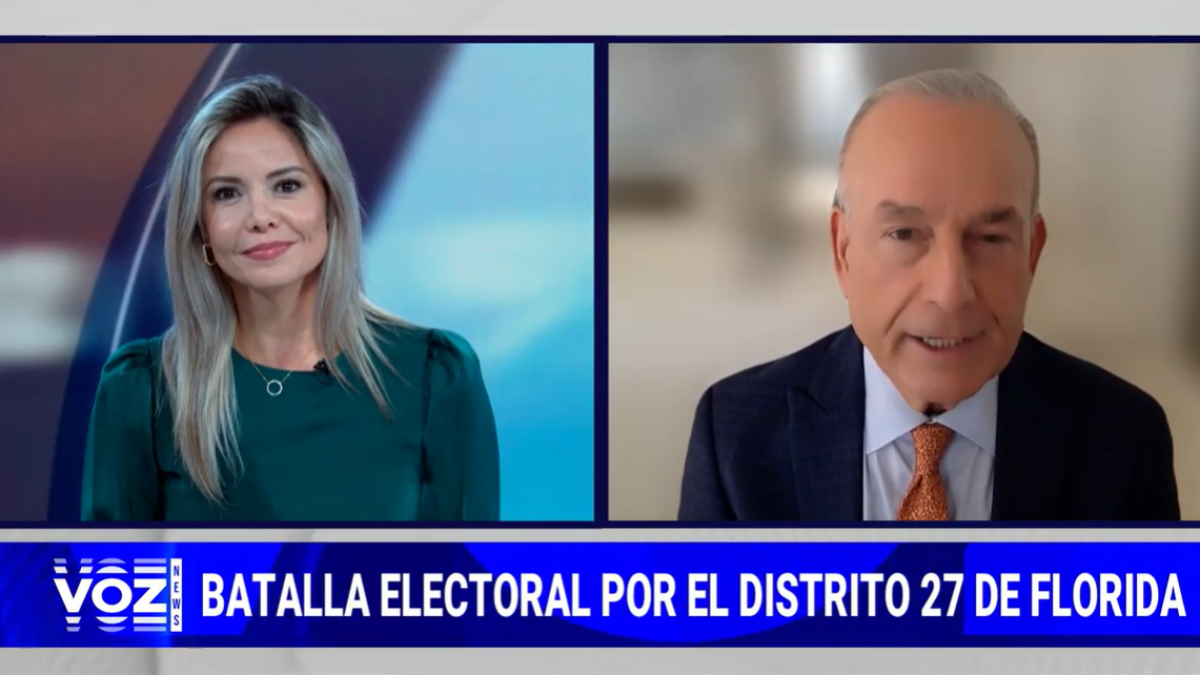
Karina Yapor interviews journalist and Democratic congressional candidate Elliot Rodríguez

Journalist Elliot Rodríguez, who after 25 years in front of CBS Miami's cameras won the Democratic primary for a seat in Congress representing Florida's 27th District, addressed on Voz News the issues defining his campaign against Republican Rep. María Elvira Salazar in one of the most Hispanic districts in the country, where 73.5% of residents are of Latino origin, with a strong presence of the Cuban community.
During the conversation, which included several tense exchanges and sharp debate, Rodríguez focused much of his message on inflation and the high cost of living in South Florida.
"The cost of living is through the roof, and no one in Congress representing this district is doing anything to help families who don't have money to pay for housing, who don't have money to put food on the table, who don't have money to pay for insurance," said the Democratic candidate, who accused Salazar of focusing on foreign policy while ignoring local issues.
The sharpest point of contention, however, centered on immigration, with Voz News anchor and producer Karina Yapor asking the candidate how he assessed the Biden-Harris administration's border policy.
Rodríguez acknowledged flaws in the open-border policy: "I believe President Biden made serious mistakes at the border; many people came in… it's true that they let too many people in." However, he emphasized that his parents, Cuban immigrants, had the opportunity to live the American dream and that he does not want to take that possibility away from those who arrive today to work.
Later, the candidate for Congress criticized the Trump administration's immigration policy, calling it harsh and recounting a visit to the Miramar detention center: "If you go there, it breaks your heart—people arriving there in handcuffs, people who haven't committed any crimes. Trump told us he was going to deport criminals—the worst of the worst—and what they're doing is rounding up people in Home Depot parking lots and at bus stops."
The conversation took a particularly tense turn when Yapor asked him about the elimination, in the final days of the administration of Barack Obama's administration, of the "wet foot, dry foot" policy, which stripped Cubans of the benefit of permanent residency. Rodríguez avoided delving into that period: "I'm focused on what's happening right now; the president of the United States is Donald Trump," he replied, while the VOZ host insisted on the issue's historical context.
When asked about the Trump administration's recent round of sanctions against the grandson of former dictator Raúl Castro and the Banco Exterior de Cuba, Rodríguez—the son of Cubans who left the island before the revolution— said he supports a democratic transition and "economic liberalization" on the island, though he questioned the president's motives: "Trump wants to build a hotel in Cuba—he's said so himself," he said, linking that stance to what he described as a personal economic interest.
Yapor also questioned him about the Democratic Socialist wing within his own party, the Democratic Socialists of America (DSA), from whom Rodríguez distanced himself: "I've been to Cuba many times; I know the reality of Cuba… what they need is to open up their economy so that capitalism can begin to flourish. 'I am a product of capitalism,'" he said, recalling that his father owned a grocery store in New York.
Regarding his legislative priorities if he wins in November, Rodríguez mentioned the cost of living, restoring certain health subsidies cut under the Trump administration, and his opposition to the tariffs pushed by the current administration. He concluded the interview by noting that there are people in Miami today who "are afraid to leave their homes" for fear of an immigration raid.
LATEST