Republican attempt to lock in nine Supreme Court justices fails in the House
The vote, 212 in favor and 206 against, fell well short of the two-thirds threshold required to pass a constitutional amendment, with only one Democratic representative, Don Davis, voting in favor, while the rest of his caucus voted against it.


The House of Representatives rejected on Wednesday a constitutional amendment proposed by Republicans to set the number of Supreme Court justices at nine, a measure aimed at preventing a potential "packing" of the court if Democrats regain control of Congress.
According to a report by Fox News, the vote, 212 in favor and 206 against, fell well short of the two-thirds threshold required to pass a constitutional amendment, with nearly the entire Democratic caucus opposing it and only one Democratic representative, Don Davis (N.C.), voting in favor.
Some Democrats advocate increasing the number of justices from nine to thirteen, arguing that this would ensure one judge for each federal circuit court and correct an ideological imbalance that they attribute, in part, to the strategy of former Senate Republican Leader, Mitch McConnell, to consolidate the conservative majority.

What the amendment proposed and why it was put to a vote
The resolution, known as "Keep Nine" and sponsored by Republican Andy Biggs (AZ), added a new article to the Constitution stating that "the Supreme Court of the United States shall be composed of nine justices consisting of one chief justice and eight associate justices." The GOP's explicit goal was to permanently block any future attempt to expand the court in order to alter its conservative majority.
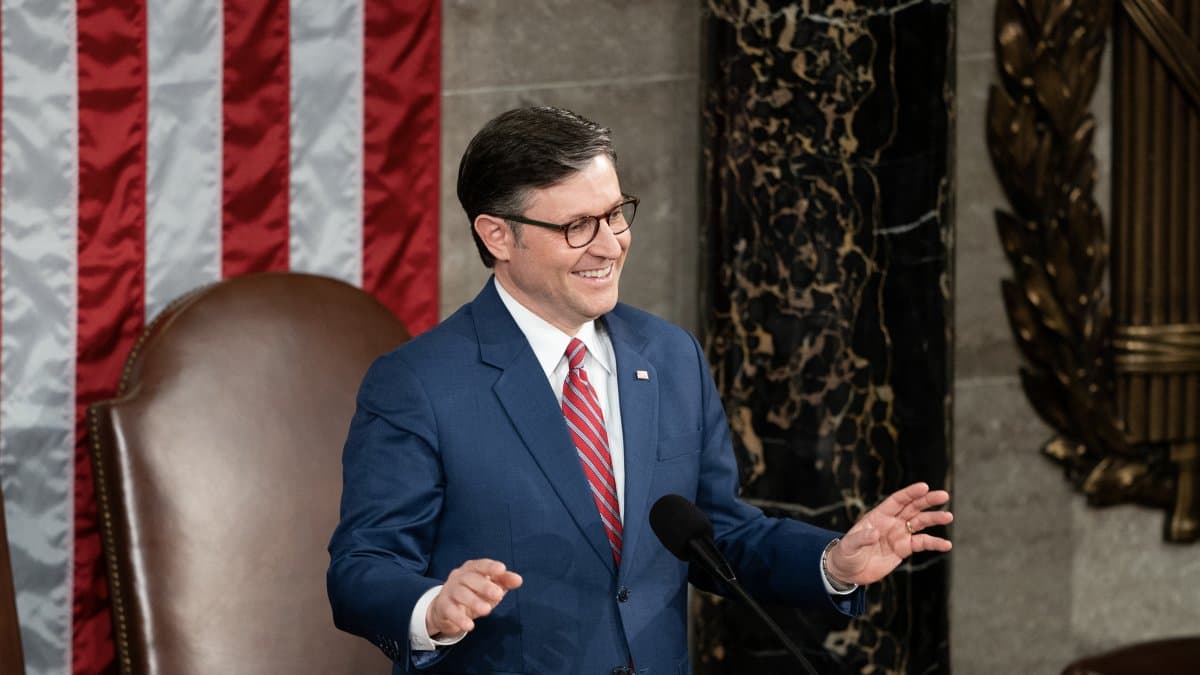
House Republican Leader Mike Johnson (LA) expedited the process through a maneuver known as "suspending the rules," which allowed several procedural hurdles to be bypassed but raised the approval threshold from a simple majority to two-thirds. Although a simple majority in the House supported the amendment, the higher threshold made it unfeasible without Democratic support.
Democrats rejected the proposal, arguing that the Constitution does not set the number of justices on the Supreme Court and that Congress has modified it on several occasions throughout history; therefore, they considered it "arbitrary" to enshrine the number nine. "MAGA's proposal is to strip Congress of all authority in the matter, to freeze it and cement it permanently in the constitutional architecture for all time with the suddenly magic number nine," Raskin said.

Judicial independence and the rules of the game
Republican proponents presented the amendment as a defense of the court's independence against temporary majorities. Biggs warned on the floor: "If a sitting majority can change the size of the Supreme Court the moment it dislikes rulings, what happens to the next time the other side is in power?" According to their argument, setting the number at nine prevents the Court from becoming yet "another political institution controlled by whoever happens to hold the majority," and protects its role as a counterweight.
For Republicans, the measure also serves a clear electoral purpose by turning the threat of "packing" into a campaign issue ahead of the midterms, portraying Democrats as willing to change the rules to impose their agenda.
🛠 Do you think there is an error in this article?
Recommendations







LATEST